Arson at military base and first deaths as protests escalate in Iran

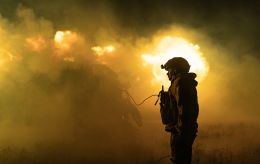
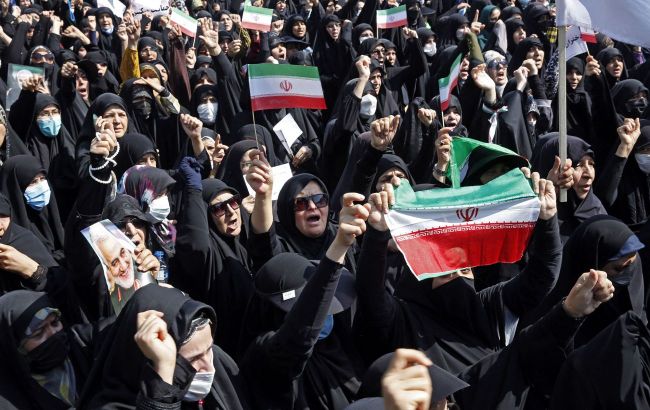 Photo: Protesters set fire to a military base in Iran (Getty Images)
Protests in Iran have entered a new, harsher phase. On New Year’s Eve, demonstrators set fire to a Basij militia base, a key instrument of the authorities’ coercive power, according to Bild and Reuters.
The Basij militia base in the town of Chenar near Asadabad in Hamadan province is subordinate to the Islamic Revolutionary Guard Corps (IRGC) and has for decades been used by the regime to brutally suppress mass protests.
The incident became one of the most radical episodes of the current wave of unrest. In cities across the country, people are taking to the streets despite shuttered shops, barricades, and tear gas, chanting anti-government slogans.
What began as a reaction to soaring inflation and the collapse of the national currency has quickly evolved into open criticism of the entire political system. According to local sources, millions of Iranians have already joined the protests.
"This is the final battle — Pahlavi will return," slogans supporting the restoration of the Pahlavi monarchy are increasingly appearing in public spaces.
Authorities have also confirmed an attack on the governor’s office in the city of Fasa in southern Iran.
According to the judicial news agency Mizan, a group of individuals damaged the administrative building, indicating the growing scale and coordination of protest actions.
In addition, at least three people have been killed, including a member of the security forces.
Protests spread nationwide
Mass demonstrations began last weekend after traders at Tehran Grand Bazaar shut their shops en masse. This move carries particular significance, as the bazaar is traditionally not only an economic hub but also an important political symbol.
Calls to close markets were quickly supported by business owners in other cities, including Shiraz, Kermanshah, Qeshm, and several provinces. Protests spread to universities and city centers, becoming increasingly politicized.
Security forces have responded with tear gas, mass arrests, and a heavy police presence.
At the same time, Iran’s state media are covering the events in a highly limited manner. There are confirmed reports of violence against students and young people. It has also become known that the mass protests have resulted in fatalities.
The situation in Iran is escalating further as groups that had previously been pillars of the regime have joined the protests. The bazaaris — traders from historic markets — played a key role in the 1979 Islamic Revolution, providing financial and organizational support to the clergy and Ayatollah Khomeini.
For decades, this network served as a stabilizing force for Iran’s Islamist system of power.
Against the backdrop of these events, Crown Prince Reza Pahlavi, the son of Iran’s last shah, addressed Iranians from exile. He voiced support for the protests, urged security forces not to turn against their own people, and called the current moment a historic opportunity for change.
Iran has seen its most powerful wave of protests since 2022 amid the collapse of the rial and a deepening economic crisis. The unrest has been driven by rising inflation, social discontent, and harsh repression by the regime.
Iran’s economic crisis is due in part to international sanctions. Recently, the US State Department announced new sanctions to reinforce existing UN restrictions on Iran over its refusal to halt its nuclear program.
It was also reported that on September 27, the United Nations reinstated an arms embargo and other sanctions against Iran that had originally been imposed by the UN Security Council between 2006 and 2010.