Army chief explains why Ukrainian defenders had to withdraw from Siversk

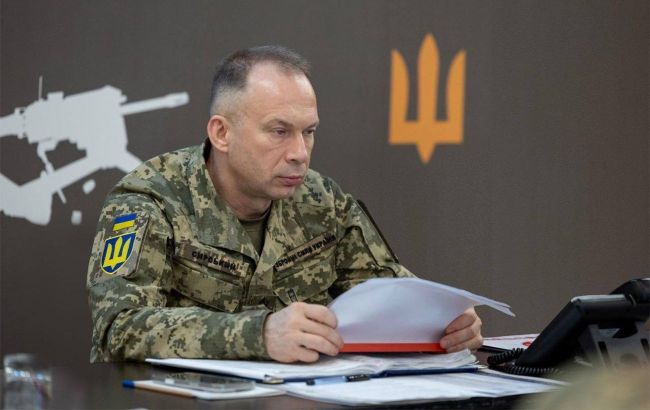 Photo: Oleksandr Syrskyi, Commander-in-Chief of the Armed Forces of Ukraine (facebook.com/CinCAFofUkraine)
Under pressure from Russian forces, Ukrainian drone crews were gradually forced to withdraw from Siversk. Against this backdrop, the infantry was left without cover, creating the need to leave the city, states Commander-in-Chief of the Armed Forces of Ukraine Oleksandr Syrskyi in an interview with Channel 24.
The general pointed out that in the Serebryanske forestry, Bilohorivka, and Siversk, heavy fighting took place even during World War II, so fortifications were built there. The area consists of dominating heights.
According to Syrskyi, the Siversk direction was long considered a lower priority, as the Russian forces lacked the capacity for a full-scale offensive. Brigades were stationed there, but the intensity of combat was lower than in other directions. The fighting in the region was mainly conducted by sabotage groups, infantry, and Special Operations Forces.
"Unfortunately, concentrating drone units via a fiber-optic control channel, especially with a range of over 20 kilometers, led to our units, crews, and drone teams gradually moving back, leaving the infantry without cover," the Commander-in-Chief said.
He noted that under such conditions, defending the city became problematic. Soldiers could not be left to die in Siversk, so a decision was made to withdraw to the dominating heights.
"There is space to fall back there. The enemy is also trying to take advantage of this, but is unsuccessful. Counteractions are planned in this direction. That is all I can say about this sector," Syrskyi added.
Withdrawal from Siversk
On December 23, the General Staff of the Armed Forces of Ukraine reported that Ukrainian defenders had withdrawn from Siversk.
The military command emphasized that every meter of the city had been gained by the Russian army at a high cost. Enemy forces were exhausted.