Almost 150,000 square kilometres of danger: how demining Is carried out in Ukraine
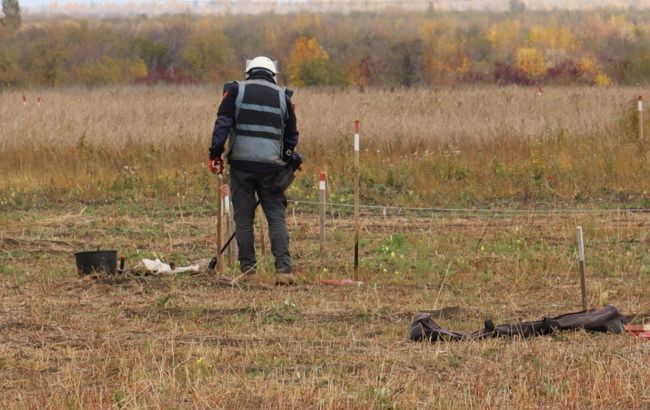 Almost 150,000 square kilometres of danger: how demining Is carried out in Ukraine (photo: RBC-Ukraine)
Ukraine remains one of the most heavily mined countries in the world. According to experts, more than 142,000 square kilometres of land are potentially dangerous. The situation is most critical in the eastern and southern regions, reported by RBC-Ukraine, citing a segment aired during the national telethon.
In the east and south, sappers clear on average 60–70 hectares of land every day. In particular, in the Kharkiv region, the consequences of occupation are still strongly felt.
A local agronomist featured in the report said that after deoccupation, the farm could cultivate only a quarter of its fields, but now the workable area has tripled. However, thousands of mines and unexploded ordnance remain in the region.
The head of the Pryshyb district noted that many shells were even found inside residents’ homes. Following this, the humanitarian project FSD Ukraine (the Swiss Foundation for Mine Action) supported by the JTI Foundation was launched in the area. Specialists survey the land and mark hazardous zones.
FSD regional manager Alex Van Roy stated that the team is working to minimise risks for the local population as much as possible.
Demining experts say that demining is painstaking work, requiring great attention and specialised equipment. They emphasise that partner support remains crucial — particularly machinery, protective gear, and vehicles.
The Ukrainian Association of Sappers has also joined the project, focusing on marking hazardous areas. In the Kharkiv region, teams faced limited access to certain sites, but they plan to apply the experience gained in the Chernihiv and Kherson regions as well. International specialists are assisting with coordination.
After marking, the contaminated areas are handed over for clearance. Today, more than 4,000 sappers and over 100 demining operators are working across Ukraine.
JTI Ukraine notes that humanitarian demining is a tool that enables people to return home and supports the country’s economic recovery.
The JTI Foundation has provided around half a million dollars for demining efforts in the Kharkiv region. This support made it possible to clear over 38 square kilometres of land, while more than 17,000 people have completed mine safety training programmes.