20 unique places likely to disappear by 2045: See them before it’s too late

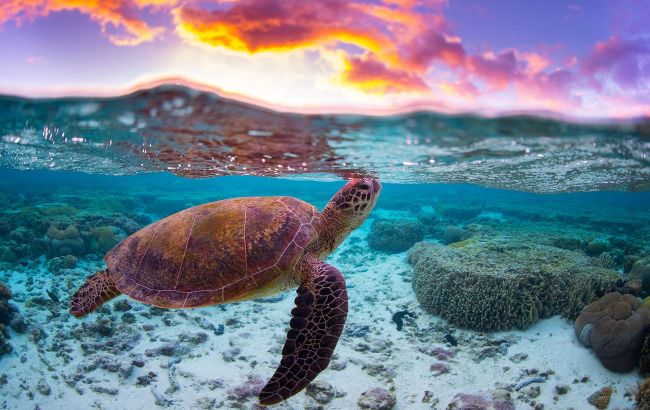 20 unique places in the world that could vanish in 20 years (photo: Getty Images)
Climate change, rising sea levels, and human activity are destroying the planet’s unique corners faster than we can visit them. Scientists warn that by 2045, many legendary places could disappear forever.
RBC-Ukraine compiled a list of must-see destinations based on data from UNESCO, NASA, and climate research.
Islands sinking beneath the waves
Rising global sea levels threaten entire countries. Some islands could disappear completely by 2045.
Maldives
80% of the territory is less than 1 meter above sea level. The islands are gradually being submerged, and the government is already considering relocating residents.
Must-see:
- underwater villas and reefs
- white sand beaches
- lagoons with bioluminescent plankton
Tuvalu (Pacific Ocean)
The fourth smallest country in the world. Its highest point is only 5 meters above sea level. Scientists predict complete flooding by 2050.
Marshall Islands
Atolls are losing land due to storm surges. Local populations are relocating en masse to the U.S.
Seychelles
Unique granite formations and coral reefs are at risk. Shores erode by 10–15 cm per year.
Glaciers and polar regions
Global warming is affecting ice masses the fastest, making them likely to vanish in the coming decades.
Kilimanjaro Glaciers (Tanzania)
Since 1912, the mountain has lost 85% of its ice cover. By 2030–2040, the glaciers could disappear completely.
Patagonian Glaciers (Argentina, Chile)
The third largest ice mass after Antarctica and Greenland. Melting faster than ever, losing about 21 gigatons of ice per year.
Glacier National Park (Montana, USA)
In 1850, there were 150 glaciers; now only 25 remain. By 2030, they could all be gone.
Alpine Glaciers (Switzerland, Austria, Italy)
Losing up to 3% of their mass annually. Legendary ski resorts could turn into ordinary mountains.
North Pole
Scientists estimate that summer sea ice may vanish between 2030 and 2050, altering the entire Arctic ecosystem and threatening polar bears.
Coral reefs and marine ecosystems
Rising ocean temperatures are killing coral reefs permanently.
Great Barrier Reef (Australia)
The largest living structure on Earth. Since 2016, it has experienced five mass bleaching events. Scientists predict it could lose up to 90% of its coral by 2045.
Threats:
- rising water temperatures
- ocean pollution
- coral diseases
Dead Sea (Israel, Jordan)
Losing about 1 meter of water level per year. In 50 years, it has shrunk by one-third. Could dry up completely by 2050.
Everglades (Florida, USA)
Unique tropical wetlands are under threat from changing water levels and urbanization. About 50% of the territory is already lost.
Cities at risk
Venice (Italy)
The city sinks 1–2 mm per year, with some estimates at 2–4 mm. Floods are becoming more frequent and destructive. Even the MOSE flood barrier system may not be enough.
At risk:
- palaces on the Grand Canal
- Piazza San Marco
- bridges and historic architecture
Amsterdam (Netherlands)
Located below sea level. Its system of dams may not withstand extreme climate changes.
Tropical forests and unique ecosystems
Amazon (South America)
Losing 10,000 km² of forest per year due to deforestation. Approaching a “point of no return,” after which it could turn into savanna.
Congo (Africa)
The second-largest tropical forest on the planet. Disappearing due to illegal logging and mining.
Madagascar’s forests
90% of primary forests are destroyed. Unique species of lemurs and plants vanish along with them.
Galápagos Islands (Ecuador)
Unique ecosystems are threatened by invasive species, tourism, and changing ocean currents.
Historical and archaeological treasures
Valley of the Kings (Egypt)
Pharaohs’ tombs are deteriorating due to rising groundwater and tourist traffic.
Timbuktu (Mali)
The ancient city in the Sahara is gradually being buried by sand due to desertification.
How to see them before it’s too late
Many of these places already limit tourist numbers or have special visiting rules.
What to do:
- plan trips in advance
- choose eco-friendly tourism
- follow conservation rules
- support organizations protecting these sites
Why it matters
These places are not just tourist destinations. They are unique ecosystems, historical heritage, and homes for millions of people and animals. Their loss would be irreversible.
Scientists warn: the next 20 years are the last chance to see these natural and architectural wonders in their true form.
You may also be interested in: