Chornobyl catastrophe 40 years later: how war reshaping nuclear risks and radiation threats?


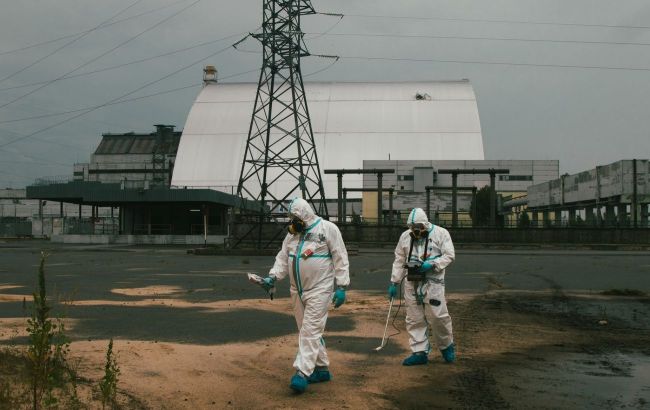 Photo: the Chornobyl exclusion zone is under constant radiation monitoring (photo: unsplash.com)
On the 40th anniversary of the Chornobyl disaster, the world is once again watching Ukraine’s nuclear sector with concern. Over this time, the Chornobyl zone has evolved from a dead territory into a unique nature reserve. However, the war has brought back a sense of danger.
How many centuries will Chornobyl remain a “deadly” zone, whether radiation can migrate to clean regions, and what really happened after a Russian drone attack on the protective arch of the Chornobyl Nuclear Power Plant — in an interview with RBC-Ukraine, explained Serhiy Kireev, a radioecologist, liquidator, and General Director of Ecocenter, whose staff ensures radiation safety in the zone.
Key points:
Radiation pathways: The main leakage occurs via water. The Pripyat River washes out isotopes year-round, but during large-scale fires, the amount of released radiation can equal the annual discharge through surface water.
Forest barrier: Trees retain radionuclides in biomass and soil. This function is destroyed during fires.
Decay time: Full cleanup from cesium and strontium takes about 300 years. However, plutonium-239 has a half-life of 24,000 years.
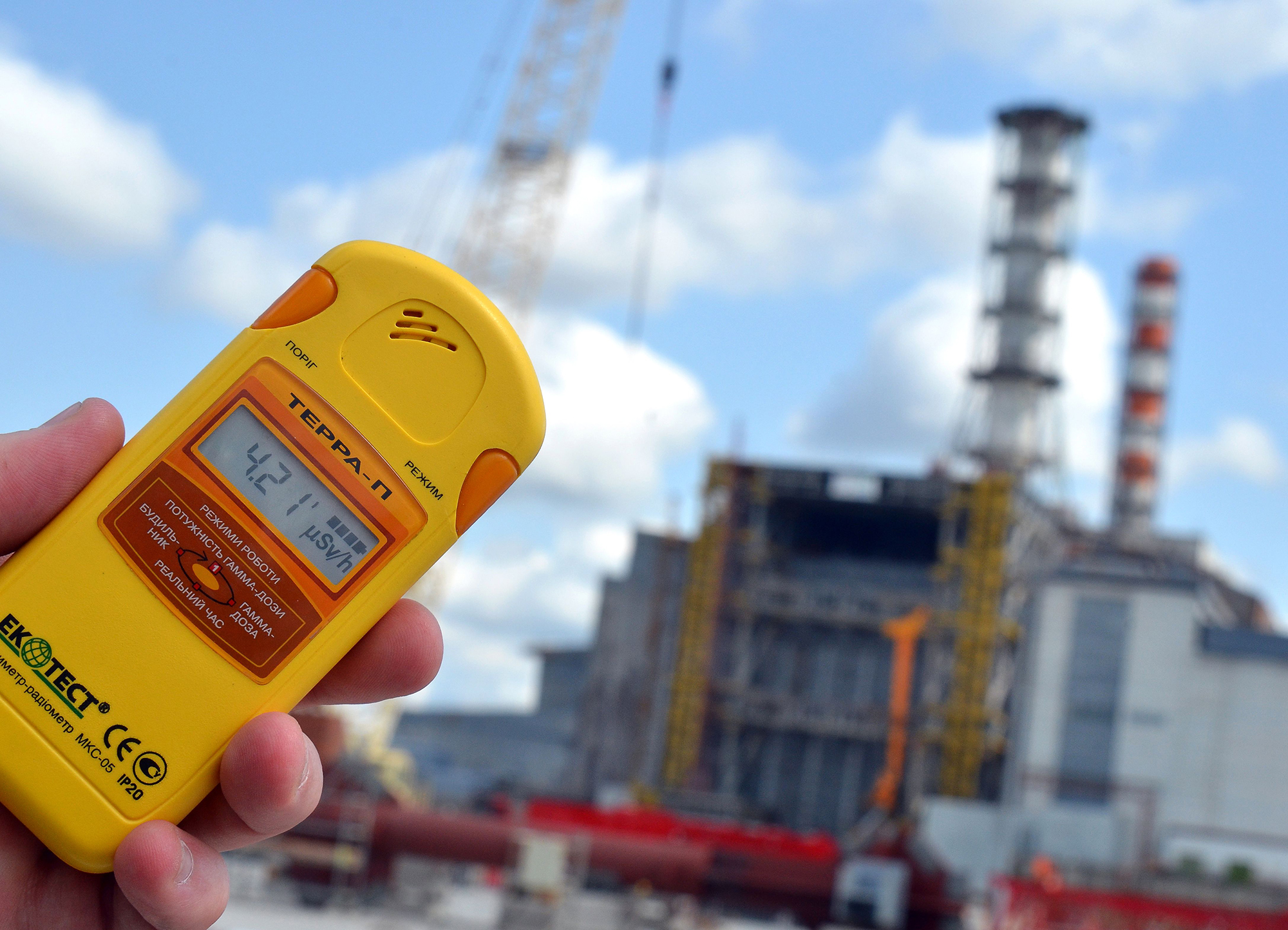
Most contaminated spots: The highest radiation levels are recorded near the generator station (7.3 μSv/h) and the oil depot (4.5 μSv/h). For comparison, the safe level for the population is 0.3 μSv/h.
Attack on the arch: In February 2025, a Russian Shahed drone struck the protective confinement of the plant. The hit landed near the sealed zone — if the drone had deviated by a few meters, it could have caused a direct radiation leak toward Belarus.
Liquidator’s memories: Kirieiev worked from the first days of May 1986, liquidating the disaster’s consequences. The USSR concealed the truth, restricting access to laboratories. Liquidators worked almost blindly.
“Pulse” of radiation: how real-time monitoring works
— Today, the Chornobyl zone is under constant monitoring. How is this radiation surveillance carried out?
— A radiation and environmental monitoring system was created in the exclusion zone almost immediately after the disaster. By the late 1990s–early 2000s, it took its modern form. Now it is being модернизирована, and new approaches are applied.
We monitor all environmental components: groundwater and surface water, the near-surface atmospheric layer, radionuclide fallout, landscape test sites, aquatic organisms, and more.
We analyze all collected samples for radionuclide content and track changes in monitored objects that could affect the radiation situation.
In addition, an automated radiation monitoring system operates as part of this network, with 39 gamma radiation sensors located throughout the zone.
This system works in two modes. In normal conditions, data on gamma radiation dose rates is sent to the operations center every hour.
If an event occurs, the system switches to emergency mode, and data is transmitted every 3–5 minutes.
During fires, this system, along with dose assessment tools and radiation reconnaissance, helps protect personnel and emergency workers from additional exposure and ensures timely rotation.
Serhiy Kireev, a radioecologist, nuclear disaster responder, and CEO of Ecocenter (screenshot)
— There is a misconception that radiation is securely “locked” within the exclusion zone. How does it actually spread to clean areas?
— There are three pathways for radionuclides to leave the zone. The main one is surface water: 90–98% of radionuclides are carried beyond contaminated areas by rivers in the Pripyat basin.
The second pathway is through the air. Large-scale engineering works can raise contaminated dust, which may spread under favorable weather conditions.
The same happens during fires, although fires are short-term events, usually extinguished within one to two weeks, while the river transports radionuclides year-round.
Another route for removal involves personnel, vehicles, and cargo leaving the zone. The radiation monitoring system is designed such that crossing the zone’s boundaries is only possible through a monitoring checkpoint.
The exclusion zone is divided into three zones. The first is the 10-kilometer zone, which has the highest concentration of radiation. The second is a buffer zone extending from the 10-km boundary to the 30-km boundary. The third is the city of Chornobyl, where our staff, State Emergency Service personnel, and other units live on two-week rotations.
Movement between zones without radiation checks is prohibited. At control points, dosimetrists monitor vehicles, cargo, and personnel around the clock.
If contamination exceeds limits, decontamination is carried out. If that fails, items are disposed of. Vehicles and cargo are also sent for decontamination if necessary.
— The waters of the Pripyat flow into the Dnipro River. Does this pose a threat?
— Compared to safety standards, concentrations are low. They are higher than before the accident, but not critical as in the early years.
Flooding in the early 1990s caused spikes when contaminated floodplains were washed. Similar events occurred in 1999. After that, protective dams were built, reducing risks.
In recent years, hydrological drought has reduced radionuclide transport.
— How dangerous is the spread of radionuclides during fires?
– The forests of the exclusion zone act as a barrier, trapping radionuclides in their biomass and soil. During fires, this function is disrupted. Some of the radioactive substances are carried away by air currents, while others become concentrated in combustion products, particularly in ash.
“Fire scars” form at the sites of fires—a dense layer of dry biomass that, in the event of a new fire, contributes to the rapid spread of flames. This complicates firefighting efforts and increases the risk of uncontrolled fire spread.
The territory of the exclusion zone is part of the Dnipro River basin and is directly connected to the Kyiv Reservoir, which provides drinking water to millions of people. In the event of fires and the subsequent washing away of combustion products, there is a risk of radionuclides entering water bodies.
Fires of varying scale and intensity occur periodically in the zone. Recent fires have caused significant damage to ecosystems, destabilized the radiation situation in certain areas, and increased the transport of radionuclides.
Typically, the proportion of radionuclide transport by air masses does not exceed 5%. However, during large-scale fires, the amount transported can equal the annual transport by surface watercourses.
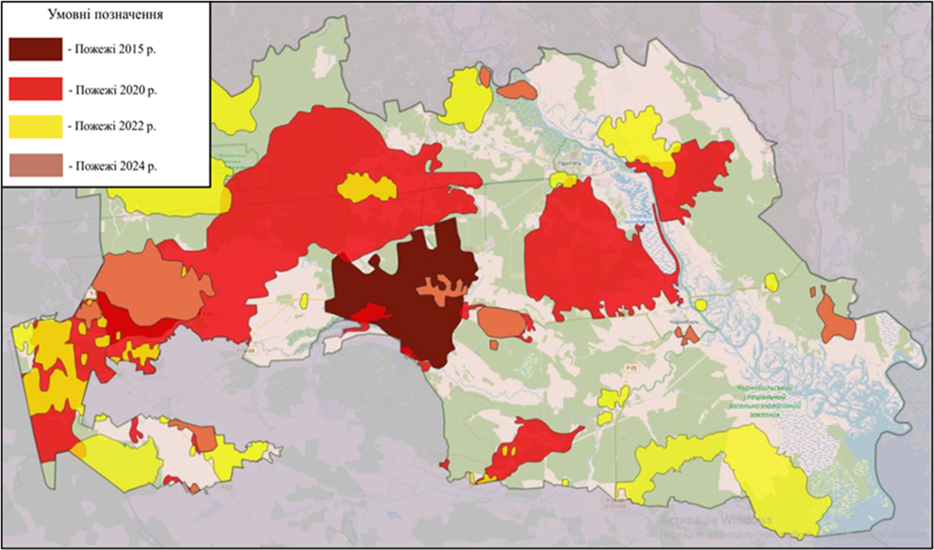
Map of the spread of large-scale fires in the Chornobyl exclusion zone in 2015–2024 (based on NASA data, visualization by Ecocenter)
Forests damaged by fire create conditions for the development of new, even larger fires. Radioactivity concentrated in ash on the soil surface is prone to rapid leaching by precipitation.
This can become a significant local source — and in the case of large-scale fires like those in 2020, a regional source — of radioactive contamination of surface and groundwater, with unpredictable consequences for drinking water sources of the Kyiv agglomeration and the cascade of Dnieper reservoirs. This will require expanded radiation monitoring of both surface and groundwater.
The situation is further complicated by wartime conditions. Large areas are mined, limiting access to fire zones and making full preventive measures impossible. This leads to delays in response and increases the scale of potential fires.
In addition, fires may pose risks to radioactive waste management infrastructure and may affect the defense capacity of border areas.
The problem is systemic. In recent years, hundreds of fires have been recorded, some accompanied by significant releases of radionuclides into the environment. Therefore, not situational solutions but a comprehensive state policy is needed in this area.
Permanent danger: which radionuclides still contaminate the zone
— The radiation norm for the population is up to 0.3 microsieverts per hour. What are the highest levels you record in the Chornobyl zone?
— That 0.3 microsieverts is a conditional norm. There are places, not only in Ukraine, where the natural background is significantly higher, including in Polissia.
High levels are recorded around the industrial site of the Chornobyl Nuclear Power Plant and along the fallout traces of radionuclides:
- the average dose rate at the station’s administrative and utility building (APK-1) is about 0.4 μSv/h
- at the oil depot — 4.5 μSv/h
- at water intake station No. 2 — 4.9 μSv/h
- at the spent nuclear fuel storage facility (ISF-1) and the fire station — nearly 2 μSv/h
- at the spent nuclear fuel storage facility (ISF-2) — 0.2 μSv/h
- at the exit checkpoint “Dytyatky” — 0.09 μSv/h
— Which radioactive elements still contaminate the zone? Which will decay soon, and which will remain for thousands of years?
— Radioactive substances have half-lives ranging from seconds to thousands of years. Cesium-137 decays over 30 years, strontium-90 over 28 years. That means their amount has already been halved compared to immediately after the accident.
However, long-lived plutonium and americium isotopes remain. For example, plutonium-239 has a half-life of 24,000 years.
Contamination in the exclusion zone is patchy. Radionuclides emit alpha, beta, and gamma radiation (gamma is the most dangerous for external exposure; protection requires distance or barriers such as lead or concrete). These particles shape the radiation conditions in the zone.
— 24,000 years is essentially eternity on a human timescale. Can this zone be considered permanently dangerous?
— It is currently believed that for cesium-137 and strontium-90 levels to return to pre-accident values, about 10 half-lives must pass — roughly 300 years.
These radionuclides define current contamination levels; their amounts will decrease over time, but plutonium isotopes will remain. Much depends on national radiation safety standards.
Civilian residence is prohibited in areas where plutonium contamination exceeds 3.7 kBq/m². However, personnel are allowed to work there under strict radiation safety regulations. Staff undergoes training, briefings, and safety instruction.
Chornobyl under fire: How the war has changed the level of threats in the exclusion zone
— What are the biggest dangers you are facing in the zone now?
— These are military actions from our so-called brothers. It is not enough to call them terrorists… They violate all international norms and have seized nuclear facilities. And it is not only about the occupation of the Chornobyl Nuclear Power Plant, but also the Zaporizhzhia Nuclear Power Plant. It is unclear what kind of “training” is being conducted there.
Who would even think of launching a Shahed at the New Safe Confinement over the plant? It was built by the international community with the expectation that it would protect against radiation for 100 years. And what now?
Emergency measures were, of course, carried out at the plant, but the confinement will no longer last a century.
— In February 2025, a Russian Shahed hit the arch over reactor No. 4. How close were we to a second Chornobyl that night?
— The drone struck the New Safe Confinement at a point beneath which there is a sealed area. It was planned that in the coming years, a special crane would dismantle the debris left after the accident there.
If the strike had been slightly to the left or right, it would have hit other sections and caused a release of radionuclides. Given the meteorological conditions at the time, the radiation would have moved toward Belarus.
We have stationary monitoring points near the plant that track the near-surface air layer. We also deployed a mobile laboratory, took samples, and analyzed everything — the readings did not exceed the norms established for the plant’s industrial site.
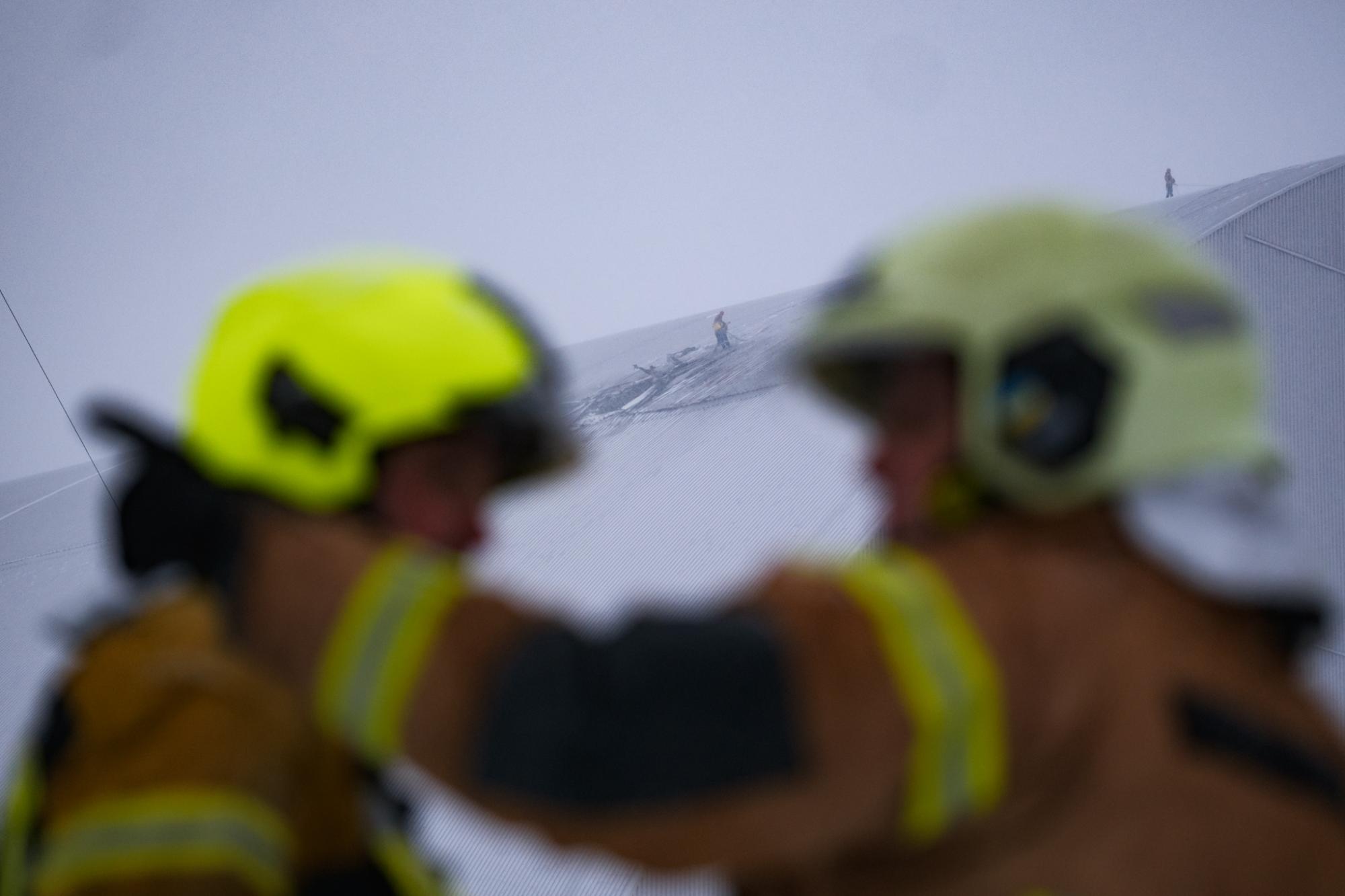
Consequences of the Russian attack on the New Safe Confinement of reactor No. 4 at the plant in February 2025 (photo: Vitalii Nosach/RBC-Ukraine)
— In the event of major damage to the confinement, could radioactive substances be released?
— Before the drone attack, we had calculated different emergency scenarios in the exclusion zone. Three main scenarios were considered.
The first was large-scale fires in contaminated areas. The second involved hydrological emergencies, when high water floods contaminated zones.
The third was a possible accident at the plant site or at another radiation-hazardous facility, such as radioactive waste burial sites.
For each case, we developed countermeasures and response plans. And then suddenly — a drone attack. Now we must assume that as long as the war continues, Russia could strike a radiation-hazardous site. Previously, this was considered unrealistic, but now it has become a reality.
A similar situation exists at the Zaporizhzhia plant. I am surprised by the position of countries that have not concluded either from Chornobyl or from the Fukushima disaster.
They do not understand that if a radiation release occurs in Ukraine, it will spread to Europe. We proposed to the UN in 2022 to deploy forces and push Russian troops out of the plant area. From the International Atomic Energy Agency, we only hear expressions of concern. Meanwhile, we live under constant air raid alarms, drones, and missiles.
— The last reactor at the plant was shut down in 2000. What is the staff doing there now?
— The plant is currently in the decommissioning stage. Personnel are decommissioning three functional reactors and managing radioactive waste.
— Nuclear waste is now being moved to the new storage facility SFSF-2. Does this affect radiation levels?
— Part of the spent fuel assemblies removed from reactors is being transferred from the old storage facility SFSF-1 to the new one.
They are hermetically sealed in special containers and moved to dry storage technology. The entire process is closely monitored by IAEA experts, but regular Russian attacks put this critically important operation at risk.
— The Chornobyl accident was the largest nuclear disaster in the world. Could a similar tragedy happen again?
— Reactors of the RBMK-1000 type that were used at Chornobyl no longer exist in Ukraine. However, no one is fully insured against such accidents. After Chornobyl, there was Fukushima in 2011. Of course, the causes were different.
All activities in the exclusion zone are aimed at minimizing the spread of radioactive materials, managing radioactive waste, decommissioning the plant, and protecting nature.
This is a unique scientific testing ground. Apart from Japan, no other country has such experience. It must be studied so humanity understands how to prevent nuclear disasters and what their consequences can be. Some countermeasures used at Chornobyl later proved ineffective.
In 2021, Germany’s Federal Office for Radiation Protection conducted training here. We selected several sites with different contamination levels. For them, it was real practical experience in radiation reconnaissance, not artificial calibration of dosimeters.
In addition, Chornobyl allows the study of radiobiology and radiogeochemistry to assess impacts on living organisms. It is a vast field for research.
Radiation contamination in the zone has a patchy nature (photo: Getty Images)
— 40 years after the accident, is Chornobyl still a “territory of death” or already a “zone of hope”? When will people be able to live here again?
— Life in the zone exists — personnel work here, self-settlers live here, nature is recovering. To return people here, it is necessary to study how the environment will affect a human. Will families with children want to live here and not go to the forest for mushrooms, not swim in rivers? The question is, of course, rhetorical.
For the population, there must be infrastructure here: roads, a medical point, shops, businesses, etc. Production or agriculture must function so that people have jobs. We will no longer return to what it was like here before the accident...
— Why then has the population of wild animals increased in the zone, including those listed in the Red Book? Doesn’t radiation critically affect them?
— Nothing is surprising in this. Previously, people collected mushrooms and berries in these forests and harvested firewood. After 1986, human pressure decreased here, so nature recovered.
Heroes of that time: from the first days of liquidation and 40 years of work in the exclusion zone
— You were among those who were the first to measure the radiation threat after the accident at the Chornobyl nuclear power plant, and you have been doing this for 40 years. Do you remember how you learned about the catastrophe?
— On April 27 or 28, my then supervisor called me. The day before, his colleague from the laboratory of the Institute of Nuclear Research went to the Chornobyl nuclear power plant; however, near the village of Kopachi, the police turned him back, although he had a permit for passage.
When he returned to Kyiv, he shook dust off the car to check it in the laboratory. Already at the entrance, the devices detected radiation and started beeping.
When he carried out measurements on the detector, he saw a whole spectrum of radionuclides. He called my supervisor with the words: “It seems something happened that we cannot even imagine”...
— As a radioecologist, you understood the nature of the threat much better than the party leadership. Did you take your family away from Chornobyl?
— At that time, my wife was pregnant, so I temporarily took her from Kyiv to her parents in the Kirovohrad region.
— In the first weeks after the explosion, no one knew exactly what they were dealing with. What did this work “blindly” look like?
— I got to the Chornobyl zone on May 3 or 5. I was engaged in assessing the radiation situation. The task of the first months was to identify where there is radiation contamination, determine its boundaries, how dangerous it is, and what to do further.
Now we are so smart and say that some things should have been done differently… But no one expected such an accident. Despite the fact that there were quite competent people, they proposed different approaches. Only when we received materials on contamination did a real picture emerge of what to do next.
In the monitoring system, objects are divided into fast and not very fast. Fast ones are the content of radionuclides in the near-surface layer of air and surface waters. Here, it is necessary to react in such a way as to timely provide proposals for management decisions that minimize the impact of radiation on humans and the environment.
Another situation is with groundwater, soils, and wood. In these environments, migration and accumulation of radionuclides occur slowly. Here, it is not necessary to take samples so frequently. But then we took everything. In some places, decontamination was carried out, while contaminating others.
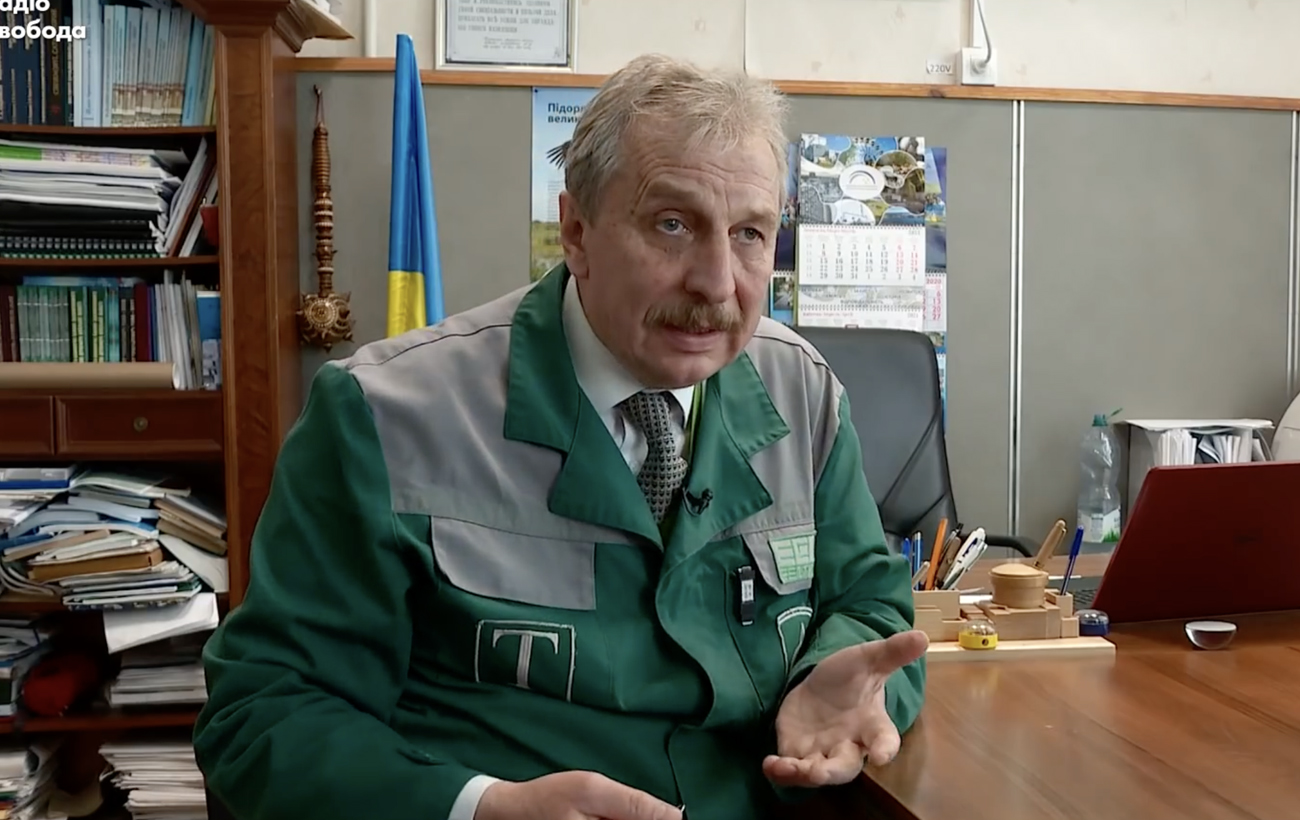
Serhiy Kireev has been working in the exclusion zone for 40 years (screenshot from a Radio Liberty video)
— What impressed you most in those first days of liquidation?
— I remember how we arrived in Chornobyl, and there it is spring, everything is green, the sun is shining, but apart from dogs, police, and several liquidators, there is no one. In nearby villages, the same picture, although at that time not everyone had yet been evacuated from the zone.
— Did the liquidators have fear of the “invisible danger”?
— Those I worked with had no fear. We were ready to work with radiation and understood the potential risks. The dose depended on how long we stayed in the contaminated territory and on elementary rules of behavior. We had respirators, special clothing, and footwear. Despite this, I received a dose of radiation.
— Official figures often tried to “smooth over” the consequences of the tragedy. You saw the real picture from the inside: how many of your colleagues-liquidators paid with their health while eliminating the consequences of the Chornobyl catastrophe?
— Out of 250–300 employees of our enterprise who witnessed the events of 1986, about 120–150 people have already died from various causes, not only related to radiation.
— In your opinion, how effectively did the USSR cope with the consequences of the catastrophe at the Chornobyl nuclear power plant?
— They concealed everything they could. We even had a laboratory where radiation was measured, locked with a code lock. By a special order, people were defined who could enter there.
However, the Soviet Union built a sarcophagus over the destroyed reactor in 7 months. The project was developed practically “on the knee.” Maybe something was done incorrectly, but it was built.
— There are many tragic pages in the history of Ukraine. Sometimes one can even hear that it is enough to cry over the past. Why should Ukrainians and the whole world remember the Chornobyl catastrophe?
— It is impossible to forget the accident at the Chornobyl nuclear power plant. How many people were resettled, and how many lost their health during the liquidation. People who eliminated the consequences of the catastrophe are heroes of that time. Everyone worked to overcome the “atoms for peace.” It turned out that it came into every home.