From car sharing to combat: How Estonian startup reshaped Ukrainian battlefield

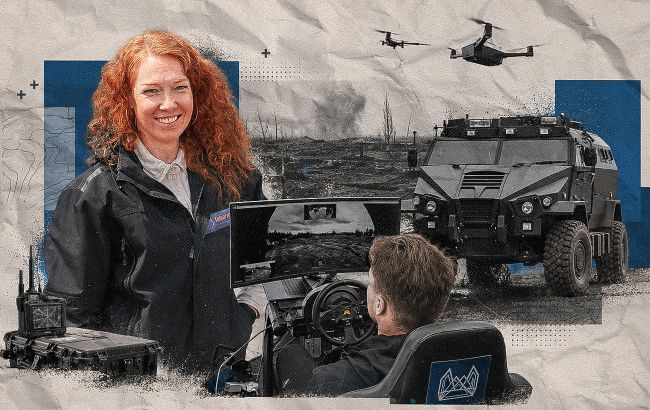 Photo: Tuuli Tolmats-Aija (RBC-Ukraine collage)
The remote vehicle control technology developed by the Estonian company Telearmy, which Uklon demonstrated in May 2026, has evolved from a civilian car-sharing solution into a battlefield system used on BRDM armored vehicles and Humvees, in cooperation with the General Staff of the Armed Forces of Ukraine.
In an exclusive interview with RBC-Ukraine during the Defence Builder Accelerator event, Telearmy COO and co-founder Tuuli Tolmats-Aija spoke about the company's cooperation with Ukraine's General Staff, the combat use of remotely operated vehicles, and why she believes the technology has applications far beyond the defense sector.
Key points:
- Estonian company Telearmy equips conventional vehicles and armored vehicles with a remote driving system. The vehicle itself is not modified—only cameras, sensors, communications equipment, and software are added.
- The technology is already being used in the civilian sector (taxis, car sharing in Estonia, and a pilot project with Uklon in Ukraine). On the battlefield, it is used for logistics and evacuations without putting people in danger.
- Telearmy sees remote driving as the first step toward full autonomy. The technology is already ready for deployment today, while AI and autonomous capabilities will be added gradually over time.
The technology, the company, and its partnership with Ukraine
– Tell us about your technology. How did it all begin, and how did your partnership with Ukraine develop?
– At Telearmy, we make any vehicle remotely operable. It can be either a military or civilian vehicle. The company was founded in 2020, and we initially focused on the civilian market.
Over six years of development, our team adapted the technology for nine different vehicle types and deployed it across four industries. But when the war in Ukraine began, we also wanted to help, so we expanded into the defense sector.
Today, we work with leading military units, including the General Staff of the Armed Forces of Ukraine and the ASD unit, with whom we adapted the technology for the BRDM armored reconnaissance vehicle. We have also begun working with Uklon in Ukraine's taxi industry.
We publicly announced that partnership a couple of weeks ago. It's an exciting step toward autonomy. But remote driving itself is already mature, deployment-ready, and safe.
As for autonomy, it isn't there yet. That's why we believe remote driving is the right first step before deploying autonomous vehicles on public roads or battlefields. Later, we will gradually add AI layers and increasing levels of autonomy as the technology matures.
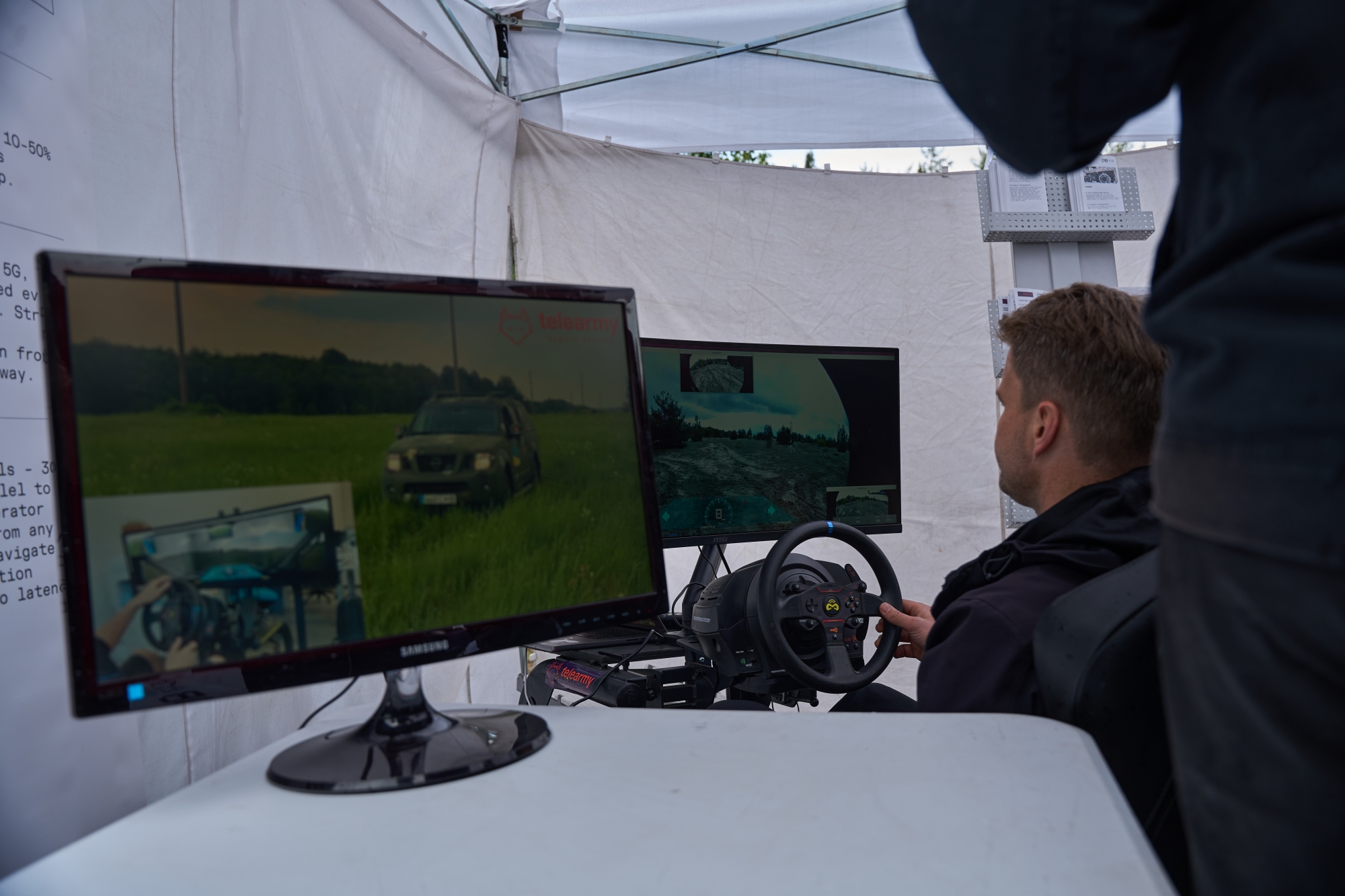
Photo: Remote vehicle operator (Defence Builder)
– How is the technology currently being used in Estonia?
– In Estonia, we use it for car sharing and taxi services. We have authorization to operate on public roads at speeds of up to 50 km/h, which is standard city speed, and the permit has no geographic restrictions. Both the vehicles and operators are certified, so there is no safety driver or anyone physically present inside the vehicle.
Deployment scale and competing with Tesla
– How many vehicles currently use your technology?
– I can't provide an exact number.
– Tens? Hundreds?
– We're moving from dozens toward hundreds. That's the most precise answer I can give.
– Do you compete with Tesla?
In terms of the use case, yes. But not in terms of readiness.
When it comes to autonomy, today's autonomous systems still cannot handle every possible situation. They're also extremely expensive, and autonomous vehicles cannot safely operate at high speeds.
Remote driving, on the other hand, always stays connected because we simultaneously use multiple communication networks—Starlink, radio communications, and LTE—so the vehicle remains connected even if one network fails.
The system can operate at any speed. One of our operators has reached a personal record of 157 km/h, while the record distance between the driver and the vehicle is 4,300 kilometers. It's also already legal to operate on public roads. That's why we believe remote driving is the right first step today.
Read also: Electric pickup alternatives, amphibious vehicles, and AI: Where Ukraine's ground drones are headed
Operating multiple vehicles, Europe, and the battlefield
– Can one remote driver operate only one vehicle, or switch between multiple vehicles?
– From a single control station, one operator can switch to any configured vehicle without limitations. I could switch between ten different vehicles if I wanted to. On the battlefield, for example, after completing one mission in one region, I could immediately connect to another vehicle in another region and continue the next mission.
At the moment, however, an operator controls only one vehicle at a time. This summer we're launching a very exciting project that adds autonomous capabilities. Then I'll be able to instruct one vehicle to drive autonomously from point A to point B while I take control of another vehicle and complete another mission. At that point, one operator will effectively manage multiple vehicles simultaneously.
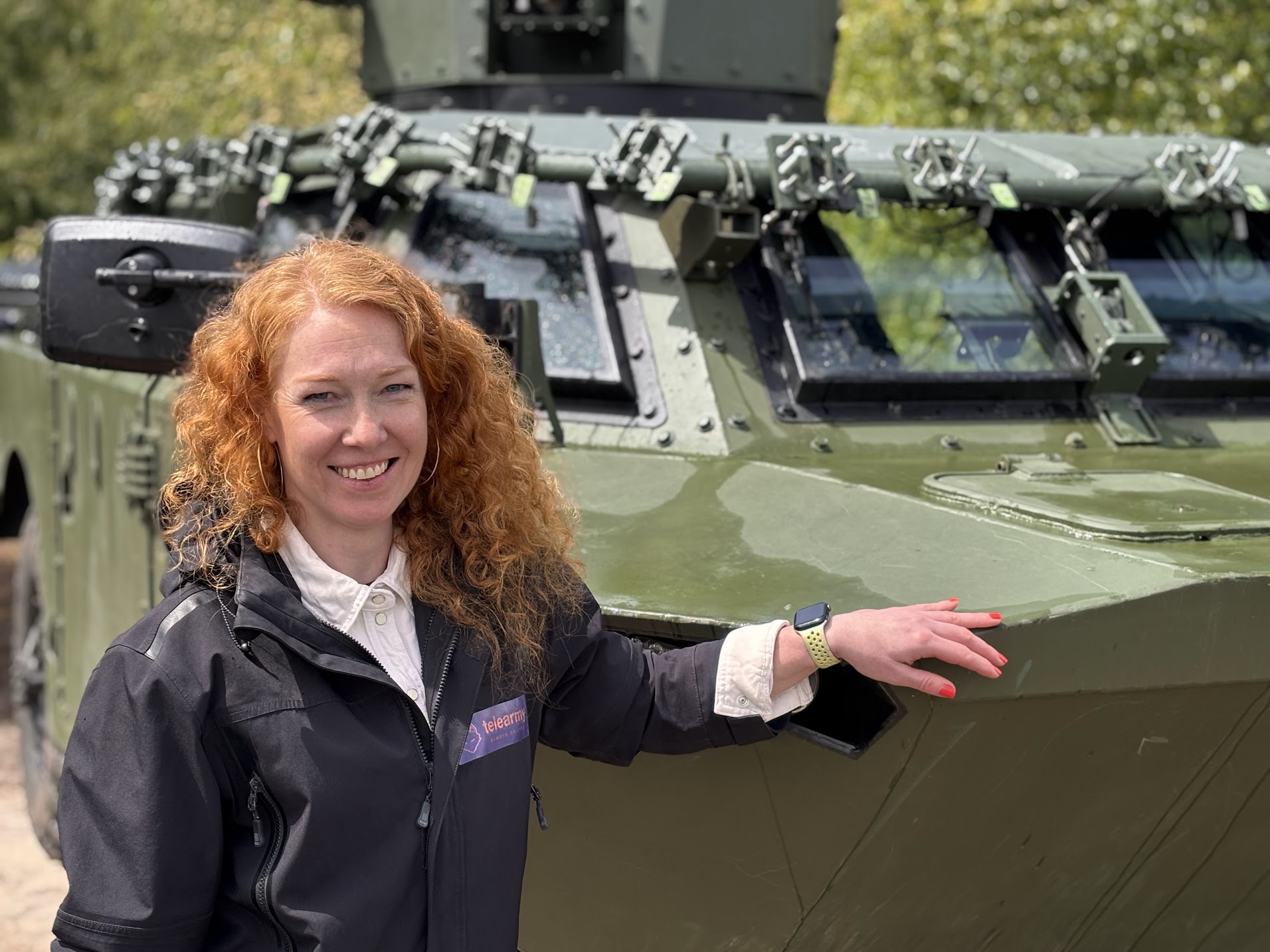
Photo: Tuuli Tolmats-Aija (Lev Shevchenko, RBC-Ukraine)
– Is Ukraine your only market, or are European countries also interested?
– Europe is showing tremendous interest. Germany is a very important and active market for us. We've already completed our first deployment there, and some major developments are coming.
– Is the technology already being used on the Ukrainian battlefield? When did that begin?
– Yes. It's already operating on the front line. We conducted our first field tests about two years ago.
The main battlefield applications are logistics and casualty evacuation without exposing personnel to danger. If you combine remote driving with remotely operated weapons, you essentially create a fully unmanned combat platform capable of entering dangerous areas and engaging the enemy without any soldiers onboard.
The system is already compatible with a wide range of vehicles, including BRDM armored vehicles, Humvees, Toyota Hilux and Nissan Navara pickups, and smaller UTVs.
Another application is mobile decoys. Instead of stationary fake military equipment, remotely operated moving decoys can be deployed.
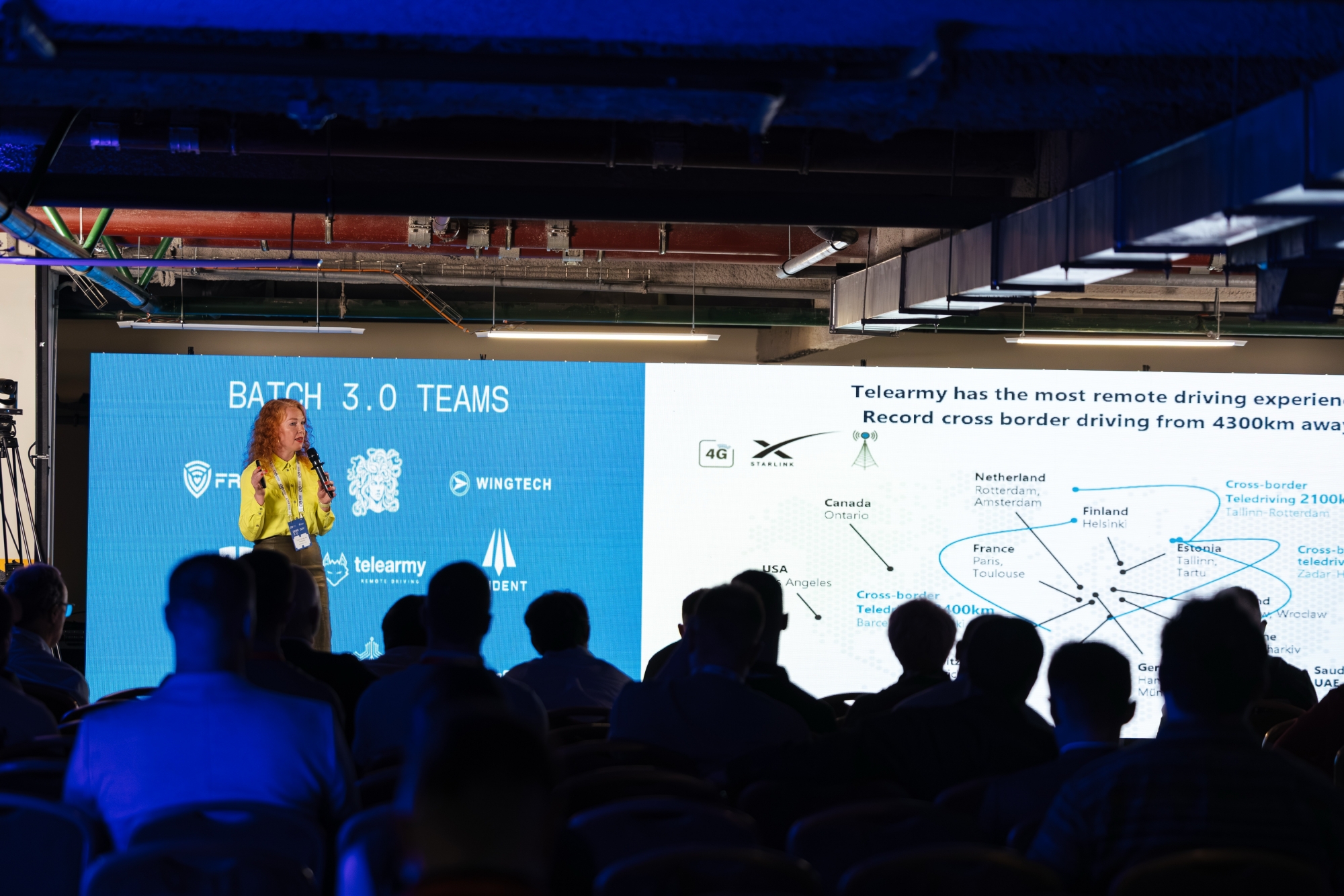
Photo: Tuuli Tolmats-Aija (Defence Builder)
Future of the technology, veteran drivers, and the cost of the control station
– What do you see as the future of this technology in both civilian and military applications?
– On the battlefield and throughout the defense sector, preserving human lives is absolutely critical. We believe we're entering an era of widespread adoption of electric vehicles equipped with remote driving capabilities.
I believe this trend is critically important and will accelerate very quickly. That's my personal expectation, and I'm already seeing strong demand.
In the civilian sector, Ukraine's decision to publicly announce its move toward this technology was strategically significant in itself. I expect other major players to follow.
The applications go far beyond taxis. The technology will also play an important role in agriculture, logistics, mining, and many other industries.
– During your presentation, you mentioned that veterans could become remote drivers.
– Yes, and I'm genuinely excited about that opportunity.
Among the first four drivers we trained for Uklon was a war veteran who lost both legs and operates the vehicle using hand controls instead of pedals.
That same veteran also drove during our demonstration day for government officials and other guests, transporting everyone using the same hand controls. He's an excellent driver with incredible determination.
This technology allows him to continue contributing to Ukraine's defense and remain active despite his injuries. That's exactly what he wants—and exactly what this technology makes possible.
– One final question: Can you disclose the price of the control station?
It depends on both the type of vehicle and the control station configuration. I always recommend contacting us directly for a customized price estimate.
Quick Q&A
– What is Telearmy technology, and what is it used for?
It is a system that allows cars and armored vehicles to be operated remotely, enabling the driver to be thousands of kilometers away. It has both civilian applications (taxis, car sharing, logistics) and military uses (evacuation, supply missions, and combat operations without personnel inside the vehicle).
– Can one operator control multiple vehicles at once?
Currently, an operator controls one vehicle at a time but can switch between multiple vehicles from a single station without restrictions. The company is developing autonomous capabilities that will allow one vehicle to navigate independently while the operator controls another.
– Which vehicles are already compatible with the system?
The technology has been adapted for BRDM armored vehicles, Humvees, Toyota Hilux and Nissan Navara pickups, as well as smaller UTVs. Another application involves mobile decoys that replace stationary mock military equipment.
– Can people with disabilities operate these vehicles?
Yes. Among the first trained operators was a war veteran who lost both legs and drives using hand controls instead of accelerator and brake pedals. The technology enables veterans with severe injuries to remain active both on the battlefield and in civilian professions.