'Better not to deal with Russia': Hungary's Ambassador Shandor on Budapest's shift


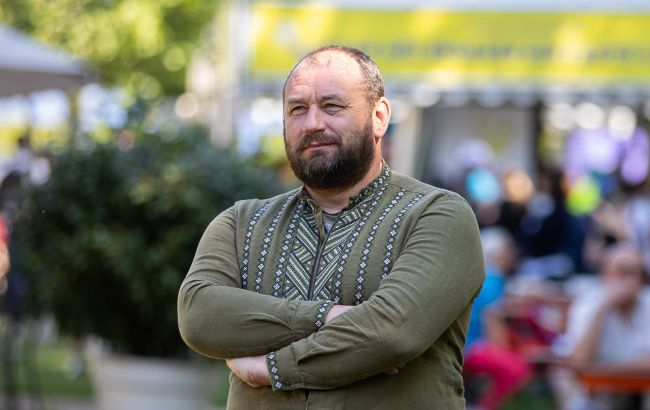 Photo: Fedir Shandor, Ukraine's Ambassador to Hungary (flickr.com)
The change of government in Budapest has already given a new impetus to relations between Ukraine and Hungary. However, a full-fledged meeting between Volodymyr Zelenskyy and Péter Magyar has yet to take place due to both leaders' busy schedules.
Read the full interview with Ukraine's Ambassador to Hungary Fedir Shandor for RBC-Ukraine on unblocking Ukraine's EU integration, the investigation into the cash-in-transit case, and defense cooperation.
Key points:
Clearing out Russian disinformation: Anti-Ukrainian narratives have disappeared from Hungary, while criminal investigations are being prepared against those behind them.
Give the new government at least 100 days: It is too early to judge the new administration, which has been in office for too little time and is simultaneously tackling several domestic problems.
Defense cooperation: Hungary is providing rehabilitation for Ukrainian soldiers, civilian demining, and drone-related knowledge exchange.
Logistics bypassing blocked ports: Kyiv and Budapest have begun removing bureaucratic obstacles to the resumption of Ukrainian grain transit.
The cash-in-transit case: The money and vehicles have been returned to Ukraine, deportations have been canceled, and the remaining step is to hold those responsible accountable, including among the former Hungarian leadership.
With Péter Magyar coming to power in Budapest, political tensions have fallen sharply. Ukraine’s Ambassador to Hungary Fedir Shandor openly acknowledges this, adding that Russian intelligence services, which assisted Viktor Orbán, were largely behind the political tensions and demonization of Kyiv.
"Hungarians have learned an excellent lesson: it's better to have nothing to do with the Russians because they will only cause harm," the diplomat told RBC-Ukraine.
The Orbán era has come to an end. Constitutional amendments adopted by the new parliament have made it impossible for him to return to the prime minister’s office. More importantly, Hungary’s political system is undergoing a sweeping purge of personnel appointed under the previous regime.
Péter Magyar also needs to rebuild constructive relations with Brussels and Hungary’s neighbors, which his predecessor damaged. That is why Fedir Shandor urges against making an issue of the fact that Budapest has yet to unblock the opening of four negotiating clusters on Ukraine’s EU accession — the new government should be given at least 100 days.
Despite this, on issues ranging from Hungary’s ethnic minority in Ukraine to sanctions against Russia and many other areas, Magyar’s government is showing unprecedented openness. Moreover, Kyiv and Budapest are now discussing new areas of cooperation that were impossible under Orbán.
— What changes have you observed in the atmosphere in Budapest since Péter Magyar’s victory?
— "Atmosphere" is a good term. Indeed, the temperature has dropped — both subjective and objective factors heavily heated it. The objective factor was the election, which we understood, while the subjective factor was the direct involvement of various Russian networks.
This ranged from intelligence operations to Russia’s standard tactics: smear campaigns, advertisements targeting Ukraine’s top leadership, and things that had never happened in the history of Hungarian elections — so-called "titushky" (agent provocateurs - Ed.) in the city of Győr.
Today, we are seeing not just a sharp decline but the disappearance of anti-Ukrainian narratives from the media. Moreover, criminal investigations are now being prepared against those responsible for creating these anti-Ukrainian narratives, including narratives targeting not only the Tisza Party.
Following the election, Hungary is predictably reforming and transforming processes that had become entrenched in the system over 16 years. At the same time, the new government has faced certain unforeseen difficulties, such as falling water levels in the Danube, which require constant attention. And all we can and should do now is assist our neighboring country if it needs our help.
This government has been in power for only 80 days. Give it at least 100 days to work, and then we can assess its performance.
— Has access to government offices in Hungary changed? I mean not only the Foreign Ministry, but perhaps other ministries as well. What about the media?
— We never had problems with the media, even during periods of tense political relations. Journalists who respect their profession and adhere to its code of ethics have always stayed in contact with us.
We now hold a monthly meeting of experts and journalists at the embassy, where we discuss pressing issues in Ukrainian-Hungarian relations. It has been operating for a year and a half.
As for access to government structures, it is clear that the ministries are now being reorganized. The number of contacts has dropped sharply because new people have taken over. But in the key areas where we had the greatest need, everything has already been restored, and we have good, renewed contacts through which issues raised by the Ukrainian government are resolved quickly.
In addition, new ministries have been created where we previously had no contacts at all, and we are now gradually establishing them.
As I said, the post-election period in Hungary is characterized by major changes, so establishing a full-fledged dialogue will take time.
— Ukraine and Hungary have already developed an action plan, generally within the framework of European integration, covering the rights of the Hungarian and other minorities. It is based on the 11 points originally put forward by Orbán. This was one of Magyar's conditions for unblocking Ukraine’s EU integration. But why does Budapest still block the opening of four negotiating clusters?
— The two sides have taken steps to resolve the outstanding issues and establish a full-fledged dialogue. An important factor here is the mood of Hungarian society, which must be taken into account.
First, 2.5 million voters supported the Fidesz party. That means Fidesz’s narratives and appeals worked. Second, questions concerning the Hungarian community in Ukraine had been raised for far too long. A huge number of myths were created about alleged discrimination that did not actually exist.
Given these factors, I would highlight the positive momentum. Just imagine: since 2017, we had been meeting and resolving nothing. Now, after just one month of work by the expert consultation commission on the so-called 11 points, we have achieved what we could not achieve in almost 10 years. So we can state that there is mutual openness to dialogue and an intention to resolve the outstanding issues.
In September, amendments concerning points 1–5 of the first part will be incorporated into Ukrainian legislation. But those points contain further points, and those contain subpoints, so they cannot really be called "11 points." Moreover, they overlap with one another.
In practice, points 6 through 10 are to be agreed upon and implemented by May, while the 11th has been submitted for consideration by the relevant expert councils in accordance with the appropriate procedures because it concerns parliamentary representation.
This is actually happening at turbo speed. They are studying the points, and anything they understand clearly is immediately sent for approval.
Look at the fact that Hungarians have not opposed the introduction of sanctions for quite some time. That is a positive development — the veto has been lifted. Sanctions against Ukrainian media have been lifted. Work is being prepared to restore commissions that have not functioned since 2020, 2017, or 2008.
 So, in reality, everything is moving very quickly. The first basic cluster has been opened, as well as the sixth. I don’t want to get ahead of ourselves, but I think we will still see some actions this year that will pleasantly surprise us.
— Our government has also changed, including the minister of education and science. Could this affect the pace of implementing the plan?
— I really liked the president's address to diplomats about the subjective factor in the modern world. When there are masses of media, and you can get lost in deciding what to read and whom to believe, the subjective factor becomes more obvious, and you need to rely on official sources.
The new minister, Andrii Butenko, worked with the Ukrainian Embassy in Hungary. It was specifically under him that positive communication took place with agencies regarding licensing and accreditation. A seminar and consultations on coordinating higher education policies were held at the embassy.
So I think we will have a lot of new communication.
— Magyar's position on military aid to Ukraine is well known: he remains opposed to it. But is there at least an interest in Budapest in studying Ukraine’s military experience or pursuing mutually beneficial defense projects?
— Hungarians are among the world leaders in demining, which they are doing in Ukraine, although through many NGOs — we don't know about all of them.
The second point is that we have opportunities to exchange information in areas where we are particularly strong. That exists, including in the form of drone deals.
There is also rehabilitation for soldiers, which they are providing. Right now, as I am giving you this interview, more than 100 of our soldiers who have lost upper or lower limbs are undergoing treatment, rehabilitation and the fitting of biodynamic prostheses.
Hungary is a world leader in this field. This is something they know how to do. Their rehabilitation and medical expertise are important to us because, unfortunately, many of our soldiers have suffered these kinds of injuries. There is also one of the rehabilitation schools that studies post-traumatic conditions and works directly with the psychology of post-traumatic stress among military personnel — the Hungarian school of psychology.
So these two areas — civilian demining and rehabilitation — are extremely important.
— So has interest in defense cooperation emerged after all?
— Absolutely. Hungary is a NATO member, and I think cooperation with NATO will crystallize its military relations with us.
— You mentioned the Danube ports. Have you discussed with Hungary’s new government the possibility of transporting Ukrainian grain around the blocked ports of Greater Odesa?
— We have already started. We are fixing some shortcomings that date back 30–35 years and are trying to remove specifically bureaucratic rather than technological obstacles rapidly.
It comes down to signatures from specific officials so they can authorize the grain corridor to operate. The work is underway.
— When can we expect some results?
— It is difficult to predict. This period coincides with the vacation season. That is why we are pursuing several different avenues.
In fact, the grain route has begun operating gradually, although not on a mass scale. And Hungary is the most logistically convenient country for us. It has highway connections, both standard and narrow-gauge railways, and hubs where various types of cargo can be accumulated. So we are already working.
— In one of your recent interviews, you said you expected the Ukrainian-Hungarian economic commission to resume its work. It has been inactive since 2020. What progress has been made, when could it resume, and what should it achieve?
— Even the previous Hungarian government appointed a person responsible — that was Péter Szijjártó, while on our side it was Taras Kachka, the former deputy prime minister for European integration. Just a month before the election campaign began, they literally said, “Let’s do it.” And obviously, there was no communication because the hot phase of the war was underway from February to April.
There are still no officials appointed — who will be responsible on the Hungarian side and, now, who will be responsible on the Ukrainian side. Our government has also changed, so certain bureaucratic issues are simply delaying the process.
— What about the incident involving Ukrainian cash-in-transit workers detained under the Orbán government? Has the case been fully resolved?
— It is 95% resolved. The remaining 5% is punishing those who committed this terrorist crime. Under international standards, this constitutes terrorism against, in this case, the financial sector and individuals. It is a crime because the people were injected with various tranquilizers — Russian intelligence was behind it. There was an attack on people, humiliation of their dignity, physical harm, and damage to vehicles.
The people have now been returned, the vehicles and financial assets have been returned, and the deportation orders against those involved in the transportation have been canceled.
Read also: 28 hours in handcuffs and a forced injection: Details emerge about Ukrainians’ detention in Hungary
A new phase has now begun, and the Hungarian side is very active in this, even more active than the Ukrainian side. It wants to remove the reputational risks inflicted on its banking sector.
Essentially, piracy took place on Hungarian territory, and the state failed to control it — and, on the contrary, facilitated it. Tomorrow, some Hungarian vehicle could be seized in Slovakia or Poland. That violates every rule.
I think we will hear the names of some extremely high-ranking people who personally issued the orders. Even officers did not want to carry them out.
— Has the Orbán era finally ended? Or could he still have a political future?
— In June 2026, Hungary’s parliament adopted a constitutional amendment limiting the time a person can serve as prime minister to a maximum of eight years — two four-year terms. The rule applies in general, including when terms are interrupted, effectively closing the door for former longtime Prime Minister Viktor Orbán to return to office.
— More broadly, has Hungary stopped being an outcast and a problem for Europe?
— It never was. It was specific individuals. Hungary clearly demonstrated that the election was democratic, despite all the expectations that the Russians might try to interfere.
I think if they had seen an opportunity to do so, they would have. But the Russians saw that society had said: “That’s it. It’s over.”
Historically, the Russians tried to destroy the Hungarians not only in 1956, but also in 1848–1849 during Kossuth’s revolution, and in 1944. Everywhere the Russians encountered Hungarian history, they caused harm. And this time was no different.
Nothing has changed. And nothing will. Hungarians have learned an excellent lesson: it is better to have nothing to do with the Russians because they will only cause harm.
— Finally, I would like to ask you, as an ethnic Hungarian: what changes are taking place in the Hungarian community in Zakarpattia?
— The Hungarian community is no different from the Ukrainian community. There is mobilization in Ukraine, as you know, and this is connected with certain media issues. There are psychological fears related to bombardments — Zakarpattia has also been bombed, and it is not a vacation destination.
Certain types of businesses have disappeared, such as craft production, which people had focused on — paprika, tomatoes, craft cheese and beer production, festivals and tourism. Hungarians were engaged in these activities, growing products and supporting entire families. There is still demand, but it is not the right time because of the war.
If you have to choose between a safe life and tourism or craft production, of course, you choose safety.
That is why there has been a sharp decline in the population of villages and the closure of many grant programs from Budapest. This has made the community less active than it was before. It lives in the same social environment as all other ethnic communities — Romanian, Slovak, Czech and Ukrainian. The Hungarian community is no different from the others.
— Has the community become more optimistic about Ukraine-Hungary relations?
— There is a particular feature here. According to statistical data, all communities without exception — Slovak, Croatian, Romanian, Ukrainian and Serbian — voted for Fidesz.
At the same time, there was a financial aspect, and a great many abuses by the previous government were documented — and these facts have already been proven.
The Hungarian government is conducting diplomatic work with its communities abroad very carefully and subtly, for objective reasons.