Russia boosts Kh-101 and Kalibr production fivefold during war against Ukraine

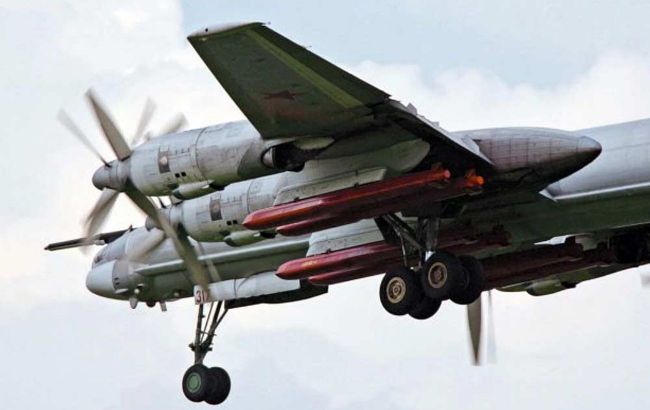 Photo: Kh-101 cruise missile (Russian media)
Russia has increased production of conventional subsonic cruise missiles five- to sixfold during its full-scale war against Ukraine. It receives some equipment, engines, and even carbon fiber for drone bodies from China, Ivan Kyrychevskyi, a serviceman with Ukraine’s 413th Raid Unmanned Systems Regiment and a weapons expert at Defense Express, said to RBC-Ukraine.
What Russia gets from China and how many missiles it produces
Kyrychevskyi noted that many components for Russia’s jet-powered drones come directly from China, including equipment, engines, and even carbon fiber for their bodies. He suggested that Russia’s strategy of scaling up its long-range drone warfare may rely on China acting as an “older brother” willing to supply industrial equipment to the extent of its capabilities.
At the same time, he said Russia had not faced major industrial problems that would have prevented it from scaling up production.
As of 2021, Russia’s industrial capacity was limited to up to 120 Kalibr missiles per year and roughly the same number of Kh-101 missiles. Today, according to Kyrychevskyi’s estimates, Russia produces around 60 Kh-101 missiles per month, with Kalibr production at approximately the same level.
This means Russia has increased its output of conventional subsonic cruise missiles five- to sixfold during the five years of its full-scale war.
Kyrychevskyi noted that, despite the temptation to assume Russia can no longer manufacture weapons effectively because it lost capabilities after the collapse of the Soviet Union, the evidence so far does not support that view. If anything, it suggests the opposite.
What remains of Russia’s Soviet-era weapons development
According to the serviceman, Russia’s land warfare capabilities were the quickest to deteriorate after 1991. He cited tanks as an example: newer T-80 tanks were among the first to be removed from storage for disposal because they were easier to access. As a result, older T-62 and T-55 tanks became the most numerous types available to Russia before the full-scale invasion.
Missile weapons followed a different trajectory, he said. Development of the Iskander began in the 1980s, but the system did not enter service until the 2000s. Work on the Kh-101 began in the late 1980s, and the missile entered service in 2013. The Su-34 aircraft was first unveiled in 1992.
Kyrychevskyi also mentioned a somewhat conspiratorial theory about the Kalibr missiles. According to this theory, under arms-control agreements aimed at easing tensions between the Soviet Union and the United States, the Soviet Union withdrew its S-10 Granat sea-launched cruise missiles from service and placed them in storage, while simultaneously developing the Kalibr based on the same design.
The Granat missile body had a diameter of 510 mm, while the Kalibr was widened to 533 mm — the standard diameter of a torpedo tube. This allowed the missiles to be launched from submarines without using vertical launch systems. From a formal standpoint, Kyrychevskyi argued, Russia never stopped working on intermediate-range missiles, even after signing the agreement.
Kyrychevskyi concluded that Russia had considered itself strong in land warfare, but its greater strength turned out to be air warfare, particularly missile and aviation-based strike capabilities.
Read also: Did Russia buy or steal Banderol technology? Expert weighs in
Russian forces used around 350 Banderol and Dan-T missiles over the course of a month, according to Yurii Ihnat, head of communications for the Ukrainian Air Force Command. He said this was roughly ten times fewer than the jet-powered drones Russia uses to attack Ukraine.