Ultimatum with no guarantees: Trump squeezes Zelenskyy as Putin braces to make winter brutal for Ukraine


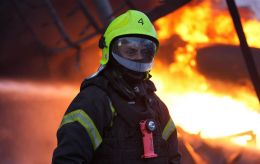
 Vladimir Putin, Donald Trump, Volodymyr Zelenskyy (collage: RBC-Ukraine)
Ahead of the US congressional elections, Donald Trump has stepped up pressure on Kyiv, restricting intelligence sharing and Starlink while trying in every possible way to appease Putin. Meanwhile, Moscow, having failed to make gains on the battlefield, is betting on a winter campaign of terror against Ukraine’s energy sector and beyond.
What happened behind the scenes of the heated disputes between Kyiv and Washington, what to expect this winter, and whether a ceasefire is still possible — read the RBC-Ukraine report.
Key points:
-
US election-year pressure: Ahead of the November congressional elections, Trump shifted course toward appeasing Moscow and began applying pressure on Kyiv, both publicly and behind the scenes.
-
Leverage: The US temporarily restricted the sharing of intelligence on ballistic missile launches and imposed a speed limit on Starlink (approximately 160 km/h), complicating the operations of Ukrainian interceptor drones.
-
Putin’s winter strategy: With Russia making no significant battlefield gains and suffering heavy losses, the Kremlin is focusing primarily on destroying Ukraine’s civilian infrastructure and energy facilities during the heating season.
-
No prospects for peace: Neither side currently sees realistic conditions for a sectoral or lasting ceasefire at least until spring 2027, while Putin’s key objective — control over all of Ukraine — remains unchanged.
October 9 gave Ukraine no indication that anything threatening was about to happen. Another round of talks between the Ukrainian and American delegations was scheduled to take place in Miami, and the team from Kyiv had also been bolstered by Europeans.
Expectations for the meeting were frankly modest: as people familiar with the negotiations told RBC-Ukraine, Russia had refused to agree even to limited ceasefires, let alone consider the prospects of achieving any lasting peace.
“Some time ago, the Russians began linking even an energy ceasefire to the lifting of sanctions against them,” one Ukrainian government official familiar with the matter told RBC-Ukraine earlier this month. By contrast, the American side appeared more inclined toward the opposite approach.
In mid-September, Congress finally passed the long-delayed Graham-Blumenthal sanctions bill. It was supposed to take effect, at least partially, in mid-October — or so Ukraine expected.
Trump turns the tables
Instead, Trump shocked almost everyone involved in the process, “turning the tables” in his usual style and taking the exact opposite course: doing everything possible to appease Moscow and attack Kyiv.
The most controversial development was, of course, the diesel deal with the Kremlin, which unexpectedly gave Moscow support from across the ocean for its struggling economy (although, strategically, hypothetical revenue from diesel sales to the US would not have that much of an impact on its condition).
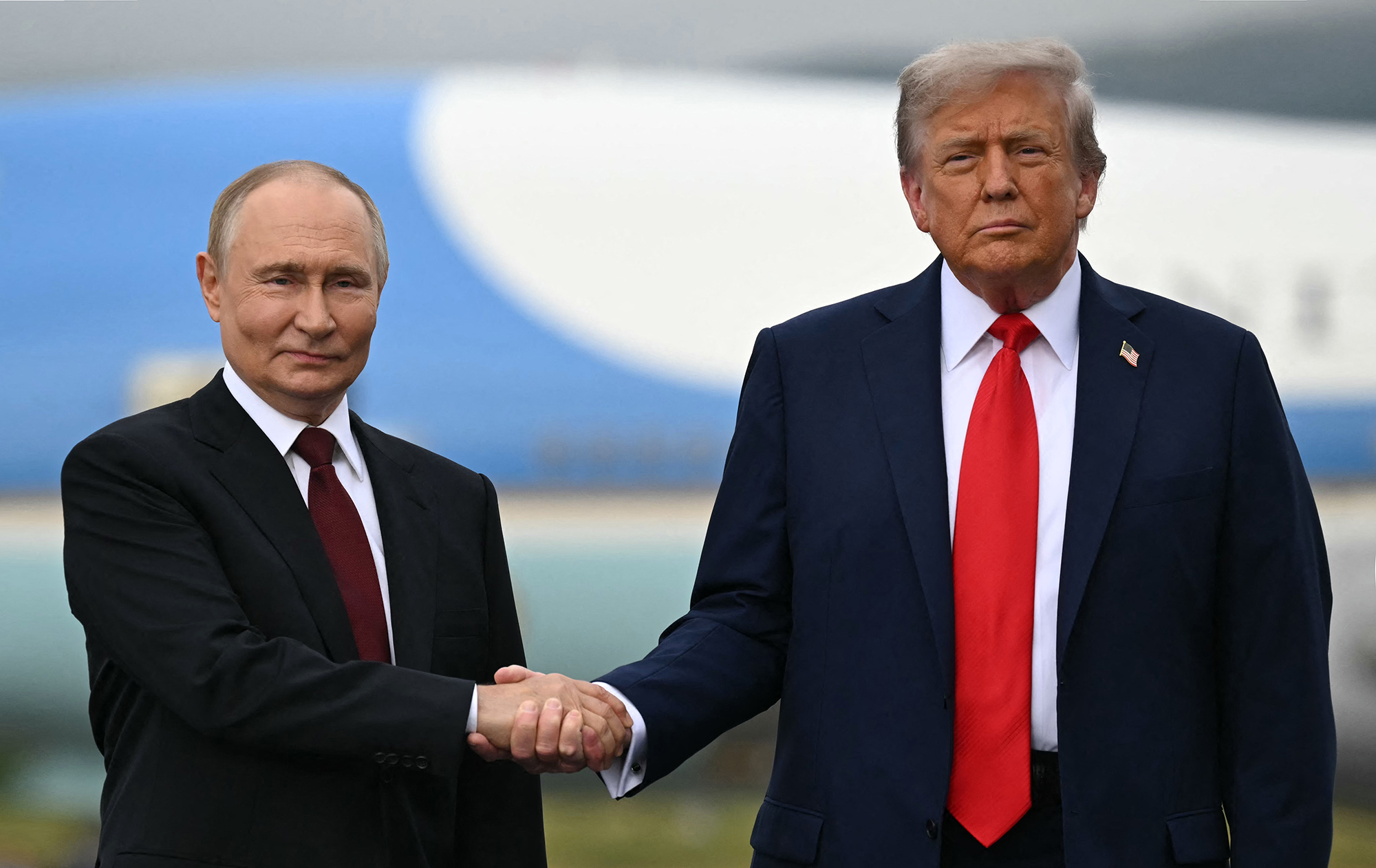 Donald Trump is once again trying to befriend Putin, as he did last year in Alaska (photo: Getty Images)
As Western media gradually revealed in the following days, the diesel deal was merely the tip of the iceberg of the US’s new approach to dealing with Russia.
“The Americans firmly believe that by appeasing Russia, they can bring it to the negotiating table and get it to agree to a ceasefire or peace. On top of that, Dmitriev is actively enticing them with all sorts of stories, such as the riches of the Arctic that they could jointly develop,” a source familiar with the matter in the Ukrainian government told RBC-Ukraine.
Indeed, among the proposals that the Americans are reportedly prepared to make to the Russians, according to Western media, are even the resumption of Russian gas sales to Europe, some kind of “framework security agreement” that Europeans would supposedly have to conclude with Russia, and American negotiators’ very pragmatic interest in the frozen foreign assets of Russia’s Lukoil, among other things.
Why is Trump doing all this, apart from the possible financial interests of people around him? The answer is obvious: the US congressional elections scheduled for November 3 are approaching.
No matter how much Trump talks about how well things are going in the US under his leadership, claims the war with Iran has been “almost won,” or says that all pollsters have sold out to the Democrats, none of this improves the Republican Party’s chances of retaining control of both chambers of Congress.
According to the latest figures from the Race to the White House project, the probability that Trump’s party will retain its majority in the House of Representatives is 11.5%, while the probability of keeping its Senate majority is 27.6%.
Trump’s sharp pivot toward Russia was logically accompanied by verbal attacks on Ukraine and Volodymyr Zelenskyy personally. He deployed almost his entire familiar arsenal of insults and arguments: claims that “Zelenskyy does not want to make a deal,” that Ukrainians need to “choose a new president,” that the cunning Zelenskyy managed to swindle enormous sums of money out of Joe Biden, and that Barack Obama was actually to blame for everything, among other accusations.
There was also a new twist: it turned out that Ukraine had supposedly been actively selling American Tomahawk cruise missiles on the open market — even though it had never actually received them from the US. Trump backed up his claims, for example, by citing interviews with Yuliia Mendel, Zelenskyy’s former press secretary.
The situation began to strongly resemble the events of early last spring, following the infamous Oval Office scandal. The difference was that this time, it would have been difficult to accuse Zelenskyy or the Ukrainian team of dressing improperly or behaving inappropriately.
“We should refrain from premature or emotional assessments. Ukraine’s restrained and wise position, the position of the head of state and our diplomacy, brought these relations back onto the right diplomatic track after the events you mentioned. I am convinced that the same will happen now,” Ukrainian Foreign Minister Andrii Sybiha said in an interview with RBC-Ukraine when asked about the parallels between the current situation and those events.
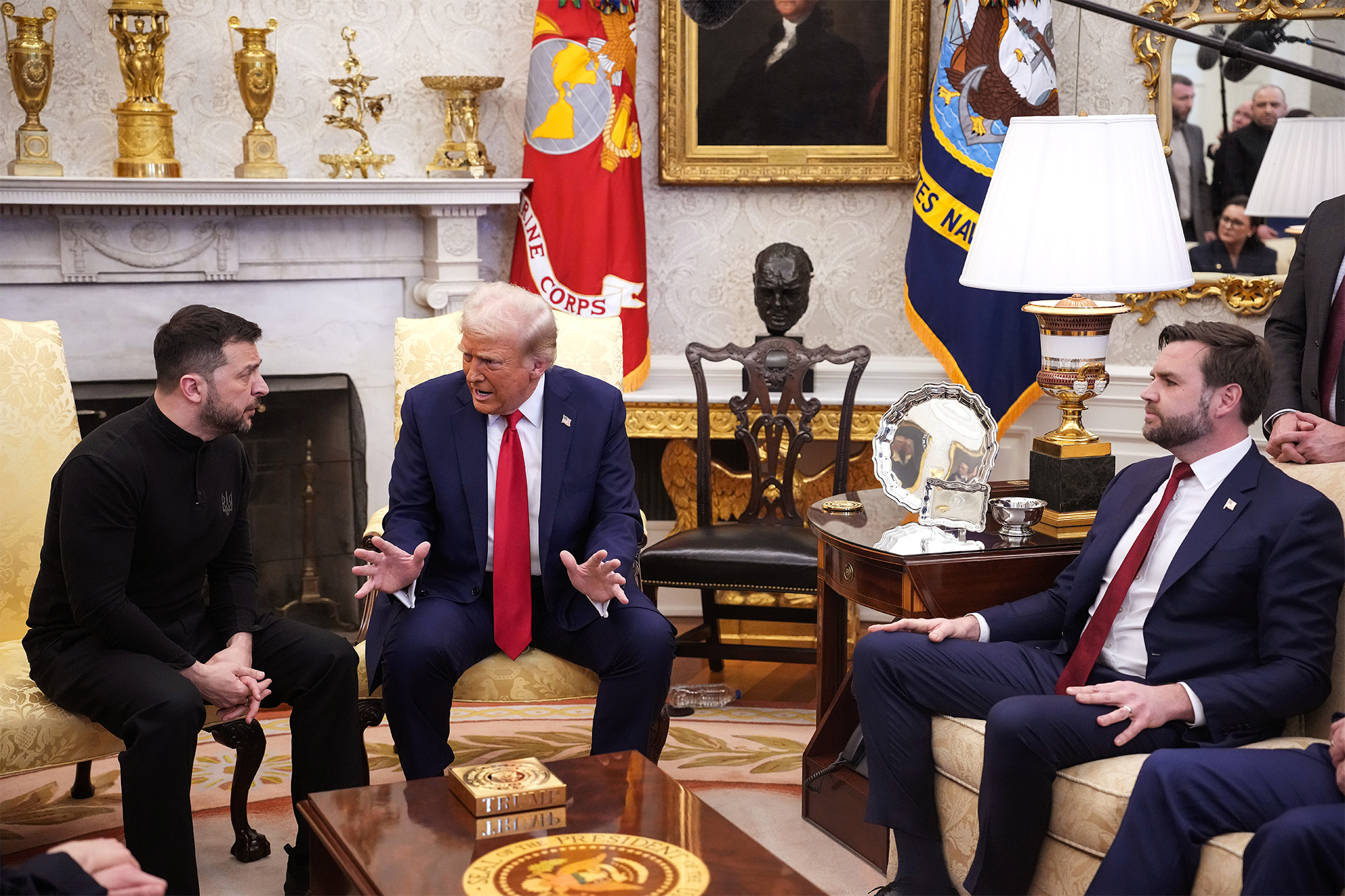
Trump’s latest actions and statements have repeatedly brought last year’s Oval Office scandal to mind (photo: Getty Images)
The obvious problem is that Trump’s verbal attacks alone could certainly be endured. However, the US also has very concrete and far more painful tools for exerting influence on Kyiv, and the American side demonstrated them over the past week.
Intelligence and Starlink: What is happening amid US pressure
Immediately after news broke of the diesel deal between Washington and Moscow, and Trump once again called for Ukraine to stop striking Russian oil refineries, a source in the government assured RBC-Ukraine that the strikes would continue if there was no energy ceasefire.
But on October 11, Trump announced for the second time in recent weeks that an energy ceasefire had allegedly been reached between Ukraine and Russia.
The announcement came as a surprise to Kyiv. Ukraine had not confirmed that any agreement existed, but agreed to refrain from striking Russian oil refineries on the condition that Moscow also observed the ceasefire.
Over the next several days, Ukraine indeed refrained from attacking Russian oil refineries, while the Kremlin continued its intense strikes on Ukrainian energy facilities. Meanwhile, Ukraine concentrated its long-range strikes on Russia’s digital infrastructure, attacking Yandex data centers in various regions of Russia.
One RBC-Ukraine source explained that much of Russia’s digital infrastructure is more centralized and localized than Ukraine’s. As a result, hitting large data centers can disrupt numerous services simultaneously and cause serious inconvenience.
Ultimately, on October 15, Kyiv resumed attacks on Russian oil refining facilities.
However, Ukraine had encountered problems receiving American intelligence about Russian ballistic missile launches and restrictions on Starlink before that. Since October 12, Ukraine has failed to receive the necessary American warning during at least two ballistic missile attacks on Kyiv.
According to Western media, the American side attributed these interruptions to “bad weather conditions,” but Ukrainian sources question this explanation. Trump himself denied that intelligence support had been suspended. On October 16, Zelenskyy clarified that Ukraine receives intelligence from dozens of countries, but information specifically about ballistic missile launches comes from the US.
A similar situation occurred in the spring of 2025, following the Oval Office scandal. At the time, the Trump administration suspended the transfer of a significant portion of intelligence to Ukraine for several days, using it as leverage in negotiations. The restrictions also affected intelligence used for Ukrainian strikes on Russian military targets.
Following the meeting between the Ukrainian and American delegations in Jeddah on March 11, Washington resumed both intelligence sharing and military assistance.
Nevertheless, RBC-Ukraine’s sources do not consider the current interruptions as critical as those earlier restrictions. Ukraine has been receiving launch information consistently since October 14, one source told the outlet.
Moreover, sources explain that Ukraine receives intelligence not only from the US but also from the UK, Germany, France, and other countries.
“So if interruptions in American intelligence or ‘bad weather conditions’ become systematic, other partners will be able to back us up. Their capabilities may be more limited, but it will not be a catastrophe,” one source told the outlet.
Another source explained that Ukrainian radar stations can independently detect some ballistic missiles after they enter radar coverage. However, information from the US about the precise moment of launch provides an additional few minutes of warning.
“For ballistic missiles coming from the north that can reach Kyiv in just a few minutes, this is significant. But how much do those minutes really help us if we have nothing to shoot them down with? They only give our people more time to reach shelters or safe places,” one source explained.
Ultimately, as Zelenskyy himself reported on the afternoon of October 18, intelligence sharing with the US resumed after a brief interruption.
According to RBC-Ukraine’s sources, the restrictions on Starshield — the military satellite communications service based on Starlink — have had a much more noticeable impact on the military. On the night of October 14, Ukrainian units encountered restrictions on terminals operating on moving platforms without prior warning. The formal speed limit was approximately 160 km/h, but according to the outlet, communications in some units began dropping at speeds of around 60–80 km/h.
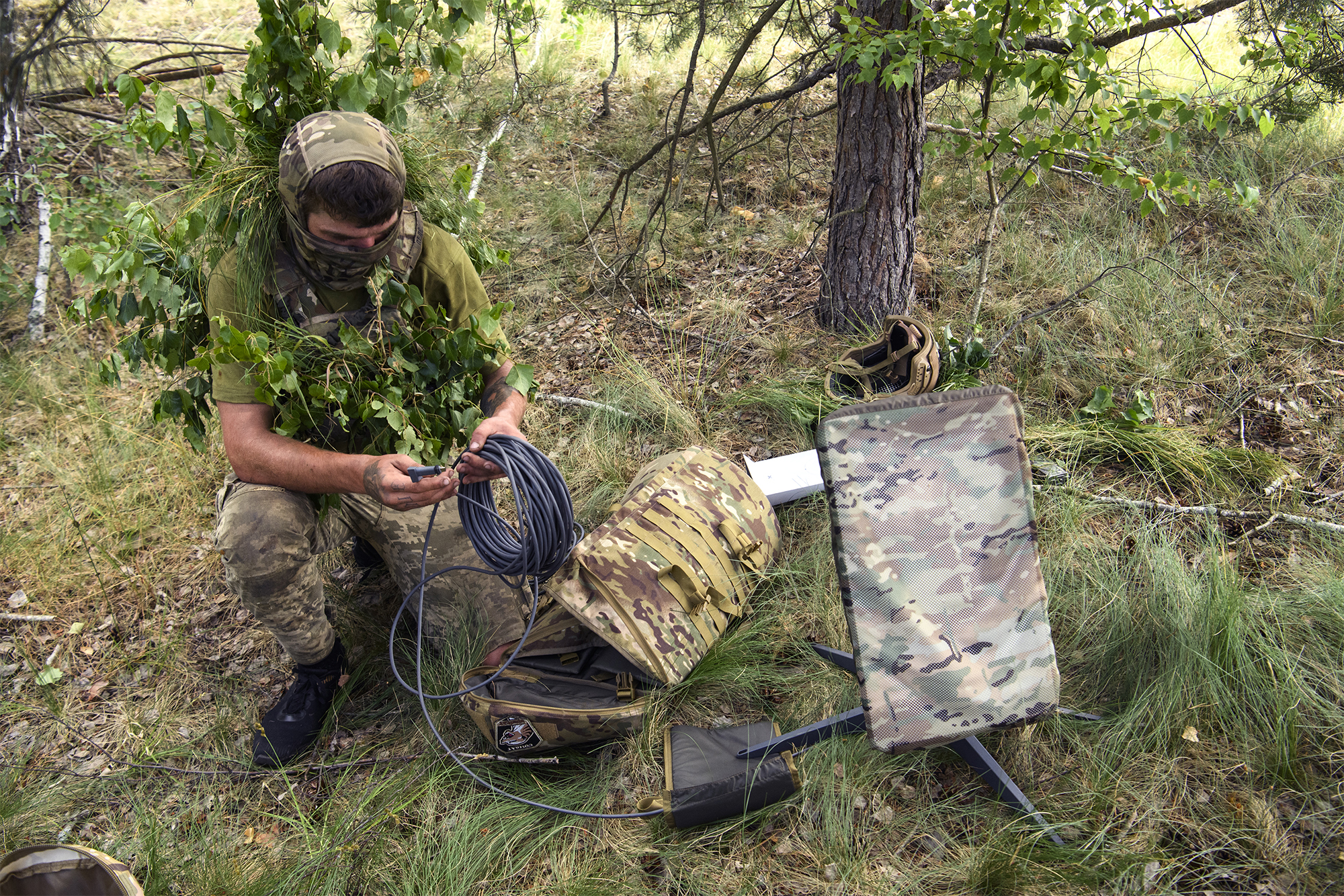
A Ukrainian serviceman with Starlink in the Chernihiv region (photo: Getty Images)
According to one RBC-Ukraine source, Ukraine tried to determine the reason for the restrictions. SpaceX initially attributed the situation to a technical malfunction, although the outlet’s sources are skeptical of this explanation.
Public explanations also contradicted one another. Elon Musk said that the US government controls Starshield’s operating parameters. On October 15, Reuters reported, citing American and Western officials, that the instruction to restrict the service had been sent from the White House to the Pentagon. Trump, for his part, denied that his administration or Musk had deliberately restricted the system.
According to another version reported by The Telegraph, Musk himself advised Trump to slow down Ukraine’s military Starlink terminals, and the US president agreed. However, neither of them wants to take responsibility.
On the evening of October 14, the situation partially improved: communications began working again at speeds of up to approximately 160 km/h, but the speed limit remained in place. As of October 17, Zelenskyy confirmed that Starlink in Ukraine disconnects once a speed of 161 km/h is reached. At the same time, according to the president, tests of similar terminals in EU countries showed that they could operate at higher speeds there.
Sources in Ukraine’s Defense Forces also say that the current maximum speed of approximately 160 km/h remains in place, while in some cases communications drop out even at lower speeds.
According to RBC-Ukraine’s sources, the Starlink restrictions primarily affect two areas. The first is interceptor drones, which Ukraine is trying to scale up to combat Russian jet-powered Geran-4 and Geran-5 drones. Since late August, these Russian UAVs have become one of the main tools used in almost round-the-clock attacks on Kyiv and the surrounding region.
The second area is so-called middle-strike missions, meaning medium-range drone strikes. However, the restrictions do not affect all such systems equally, one RBC-Ukraine source explained. For some drones, the current speed limit is not critical, while for others it significantly complicates operations.
“Some missions are becoming more difficult to carry out, and some Ukrainian drones are becoming more vulnerable targets. However, we are adapting to everything,” one source said.
The outlet’s sources also report that negotiations are currently underway to restore Starshield’s full functionality, and they are optimistic about the outcome.
Twisting Ukraine’s arm
A source in the Ukrainian government told RBC-Ukraine that the events of recent weeks involving US restrictions on intelligence sharing and Starlink speeds amount to nothing less than arm-twisting.
“The Americans are saying: withdraw from Donbas, without offering anything in return. They do not understand that the Russians will then demand that we give up Kherson and Zaporizhzhia. For Trump, this is just a deal, even though it comes at our expense,” the source said.
The source is not currently concerned about the situation on the front line. What is far more worrying is the rear and the constant attacks, particularly of the capital.
“We see that the targets of the strikes are constantly changing. After warehouses and data centers, the enemy has turned to the energy sector. Next could be other industrial facilities, while strikes on bridges, energy infrastructure, and water supplies continue,” the source suggested.
Speaking about the government’s plans for the winter, the source noted that the risks are now even higher than last year because the situation with ballistic missile defense is significantly worse.
In the current situation, Trump will try to resolve his domestic political problems through foreign policy, at the expense of the weaker side — Ukraine.
Some sources expect this pressure to ease somewhat after November 3, election day, as the White House will no longer face the election deadline. RBC-Ukraine’s sources are skeptical that Ukraine and Russia will be able to reach a lasting ceasefire, even a sectoral one, before the elections — or even by spring.
“At a minimum, everything will continue until the midterm elections. But if Trump loses badly, he will need to show his voters something to prove that the Republican Party has not completely fallen apart,” another source in the Ukrainian government told RBC-Ukraine.
Like the others, the source sees no realistic prospects for a ceasefire. One reason is that Putin has failed to achieve his key objective of capturing all of Donbas.
“Under the current conditions, taking Donbas could take him several months, an entire year, or even longer. If he succeeds, he will then assess how weakened we are. If we are severely weakened, he will try to advance further,” the source said.
Nevertheless, despite the high intensity of fighting and constant attacks, Russia has so far failed to achieve battlefield results that could force Ukraine to accept the Kremlin’s political demands.
Focus on Ukraine’s rear
According to estimates by the Institute for the Study of War, Russian forces made no net territorial gains at best in September. Taking Ukrainian counterattacks into account, they may even have lost more territory than they captured.
Estimates by Ukraine’s General Staff indicate that Russian losses in September amounted to approximately 46,000 troops. According to RBC-Ukraine’s sources, the Kremlin has not yet decided to launch a new large-scale mobilization, although Russia has made organizational preparations for such a scenario.
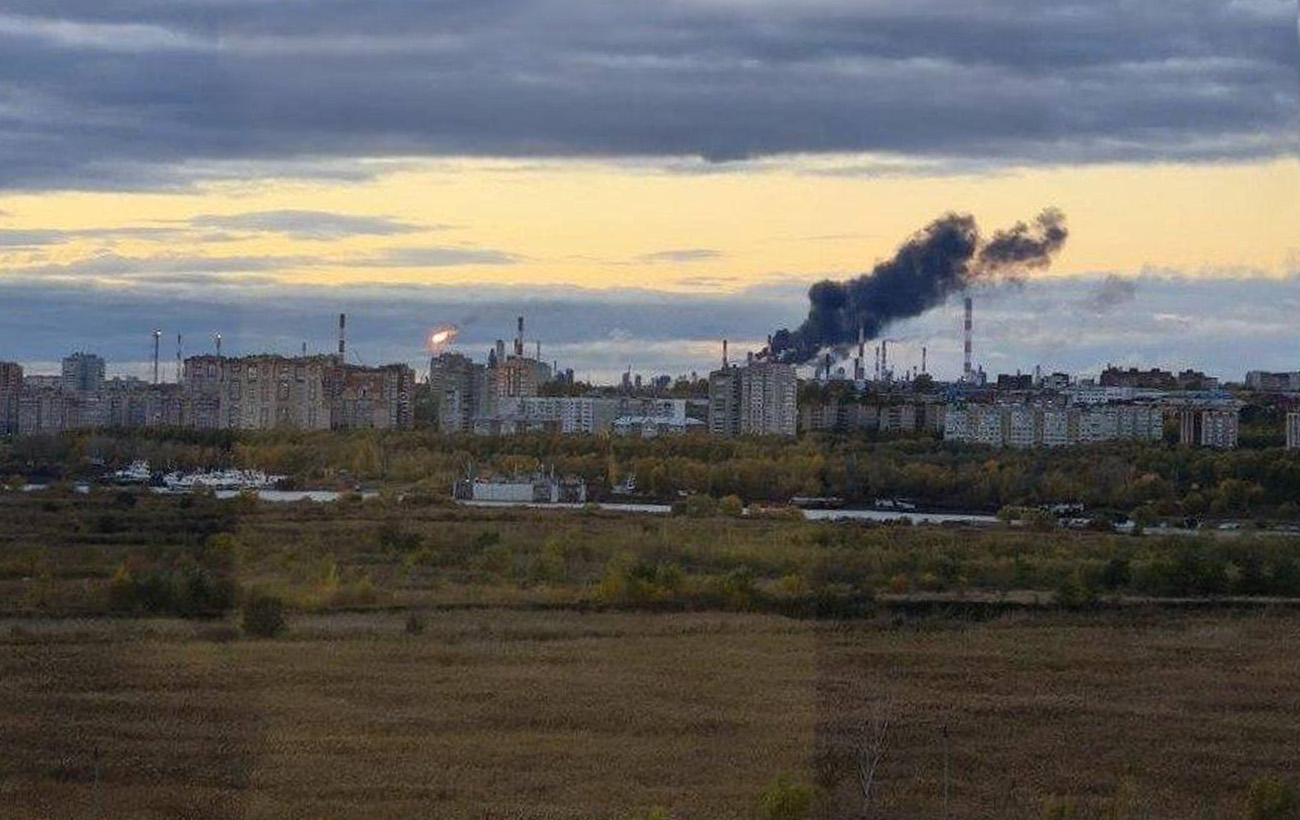 The Omsk oil refinery after an October deep strike (photo: t.me/exilenova_plus)
“They keep talking about fantastic successes: supposedly, they have approached Zaporizhzhia, captured Dobropillia and Kostiantynivka, and retaken Kupiansk. (Claims that these cities have been captured do not correspond to reality — ed.) How can they launch a new wave of mobilization against the backdrop of such ‘successful successes’? It seems they fear domestic destabilization and a repeat of the social consequences of the 2022 mobilization. They probably have not yet come up with a pretext or threat that would make such mobilization appear justified,” one well-informed source told the outlet.
Moscow is not abandoning its maximalist military plans. However, the gap between Russian plans, official claims of capturing new territories, and the actual situation on the front line has only widened recently.
According to RBC-Ukraine’s sources, the Russian command continues to plan advances over the coming months not only in the east but also in the south, particularly toward Zaporizhzhia. The outlet’s sources do not consider achieving these objectives within the timelines set by the enemy realistic.
It is precisely because Russia is failing to achieve its desired results on the battlefield that Moscow is increasingly focusing on strikes against Ukraine’s rear.
Since late August, Russia has significantly expanded the list of targets for its air attacks. Warehouses and logistics centers, businesses across various industries, railway infrastructure, and gas stations have come under attack. Since late September and early October, the energy sector and bridges in the capital have become major targets of this campaign.
Strikes on railways complicate transportation, attacks on warehouses disrupt the supply of goods, and strikes on businesses undermine economic activity. Attacks on energy infrastructure hit several essential systems at once: electricity, heating, and water supplies. Ultimately, all these strikes increase pressure on the civilian population.
The situation is further aggravated by the fact that Ukraine’s energy system is entering a new heating season without having fully recovered from previous Russian campaigns. Some equipment has been repaired or replaced, but not all damaged capacity has returned to operation.
Russia is attempting to strike not only power plants but also electricity transmission infrastructure. Attacks on energy hubs around Kyiv are intended to complicate the delivery of electricity to the capital even when some generating capacity remains operational. In other words, the problem is not only insufficient electricity generation but also the ability to deliver electricity to consumers.
According to some RBC-Ukraine sources, the winter of 2026–2027 could be the most difficult of the entire full-scale war. In their view, the Kremlin is counting on attacks on energy infrastructure to put significantly greater pressure on Ukraine than the Russian army is currently capable of achieving through advances on the battlefield.
The outlet’s sources attribute Moscow’s unwillingness to agree to a genuine energy ceasefire to this very strategy: attacks on Ukraine’s rear remain the enemy’s main weapon.
Some sources believe that Ukraine’s main priority now should be to endure the winter. If Russia’s campaign against the energy sector fails to deliver the desired results for the Kremlin, a new window of opportunity for negotiations could open in the spring. After the heating season ends, one of Russia’s main instruments of pressure will temporarily lose some of its effectiveness, forcing Moscow to reassess the cost of continuing the war.
Other sources do not expect any fundamental changes, even in the spring. In their view, Russia is capable of inflicting serious destruction on Ukraine’s rear but cannot achieve a decisive result on the battlefield. The Kremlin cannot therefore impose its territorial demands by force, yet it shows no willingness to reconsider them.
A deadlock
According to RBC-Ukraine, despite the exchange of sharp remarks between Kyiv and Washington throughout last week, unofficial diplomatic efforts with the Americans continued in parallel. Ukraine proposed organizing another meeting somewhere in Europe, where Zelenskyy was visiting at the time.
“If we manage to meet with Witkoff and Kushner, perhaps we could try to push the issue of a drone deal with the US and somehow steer the discussion in that direction,” one source familiar with the matter told the outlet during the week.
Ultimately, contact did take place, but by phone.
“Ukraine remains ready to work constructively, honestly, and toward a real result. I thank everyone in America who supports precisely this approach and Ukraine,” Zelenskyy said following the conversation.
However, it is probably still far too early to speak of a significant thaw in relations between the US and Ukraine.
“We are searching for formulas that would genuinely provide Ukraine with security guarantees after the war. At present, no country is ready to offer them. Everyone is willing to act as a mediator, but no one is ready to be a guarantor,” one senior Ukrainian official told RBC-Ukraine.
According to the official, Ukraine’s accession to the EU, accompanied by access to reconstruction funding, could serve as a possible guarantee. However, as relatively recent experience from this year has shown, EU membership cannot be negotiated behind closed doors while ignoring the views of the member states.
Numerous European diplomats with whom Ukraine communicates continually emphasize that helping Ukraine in the war is one thing, while EU accession is quite another. The two should not be conflated.
According to some RBC-Ukraine sources, even if Ukraine successfully gets through this winter, new factors that would allow Kyiv and Moscow to break the current deadlock may still fail to emerge by spring.
The “fresh ideas” occasionally announced by participants in the negotiations often amount simply to revisiting proposals that have already been discussed — for example, establishing a demilitarized or free economic zone in Donbas.
Alternatively, these “fresh ideas” may be fundamentally unacceptable to one or more parties, such as the American proposal to resume Russian gas sales to Europe.
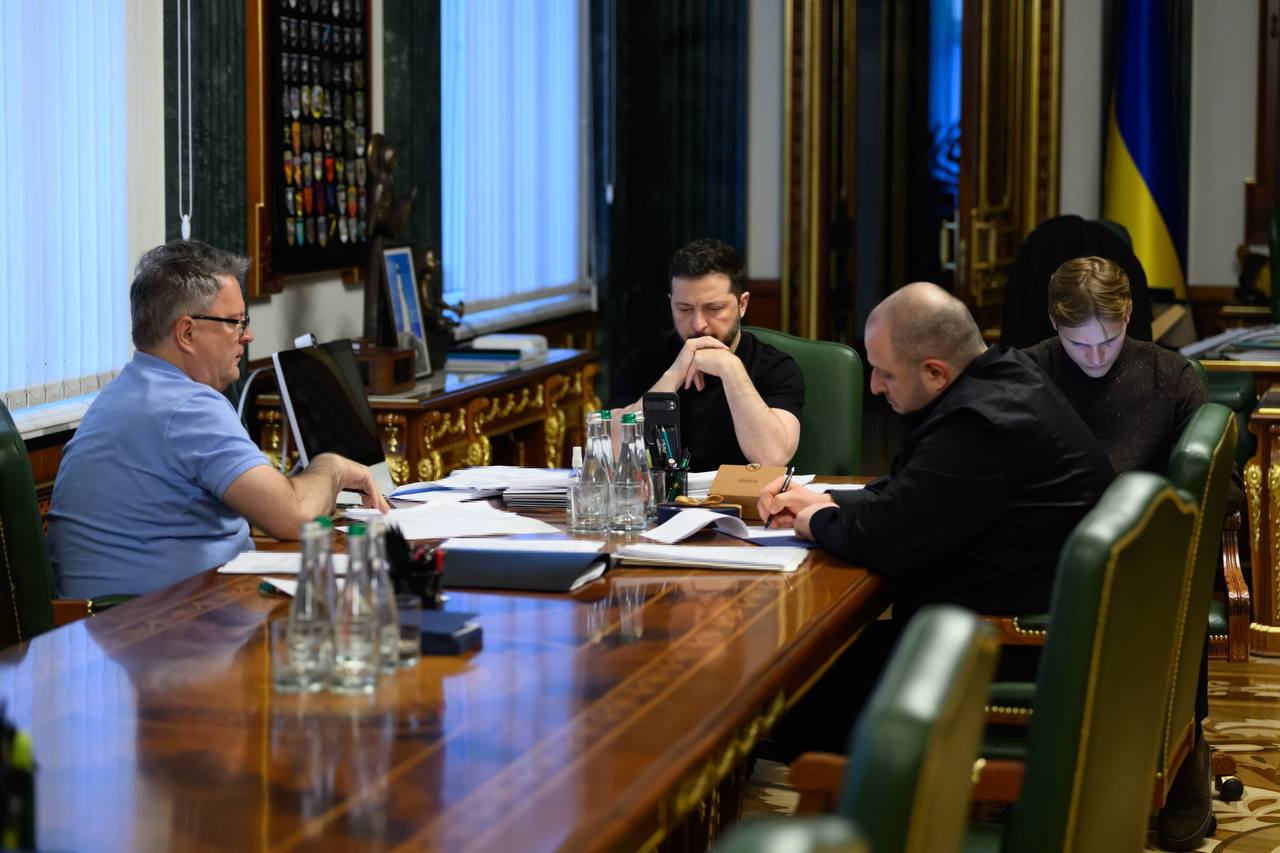 Volodymyr Zelenskyy’s conversation with Witkoff and Kushner on October 18 (photo: t.me/V_Zelenskiy_official)
“It is difficult to imagine any agreement under which we would give something up or acknowledge the loss of territory. That would set off a chain of events leading to even greater losses. But neither our partners nor we have a plan for ending the war. The Russians do not want this at all for now. Their goal remains unchanged: Ukraine’s neutral status and the West’s recognition that we are within Russia’s sphere of influence. This is Putin’s only real objective,” a source familiar with the matter told the outlet.
Quick Q&A
— Why has the US increased pressure on Ukraine?
The main reason is the approaching US congressional elections on November 3. Facing a high risk of losing their majorities in the Senate and House of Representatives, Trump is trying to resolve domestic political problems through foreign policy and demonstrate quick results at Ukraine’s expense.
— How exactly is the US applying military pressure on Kyiv?
The American side temporarily restricted the sharing of intelligence about ballistic missile launches and introduced a speed limit of approximately 160 km/h for military Starshield terminals. This complicated the operations of Ukrainian interceptor drones against Russian jet-powered UAVs.
— What is Russia focusing on because of its lack of battlefield success?
Because Russia cannot capture Donbas by force and fears the social consequences of another mobilization wave, the Kremlin has shifted its focus to destroying Ukraine’s rear. Moscow’s main strategy is to launch massive strikes against energy infrastructure, water supplies, and logistics during the winter heating season.
— Are there prospects for a ceasefire in the near future?
The outlet’s sources consider a lasting ceasefire before the US elections or even by spring unlikely. There are currently no formulas acceptable to all sides, Ukraine’s partners are not prepared to provide genuine security guarantees, and Putin’s key objective — bringing Ukraine under Russia’s control — remains unchanged.