Trump's concessions and bonuses for Kyiv: Who won US-Iran war and what Ukraine stands to gain


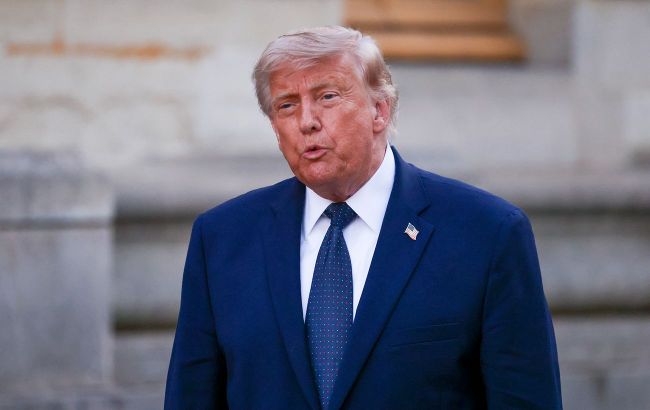 Photo: US President Donald Trump (Getty Images)
The United States and Iran have officially signed a memorandum of understanding. This marks the first step toward ending a conflict that has swept across the global economy like a hurricane.
RBC-Ukraine explains whether this could lead to lasting peace in the Middle East, who ultimately won the war, and how its outcome has affected Ukraine.
Key points:
- New agreement: Unlike the 2015 deal, Iran receives unfrozen funds in advance and sanctions relief effectively just for signing the memorandum.
- Terms for both sides: The United States will withdraw troops from the Strait of Hormuz area in exchange for Tehran’s vague promise not to develop a nuclear bomb.
- Risks of collapse: The CIA doubts Iran’s sincerity, Israel is trying to block the agreement, and Trump is threatening to resume strikes.
- Benefits for Ukraine: Falling oil prices are hitting Russia’s revenues, while the United States is freeing up scarce interceptor missiles for the Ukrainian Armed Forces.
The US-Iran memorandum is unconventional in many ways, starting with how it was signed. It was originally expected that Donald Trump and his Iranian counterpart Masoud Pezeshkian would sign it in Switzerland on Friday. However, the document was later signed remotely, not on Friday but on Wednesday, June 17.
Even more unusual are the contents of the agreement. The global superpower, the United States, has made a series of concessions to Iran, a country that barely qualifies as a regional power.
The 14-point memorandum provides for a complete cessation of strikes and other hostilities, the lifting of sanctions on Iran, and the unblocking of the Strait of Hormuz. Within the next two months, both sides are expected to develop a more comprehensive agreement to regulate Iran’s nuclear weapons issue.
This is already the second agreement between the United States and Iran aimed at addressing the nuclear weapons problem. The first, signed in 2015 by US President Barack Obama, was sharply criticized by Trump and eventually torn up to secure a much better deal.
However, when comparing Obama’s and Trump’s agreements with Iran, the outcome clearly does not appear favorable for the current US President.
Two different deals
The Obama deal did not cost the US a single cent out of American taxpayers' pockets. It merely allowed the unfreezing of Iran's own assets and lifted sanctions gradually and only after the IAEA verified the dismantling of Iran's nuclear infrastructure.
Trump, on the other hand, is providing Iran with funds upfront, even though he claims it comes from private capital. The new document obligates the US and its partners to pump a staggering $300 billion into the reconstruction of their former enemy, while oil and banking sanctions are effectively lifted simply in exchange for the Iranians’ signature on the memorandum.
The situation with compliance monitoring is much the same. The Obama deal strictly tracked every single gram of enriched uranium and every centrifuge for decades to come.
Meanwhile, the Trump memorandum offers nothing but a vague political promise from Tehran never to produce nuclear weapons. All the inconvenient technical issues were postponed until the signing of the final agreement.
In contrast, US political concessions are obvious right now. In the memorandum, Trump agreed to lift the naval blockade and completely withdraw American troops from areas adjacent to the Strait of Hormuz within just 30 days.
In return, Iran merely agrees to unblock the Strait of Hormuz and promises to halt hostilities of its proxy network.
"If we look at the situation as of February 27, before all these events began, the Strait of Hormuz was open, and Iranian assets were blocked. What we have under this memorandum is that the Strait of Hormuz will be open, just as it was on February 27, while Iranian assets will be gradually unfrozen. On top of that, there will be money for Iran's actual reconstruction," Ivan Us, an associate expert at the United Ukraine Analytical Center, explained to RBC-Ukraine.
The bottom line is that the previous deal gave the US total control and cost nothing, whereas the current one looks like a massive financial and political advance to Iran, giving it a breathing space.
How the agreement will be implemented
Even within Trump’s inner circle, there are doubts about whether Iran has any real intention of reaching an agreement.
According to Axios sources, CIA Director John Ratcliffe has expressed skepticism about Iran’s willingness to comply with the agreement. He told Trump and other senior officials that intelligence raises serious doubts about Tehran’s readiness to make concessions in the nuclear sphere.
According to CIA assessments, "the way Iranian officials were discussing the deal among themselves was inconsistent with what they were telling the mediators and the US."
The US President himself has publicly stated that, if necessary, Washington could again use force against Iran.
"If I don't like it, we'll go back to shooting at them, dropping bombs on their heads," Trump said during the G7 summit.
However, the two-month window for reaching a deal expires in mid-August — a period when the US congressional election campaign will already be in full swing. Clearly, Trump will have to carefully weigh the pros and cons of any new escalation with Iran until the November vote.
At the same time, there are actors for whom the end of the conflict would have negative long-term consequences. First and foremost is Israel, for which the restoration of Iran’s economic strength while preserving the current regime would mean only one thing: the prospect of aggression against it within a few years, or even sooner.
According to CNN, Israeli Prime Minister Benjamin Netanyahu is trying to influence the final agreement with Iran, using right-wing media figures and friendly senators to pressure Trump.
In addition, it should not be expected that the deal will be welcomed inside Iran either. For part of the ruling elite, abandoning the nuclear program is a red line. Another potential point of contention concerns reconstruction contracts and who will be able to benefit from them.
Implications for Ukraine
Despite all its shortcomings and future risks, in the short term, the memorandum with Iran brings a number of benefits for Ukraine.
"Because of the war in which the United States has been involved, its military-industrial complex was focused on producing interceptors for Patriot systems, primarily to protect American military bases and their allies. Now, hopefully, that need will no longer exist," says Ivan Us.
Another consequence is the decline in global oil prices. For Ukraine, this has two dimensions. The first is Russia’s ability to earn high revenues to sustain the war.
"The price right now is $77 per barrel. I remind you it was $110 not long ago. For Russia, the average oil price by the end of this year should not fall below $90 per barrel, and here it is already below $80. So economically, Russia is not getting what it expected and is not benefiting from this," the expert adds.
The second important aspect is the cost of imported fuel in Ukraine. The drop in oil prices also means lower prices at gas stations.
Additionally, Ukraine has increased its influence in the Middle East as a security provider. Under the Drone Deals framework, Ukrainian interceptor drones are already protecting the airspace of Arab neighbors of Iran. In return, Kyiv receives a range of benefits — from foreign currency inflows to fuel supplies and support for Ukrainian exports.
Ultimately, somewhat paradoxically, the Iran conflict has also shifted Trump’s stance on Russia’s aggression in Ukraine.
According to Politico, during the G7 summit in Évian, France, leaders of the G7 unexpectedly received signals that Trump was ready to take a tougher stance on Russia. Diplomats told the outlet that Trump urged them to support his Iran policy and provide assistance.
In particular, the United States may need allied capabilities to clear mines from the Strait of Hormuz. In response, European leaders signaled their readiness to consider such assistance, provided that Trump does not weaken support for Ukraine.
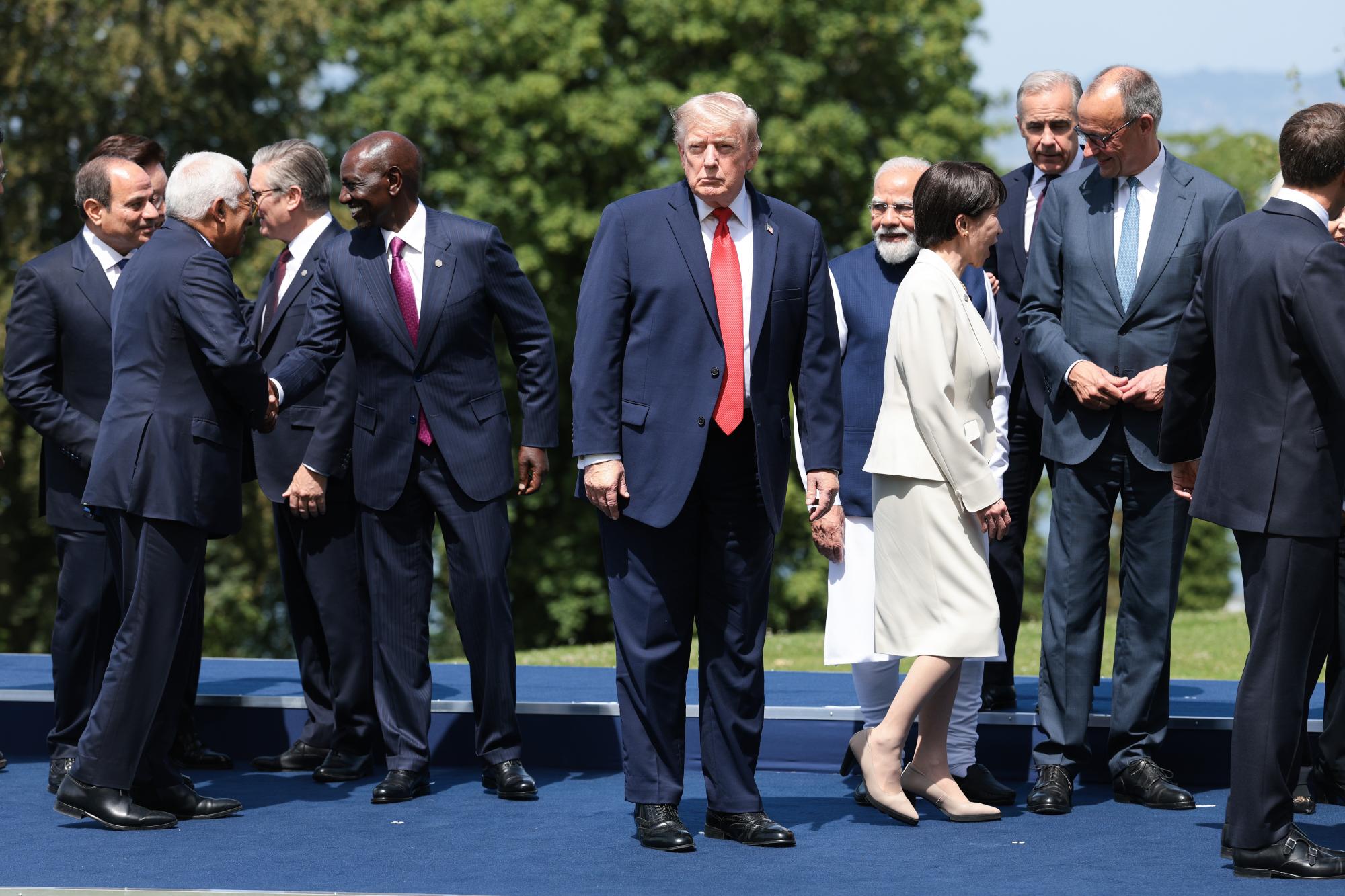
Photo: Trump at the G7 summit (Getty Images)
However, all of this remains a matter for the future—once more substantive talks begin. Contacts on the matter are expected as early as tomorrow, when US Vice President JD Vance and Iranian Parliament Speaker Mohammad Bagher Ghalibaf are scheduled to meet in Switzerland.
Quick Q&A
– Why is Trump’s new agreement with Iran considered worse than Obama’s deal?
– The 2015 agreement lifted sanctions gradually and only after IAEA inspections, without costing the US a single cent. The new memorandum hands Iran a $300 billion advance for reconstruction and scraps restrictions immediately in exchange for vague political promises.
In addition, Washington has committed to fully withdrawing its troops from the Strait of Hormuz region within 30 days.
– What are the risks that Iran will fail to comply with the memorandum with the United States?
– US intelligence and the CIA already have data raising serious doubts about Tehran’s willingness to make real nuclear concessions.
The situation is further complicated by Israeli pressure on the White House and internal divisions within Iran itself, where a radical faction of the elite views any potential shutdown of the nuclear program as betrayal. If the deal collapses, Donald Trump has pledged to resume airstrikes.
– How could a US-Iran peace deal unlock more weapons for Ukraine?
– Due to high military tensions in the Middle East, the US defense industry had to prioritize the production of scarce Patriot missile interceptors to protect American bases and Arab allies.
The cessation of hostilities would ease this burden. As a result, the Pentagon could redirect freed-up air defense stockpiles to meet the needs of the Ukrainian Armed Forces.