Storm Shadow production in Ukraine - How soon could Kyiv start making missiles


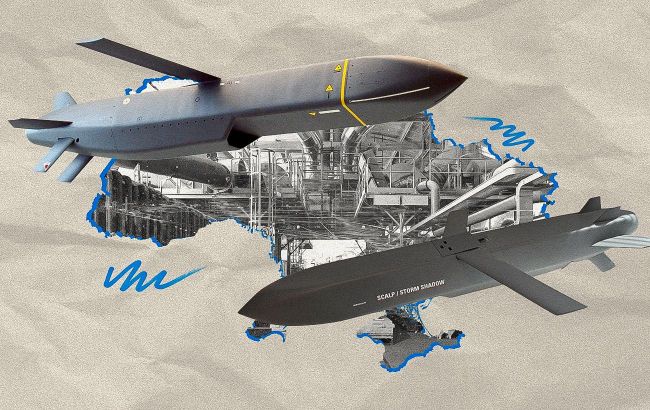 Photo: Storm Shadow/SCALP missiles in Ukraine (RBC-Ukraine collage)
Ukraine has received approval from Britain and France to launch domestic production of Storm Shadow/SCALP long-range cruise missiles.
RBC-Ukraine spoke with representatives of Ukraine's defense industry about how long it could take to launch such production and whether the Ukrainian defense sector is ready for the project.
Key points:
- Technological differences. Storm Shadow is a subsonic missile with a turbofan engine, composite body, and imaging-infrared seeker, while air-defense missiles such as PAC-3 are high-speed interceptors with solid-fuel motors, heat-resistant alloys, and radar-guided seekers.
- Existing capabilities. Ukraine already has relevant technological experience through the Neptune missile program, developed by Luch Design Bureau with engines from Motor Sich, as well as Fire Point's experience with tungsten-based kinetic elements.
- Industry assessment. The Ukrainian Council of Arms Manufacturers believes the country's defense industry has sufficient capabilities for large-component assembly of missiles using ready-made functional modules.
- Timeline. Estimates for launching large-component assembly range from 6–12 months, according to the Council of Arms Manufacturers and Anatolii Khrapchynskyi, to more than a year, according to Serhiy Goncharov. Full localization could take up to five years.
How Storm Shadow differs technologically from air-defense missiles
In July, Ukraine's potential production of missiles for Patriot air-defense systems was also discussed. Aviation expert and defense-industry development director Anatolii Khrapchynskyi said assembling Storm Shadow presents a different engineering challenge from localizing interceptors such as PAC-2 or PAC-3.
According to him, Storm Shadow is a subsonic cruise missile, while PAC-3 is a high-speed interceptor.
The propulsion systems are also different. Storm Shadow uses a conventional turbofan engine, while PAC-3 uses a solid-fuel motor, which requires a completely different manufacturing approach.
The materials and design also differ. Storm Shadow uses composite materials and a complex wing designed for subsonic flight, while an air-defense missile requires a high-strength, heat-resistant alloy capable of withstanding extreme loads during rapid changes in direction while intercepting a target.
The guidance systems are different as well. Storm Shadow uses an imaging-infrared seeker combined with terrain matching and GPS — an approach already implemented in Ukraine's Neptune missiles. Air-defense missiles, meanwhile, use active radar seekers operating in the millimeter-wave range.
Khrapchynskyi also highlighted differences in the warheads. Storm Shadow uses a penetrating shaped-charge warhead, PAC-2 uses a fragmentation warhead, and PAC-3 uses tungsten kinetic elements. Ukraine already has experience working with tungsten-based kinetic elements through Fire Point.
How ready is Ukraine's defense industry
The Ukrainian Council of Arms Manufacturers believes Ukraine's defense industry has sufficient capabilities to master the assembly of missiles in this class, although much will depend on the specific cooperation model, contract terms, technology transfer and production specifications.
If the project involves large-component assembly of Storm Shadow/SCALP using ready-made functional modules — including the warhead, engine, electronics and other components — Ukrainian companies have the necessary production and personnel capabilities, according to the council.
Khrapchynskyi noted that Ukraine already produces Neptune missiles, calling this an advantage. The country has Luch Design Bureau as well as Motor Sich, which manufactures engines.
NAUDI CEO Serhiy Goncharov noted that some key missile components would continue to be manufactured by foreign suppliers. These could include the engine, most likely from French company Safran, as well as components from MBDA, Leonardo, Thales and US companies.
Therefore, Goncharov said, the key question is how much of the production can actually be localized. He described simply assembling a missile from ready-made components as essentially "screwdriver assembly."
According to Goncharov, Ukraine's private defense manufacturers are already comparable to modern European facilities. However, all potential companies involved in the project would have to undergo technical audits to assess their production capabilities and readiness to meet partners' requirements. A makeshift facility would not be sufficient.
How long could it take to launch production
The three experts' estimates differ somewhat, but all agree that this is not a matter of weeks or a few months — it would take at least around a year or longer.
The Ukrainian Council of Arms Manufacturers provided a more detailed timeline:
- Training personnel in accordance with technical regulations and certification requirements could take about three months.
- At the same time, roughly three months would be needed to prepare production facilities, establish the required manufacturing standards, security procedures and production resilience.
- If partners provide technical documentation, component kits and testing equipment without significant delays, large-component assembly in Ukraine could take at least 8–10 months to set up.
The council stressed that a more precise timeline could only be given once the technical requirements, level of localization and terms of the agreement are known.
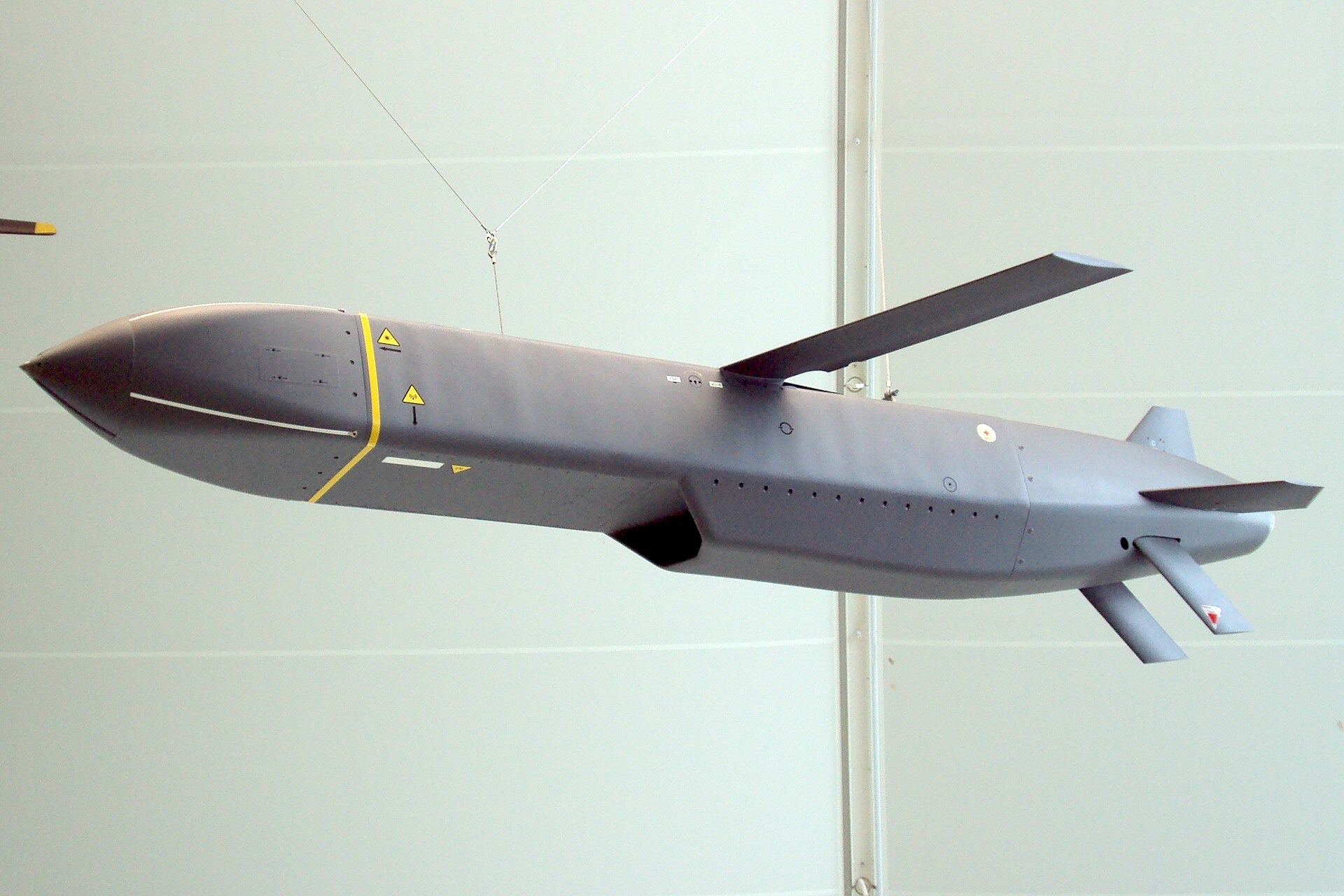
Photo: Storm Shadow missile (Wikipedia)
Khrapchynskyi gave a similar estimate. Setting up large-component assembly using ready-made kits could take 6–12 months, while full localization of production could take up to five years.
Goncharov offered a more cautious forecast. In his view, production cannot be launched within six months, and even doing so within a year would be difficult. The main challenge, he said, is achieving sufficient localization for components currently manufactured exclusively by foreign companies.
Another issue is the time required to transfer the licenses and establish production. According to Goncharov, the process is much more complicated than setting up small-arms production and cannot be completed in "one, two or three months."
What could the project mean for Ukraine
Goncharov called the technology-transfer initiative "excellent" and said he hoped it would actually be implemented rather than remain another declaration.
For Ukraine, he said, the main value lies not so much in assembling the missile itself as in gaining access to technologies for guidance, as well as reducing the missile's infrared and radar signature.
Another major benefit would be deeper integration of Ukrainian defense companies into production cooperation with European partners.
This, Goncharov believes, is where the project could provide the greatest long-term value for Ukraine's defense industry. At the same time, it will challenge Ukrainian companies to meet their partners' technological standards.
Goncharov also pointed to a broader trend: more countries are increasingly viewing Ukraine as a potential partner for projects of this kind.
"Ukraine also produces a range of missile weapons, mostly ground-launched systems. Storm Shadow is an air-launched missile. Accordingly, it will complement the missile capabilities we can use to strike the enemy not only in temporarily occupied territories but also directly inside Russia," Goncharov said.
Goncharov also explained why he considers offensive weapons easier to manufacture than defensive systems. A missile such as Storm Shadow, he said, has "room for error" — it is designed to hit a stationary target with precise coordinates, and even if some missiles in a salvo are intercepted, the others can still reach their targets.
A defensive weapon, particularly one designed to counter ballistic targets, does not have that margin for error.
"It has to be effective. It must perform the task it was designed for and the task required by the military," he said.
Quick Q&A
— What exactly did Britain and France approve?
Britain and France agreed to provide Ukraine with a license to produce Storm Shadow/SCALP missiles domestically. President Volodymyr Zelenskyy said French President Emmanuel Macron and British Prime Minister Andy Burnham agreed on August 24 to provide the necessary license.
— Is Ukraine's defense industry ready to assemble these missiles?
The Ukrainian Council of Arms Manufacturers believes it is, provided the project involves large-component assembly using ready-made functional modules. Khrapchynskyi pointed to Ukraine's existing technological capabilities, including Luch Design Bureau, Motor Sich and Fire Point's experience with tungsten kinetic elements.
Goncharov noted that key components would continue to be manufactured abroad, making the actual percentage of localization a central issue.
— How long would it take to launch assembly?
The Council of Arms Manufacturers estimates a minimum of 8–10 months, provided Ukraine receives the necessary documentation, component kits and equipment from its partners. Khrapchynskyi estimates 6–12 months for large-component assembly. Goncharov believes six months is unrealistic and that even one year would be challenging.
— How long would full localization take?
According to Khrapchynskyi, full localization could take up to five years.