Record gas imports: How Europe and US help Ukraine survive winter


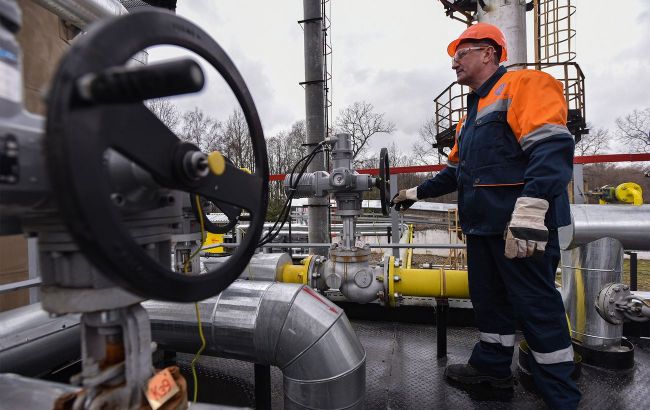 Ukraine has a powerful gas transmission system on its western border for importing gas from the EU (photo: Getty Images)
Last year, Ukraine imported a record volume of gas, enabling it to replace supplies lost due to shelling. Why import volumes were so large, how much gas Ukraine purchased from the United States, and whether imports will still be needed in the future — in an RBC Ukraine report.
Key questions:
-
Why did Ukraine import a record volume of gas in 2025?
-
Why is a large import flow necessary?
-
Where does the gas supplied to Ukraine come from?
-
How much gas is supplied from the United States?
-
What could the volume of gas imports be in 2026?
Reasons for record imports
Last year, Ukraine imported 6.5 billion cubic meters of gas. This was the most significant volume since 2021 and almost nine times higher than the volume imported in 2024. In previous years (2021–2024), the management of the state-owned holding company Naftogaz of Ukraine (Ukraine's state energy company) sought to minimize import volumes. For example, according to ExPro Consulting (an energy market analytics company), gas imports were completely absent from November 2024 to January 2025. As a result, Ukraine entered the 2024–2025 heating season with weak or no imports.
Existing gas reserves might have been sufficient to get through the previous winter without imports. Still, in February last year, the first major attacks on gas production infrastructure occurred, reducing output by 40%. This created an acute need to increase imports.
Ukraine emerged from the previous autumn–winter period with underground gas storage facilities (UGS) almost empty, containing only slightly more gas than the buffer gas (technological gas that cannot be withdrawn) required for their operation.
"As of April 16, 2025, Ukrainian UGS held about 670 million cubic meters of natural gas, excluding so-called long-term storage gas," said Andrii Ursta, General Manager for Market Development at DiXi Group (Ukrainian energy think tank), adding that this level of reserves was the lowest in the past 12 years.
Accordingly, from late February and throughout the entire past year, gas was imported in significant volumes, limited by the transmission capacity of the gas transmission system and the financial capabilities of Naftogaz and other market players.
Throughout 2025, massive attacks on gas infrastructure continued. In total, there were 24 such attacks last year involving more than 2,000 drones and missiles, Naftogaz of Ukraine reported. The attacks reduced gas production. The exact figures are not officially disclosed, but according to estimates by ExPro Consulting (an energy market analytics company), gas production in 2025 fell by 7% to 17.7 billion cubic meters.
In 2025, Naftogaz accounted for the majority of gas imports (85%). The state holding company is responsible for supplying gas to the district heating sector and households, forcing it to purchase significant volumes abroad, regardless of market price conditions.
For private imports to be viable, a price differential is required — gas prices in Ukraine must be higher than in Europe. "In the second half of 2025, commercial gas imports became profitable, creating conditions for supplies by private companies," said Mykhailo Svyshcho, gas market analyst at ExPro Consulting.
Rationale for large-scale supplies from Europe
Large volumes of gas imports are costly. 6.5 billion cubic meters of gas at average prices last year amount to approximately €2.5 billion, Svyshcho said. However, under conditions of attacks on gas production, large-scale imports are not a luxury but an urgent necessity.
This need is driven not only by low reserves left by previous management, but also by the requirement to have substantial gas volumes during a highly vulnerable period — the end of the heating season (February–March). During this period, as reserves gradually decline, pressure in underground gas storage facilities declines, making gas withdrawal more difficult, especially during sharp increases in consumption.
"It is essential to create a certain reserve for the future, especially in case of new attacks at the end of the heating season," DTEK (Ukraine's largest private energy company) told RBC-Ukraine.
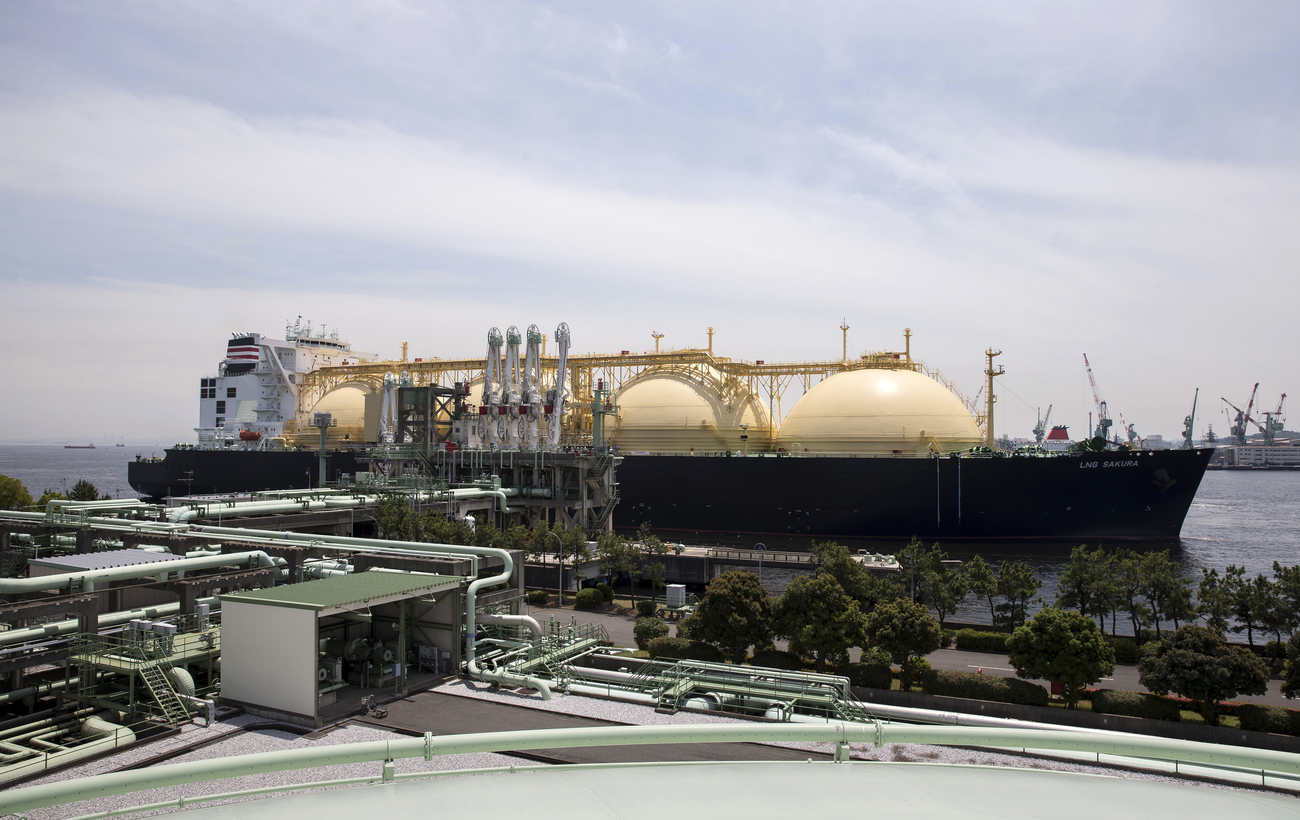 Natural gas from the United States is transported to Europe in LNG tankers like these (photo: Getty Images)
Imports "with a buffer" make it possible to forecast that Ukraine will exit the 2025–2026 heating season with higher gas storage levels than in the previous winter. Andrii Ursta estimates that, depending on the scenario, the remaining gas volumes in UGS (including buffer gas) at the end of the withdrawal season could range from 4.2 to 6.9 billion cubic meters.
Gas supply routes to Ukraine
In 2025, almost half of the gas was imported from Hungary, while about one-third came from Poland. On January 12, due to colder weather, imports increased to 27.6 million cubic meters per day, then declined to 21.6 million cubic meters, and remained at that level on January 14–15, according to ExPro Consulting. Volumes supplied from Poland account for about half of total imports, which is close to the capacity of the gas transmission system on this route. Large import volumes from Hungary and Poland are explained by geographic proximity and low gas transportation tariffs from these countries, said Mykhailo Svyshcho, gas market analyst at ExPro Consulting.
Gas trade is not hindered even by political tensions between Kyiv, Budapest, or Warsaw. Oleksandr Kharchenko, Director of the Energy Industry Research Centre (Ukrainian energy think tank), explains that cross-border gas trade in the European Union (EU) is regulated by EU-wide legislation. This framework is strict, and national governments do not dare to violate it; moreover, foreign traders profit from selling gas to Ukraine.
More than 50% of the gas imported from Hungary is Russian. It is supplied to Hungary via TurkStream (Russia–Türkiye offshore gas pipeline across the Black Sea). Hungary also received gas last year from Austria, Slovakia, Croatia, and Azerbaijan, added Leonid Unigovsky, CEO of Naftogazbudinformatyka (energy consulting company). As a result, Ukraine currently receives a mixed gas supply from various sources.
The interlocutor emphasized that Hungary follows a business-oriented approach in gas trade. "This is business as usual. If it is profitable, political relations are set aside. The key factor is money," Unigovsky said in a comment to RBC-Ukraine.
Last year, 1.3 billion cubic meters of gas were imported from Slovakia. At present, this route is utilized at only 5% of its capacity, as gas transportation tariffs from this country remain relatively high.
The smallest volume of gas was imported via the Trans-Balkan gas corridor (pipeline route connecting Ukraine via Moldova, Romania, and Bulgaria to LNG terminals on the Mediterranean coast of Greece). Although the cost of this route was reduced, as of January 8, imports through this corridor amounted to about 0.5 million cubic meters per day, while its total capacity is estimated at up to 15 million cubic meters per day.
The southern route from the Greek coast is relatively long, with a distance to the Ukrainian border ranging from 1,600 to 2,000 kilometers, depending on the route, Leonid Unigovsky explained. At the same time, the route from the LNG terminal on the Polish coast of the Baltic Sea is 850 kilometers to the entry point into Ukraine's gas transmission system.
Importance of the US gas supply
Distance calculations along these routes are important for understanding imports of US liquefied natural gas (LNG). In 2025, LNG imports to Europe are expected to reach a record level (final figures for last year have not yet been published), with LNG accounting for 45% of the European Union's total gas imports, according to a Bloomberg report. The United States is the largest supplier of LNG to Europe, according to Upstream. In addition, according to Reuters, the US became the world's largest exporter of liquefied natural gas in 2025.
Last year, Ukraine also received LNG from the US. Moreover, LNG imports into Ukraine's gas transmission system reached a record level, an ExPro Consulting analyst said. This gas was imported by two companies — Naftogaz of Ukraine with 0.6 billion cubic meters, and DTEK with 0.2 billion cubic meters.
Naftogaz purchased US gas through an intermediary, Orlen (a Polish state-controlled oil and gas group). The company has large long-term contracts with US suppliers and booked capacity at two LNG terminals — in Świnoujście, Poland, and Klaipėda, Lithuania. The Ukrainian state holding company purchases part of the volumes that Orlen sells on the European market, which are then transported via the Polish gas transmission system to Ukraine's western border.
"Naftogaz imports about one LNG tanker per month. For the first quarter of this year, the company has already contracted 300 million cubic meters of gas," said Mykhailo Svyshcho.
Last year, DTEK independently ensured the transportation of liquefied natural gas from the US Gulf Coast to Klaipėda, Lithuania, and to the Revithoussa LNG terminal (Greece). The company delivered two tankers, part of whose volumes were directly imported into Ukraine. LNG imports into Ukraine's gas transmission system remain profitable in the first quarter of 2026, DTEK told RBC-Ukraine. The price differential persists, as gas in the United States is cheaper than in Europe. "This makes US LNG, regasified in the EU, a competitive source of supply for the Ukrainian market," DTEK added.
The company assumes that US gas supplies to the European Union may increase, as the EU plans to phase out Russian gas completely in 2026–2027.
Import scenarios for 2026
To meet gas demand this year, Naftogaz of Ukraine continues negotiations with international financial institutions and partner governments to attract funding. The company also takes into account volumes already contracted.
"Taken together, these measures should ensure the necessary resources for a stable and uninterrupted heating season," the state holding company told RBC-Ukraine.
Naftogaz is considering several gas import scenarios for 2026, depending on the intensity of attacks. "The company remains ready to adjust import volumes if the security situation deteriorates," the press service added.
In response to a question from RBC-Ukraine about the required import volume in 2026, experts provided different estimates. Leonid Unigovsky believes that 6–6.5 billion cubic meters of gas should also be purchased abroad this year. This volume would be needed both in the event of continued war (to cover losses from attacks) and in the event of hostilities ceasing.
Oleksandr Kharchenko and Mykhailo Svyshcho suggest that such large import volumes may not be necessary this year. "Everything depends on the attacks, but I think that in 2026 we will not need such a large amount of gas," Kharchenko commented.
According to an analyst at ExPro Consulting, imports this summer may be lower than in the same period last year. "If the situation with attacks is similar to last year, then we will need to buy less gas abroad. Imports cost money, and funds are limited," Svyshcho added.
Although imports are costly, they serve as a safety buffer. Ukraine can always increase gas purchases abroad when domestic production deteriorates or consumption rises sharply. Regardless of the supply route, gas imports will remain a significant and critically important option throughout 2026.