'Life doesn't end after amputation': Story of foreigner helping Ukrainian defenders walk again


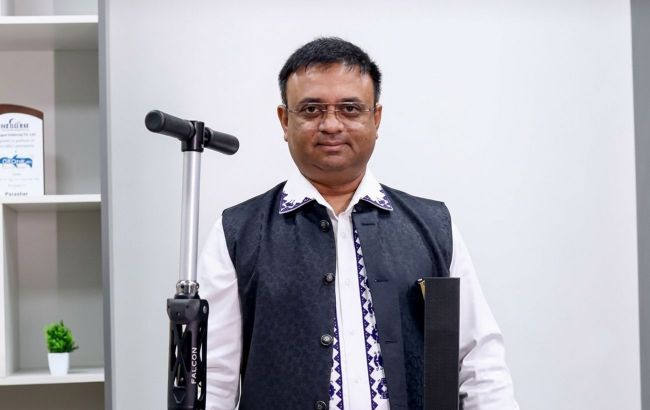 Photo: Nagender Parashar (provided by the speaker)
For Nagender Parashar from India, Ukraine became a second home more than 30 years ago. He built a successful business here, founded the Bez Obmezhen (No Limits) prosthetics center network, and became a true patriot of the country.
In an interview with RBC-Ukraine, the company's founder spoke about unique innovations for veterans and civilians, myths about migrants, and adapting to life in Kyiv in the 1990s.
Moving from India and adapting to a new country
In October 1991, a 17-year-old from India, Nagender Parashar, stepped onto the platform of Kyiv's railway station. Ukraine had only just declared independence. In India, almost no one had heard of the country at the time—the entire Soviet Union was associated exclusively with Russia, so the young man did not fully understand where he was actually heading.
"Actually, I didn't make that decision myself," Nagender Parashar recalls. "There were acquaintances who worked with the USSR, and they told me: come here, everything will be fine, you'll get an education. It was only shortly before the trip that I found out I was going to Kyiv. But I didn't even know where Kyiv was."
He enrolled at the Aviation University. At first, everything was unfamiliar. During the first few days, the foreign students even spent the night in a clinic because, for some reason, they had been accommodated there. That was also when they first encountered local cuisine.
"We tried buckwheat, cutlets, borscht, different salads for the first time. We really liked butter—we bought it by the kilogram and spread thick layers of it on bread. At two in the morning, we'd walk to the shop near the dormitory, where fresh deliveries had just arrived, and buy fresh Ukrainian black bread," he says.
Besides adapting to daily life, he had to overcome the language barrier to communicate with those around him. His first year at university was devoted to adaptation.
"First of all, back then everyone spoke Russian. During the preparatory course, we studied the language, mathematics, computer science, and physics. It was only years later that Ukrainian became more widespread," he recalls.
As time passed, Nagender fully adapted and came to see Ukraine as his true and only home.
"Ukraine feels more like home to me than India. After all, I've spent most of my life here," Nagender says.
Ukrainian mentality and the experience of the 1990s
Nagender remembers his student years in Kyiv as fairly peaceful. He was not afraid to walk the city's streets during those difficult times and does not consider isolated incidents to have been widespread.
"Back then there were document checks, and sometimes people asked, 'Why are you all coming here?' There were cases when someone would say, 'Hey, let's fight.' But I was young and wasn't very afraid. The main thing is that these were completely isolated incidents. There has never been mass racism in Ukraine," he emphasizes.
The businessman is convinced that Ukrainians are very different from Russians because their cultures and mindsets are completely different.
"The movements that existed in Russia in the 1990s—skinheads and so on—were almost nonexistent in Ukraine. That's because the culture here is on a higher level. And if you compare India and Ukraine, what they have in common is that everywhere there are simply people: decent people who know how to respect others, and indecent people," Nagender believes.
In his opinion, Ukrainians are more organized and orderly in everyday life, and he has an interesting explanation for that.
"Where the roads are bad, discipline in the country is usually lower. Where the roads are good, you can't solve things 'just like that'—everything has to be done strictly according to the rules. So look at the roads in Ukraine, and you'll understand the society. Many people here think things couldn't be worse anywhere else, but in India the roads can be much worse!" the businessman says.
'You can live and forget you're wearing a prosthesis'
Nagender Parashar has lived in Ukraine for 35 years. He started a family here and built his own business. His daughter now works at the Bez Obmezhen centers, while his son is involved in manufacturing. His decision to enter the prosthetics field was no coincidence—it was driven by a personal tragedy affecting two generations of his family.
"Both of my grandfathers had amputations. My father's father died in 1970. He fell, suffered a severe fracture, underwent an amputation, but never recovered from the shock and died shortly afterward. My mother's father also had an amputation in the 2000s due to diabetes, and he also couldn't survive it and died in the hospital," he explains.
These losses shaped Nagender's life's mission. He wanted people who underwent amputations to have a chance at living full lives.
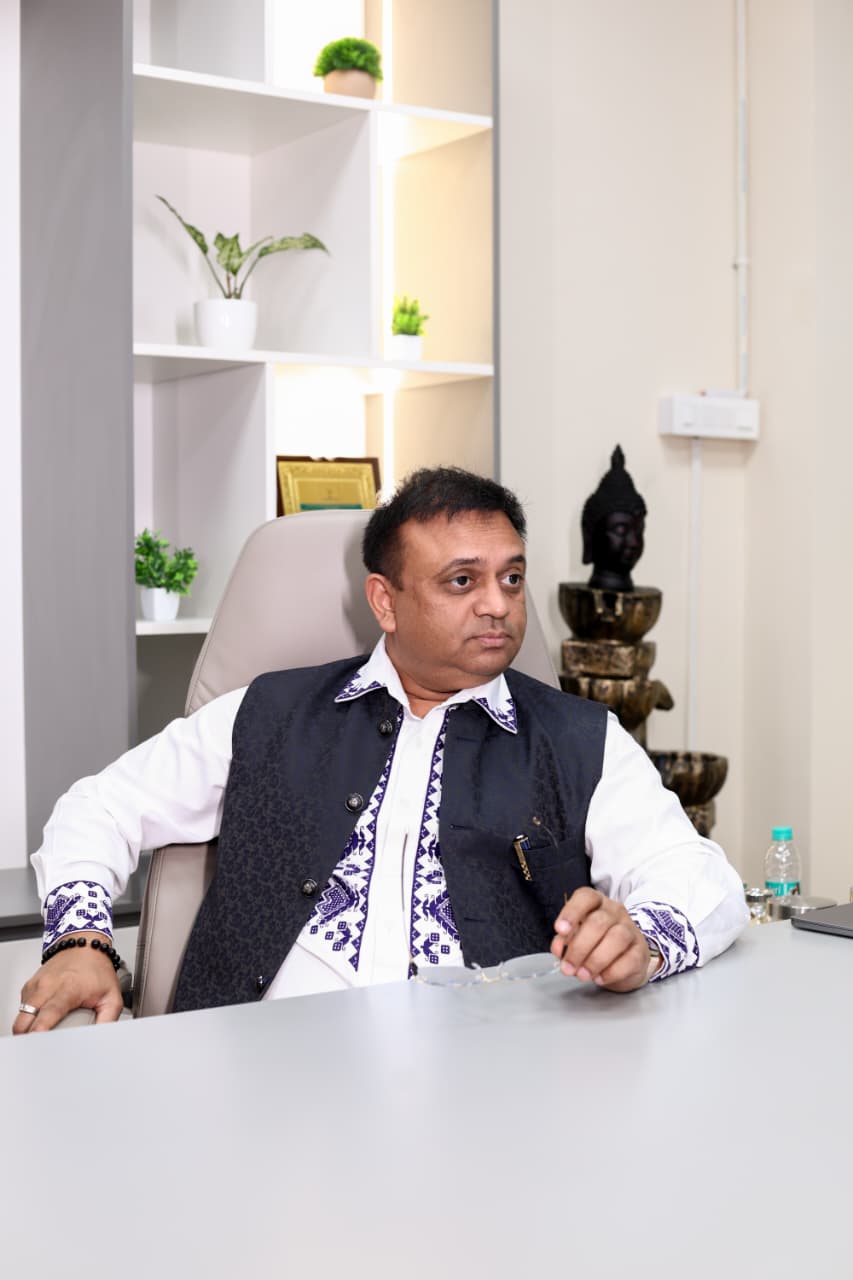
Photo: Nagender dreamed of helping people feel no limitations after amputations (provided by the speaker)
"I realized that my mission is to help people understand that life doesn't end after an amputation. That you can live confidently and forget you're wearing a prosthesis. Simply find your place in society, contribute both to yourself and to the country, and not depend on anyone," the businessman says.
For many years, he worked with imported components, but their quality did not meet his high standards. So in 2014, when Russia launched its war against Ukraine, Nagender and his team decided to manufacture the components themselves. Today, the Bez Obmezhen network employs around 120 people and has branches in Lviv, Kovel, Vinnytsia, Chernihiv, Dnipro, Kryvyi Rih, Zaporizhzhia, and Odesa.
"The most important thing is that I have a team I trust. Everyone works for results and for the sake of the men and women defending us. It's great working with Ukrainians. I've been here since my student years. In fact, it's harder to work in India than it is here," Nagender admits.
The company manufactures only part of its components in India, while its most advanced parts are produced in Ukraine. Among them is its latest innovation—unique knee joints that absorb shock, maintain balance, and instantly respond to changes in terrain.
"I've seen people with above-the-knee prosthetics fall. I really wanted to solve that problem, and eventually we succeeded. Now patients using our designs confirm they haven't fallen even once. A few months ago, we finally completed the refinement of this technology. Now these people also have the opportunity to live full lives," Nagender Parashar says.
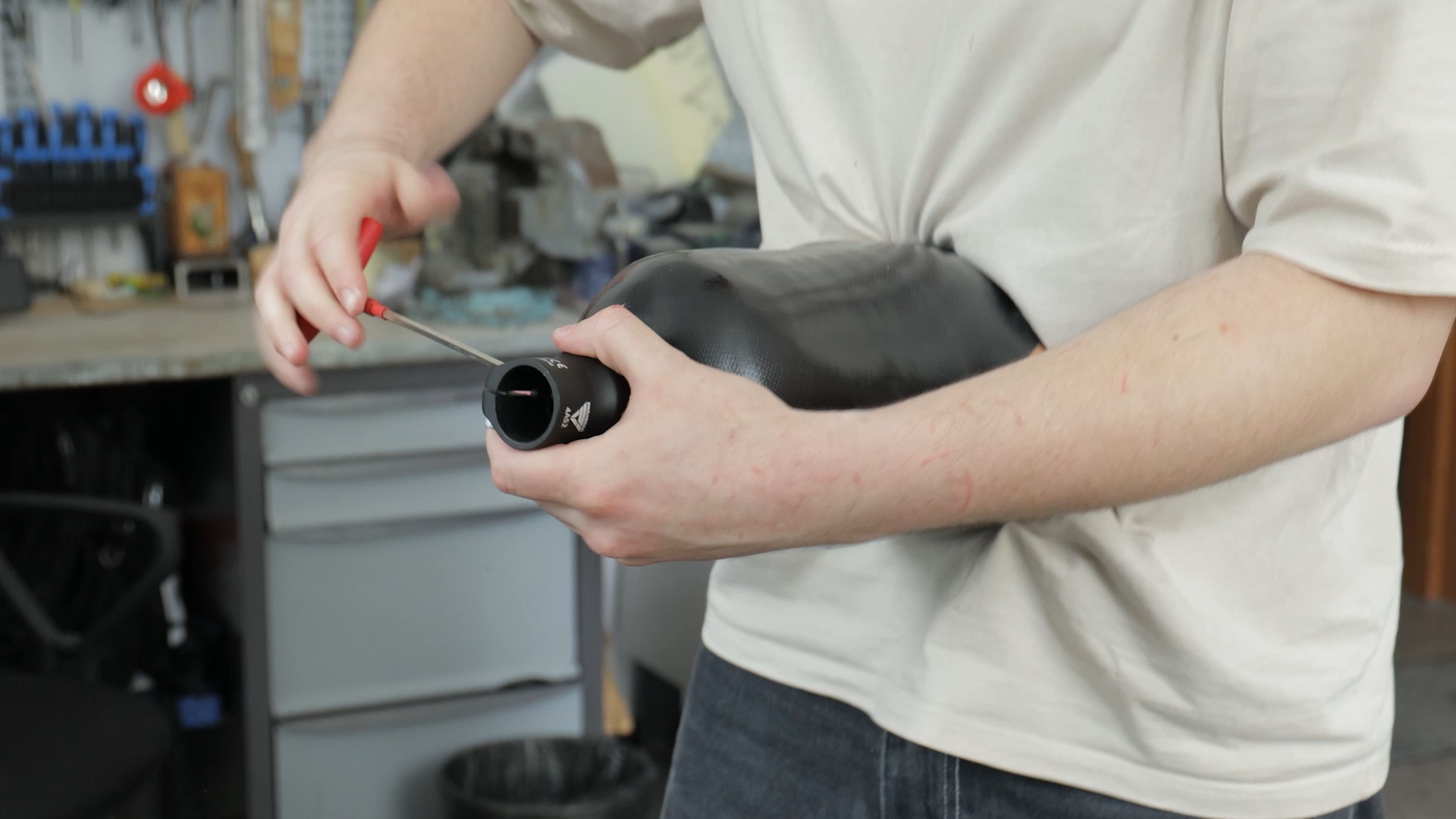
Photo: At the Bez Obmezhen center, they manufacture and help patients select prosthetics (provided by the speaker)
How Ukraine is perceived in India and business prospects
In India, people do not always clearly understand the reasons behind Russia's aggression because Russia constantly tries to influence the local information space. Nagender Parashar explained how he tries to tell Indians the truth.
"People in India have different attitudes toward Ukraine. Many think it's simply a matter of the countries' leaders: 'Zelenskyy won't compromise, and Putin won't compromise.' But I explain it with simple analogies: someone breaks into your home, attacks you, and takes a hundred kilometers of your land. Would you simply give it away? No, you wouldn't. Because then they'll take another hundred kilometers," he explains.
Nagender believes that any territorial compromises would only legitimize the aggressor's crimes and that the key to ending the fighting lies solely in Moscow.
"If one person in the Kremlin says, 'Enough,' the war in Ukraine will end in a second."
The businessman actively participates in economic initiatives and has become a kind of ambassador for Ukrainian technologies to Indian businesses.
"The Ukrainian Embassy in India organizes various investment events, and I speak at them as an advocate for Ukraine. I talk about digitalization, about Diia, and about how many processes in the country have become much more convenient," Nagender says.
Even during martial law, he encourages Indian entrepreneurs to start building ties with the Ukrainian market now rather than waiting for the security situation to change.
"I tell them that the investment climate here is excellent, the government provides support, and the embassy is here. And when the war ends, you'll already have partners here, established processes, and your business will be successful," the businessman says.