How Zelenskyy picked new army chief and whether ousted defense minister is entering politics


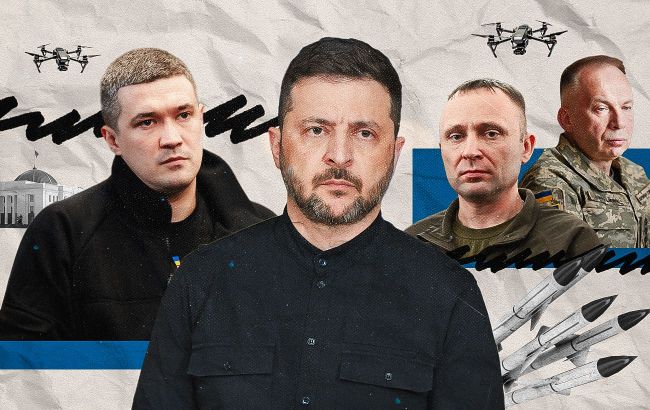 Photo: Volodymyr Zelenskyy, Mykhailo Fedorov, Mykhailo Drapatyi, and Oleksandr Syrskyi (collage by RBC-Ukraine)
Street protests against the dismissal of Mykhailo Fedorov continue, but the President’s team considers the matter closed.
For details on where Volodymyr Zelenskyy went wrong, why he decided to replace Oleksandr Syrskyi, how the selection process unfolded, as well as Fedorov’s own approval ratings and plans—read the RBC-Ukraine article.
Key points:
- A political project for the former minister: Behind the scenes, there is talk of forming a new party led by Fedorov. The former minister’s associates say he has no plans to enter politics for now.
- Protests on Franko Square: The President’s team believes the rallies in support of Fedorov will soon die down.
- Selection of the Commander-in-Chief: Zelenskyy asked his inner circle to analyze potential successors to Syrskyi. Drapatyi was chosen to show the military new approaches.
- Conflict surrounding the Ministry of Defense: Fedorov’s course of action came as a surprise to Zelenskyy’s team. The former minister’s office says he did not violate any prior agreements.
"For the second time in two years, we’ve hit the same wall with the progressive audience," a source close to Zelenskyy told RBC-Ukraine. He is referring to the current protests against the dismissal of Mykhailo Fedorov and last year’s protests against restrictions on the independence of the National Anti-Corruption Bureau of Ukraine (NABU) and the Specialized Anti-Corruption Prosecutor's Office (SAPO).
When, more than two weeks ago on July 12, President Zelenskyy launched the whole government reshuffle, he and his allies could hardly have anticipated what it would lead to: the second large-scale protest since the start of the war, as well as the dismissal of Commander-in-Chief Oleksandr Syrskyi.
So what went wrong?
What Zelenskyy and Fedorov Discussed Behind Closed Doors
"We didn’t take into account that Mykhailo would start fighting back. There had probably never been a precedent for a minister—let alone a defense minister—trying to issue ultimatums to the president. Moreover, Mykhailo himself had said earlier: 'If you decide to fire me, just say so; I’ll write a letter of resignation and leave,'" says another source close to Zelenskyy speaking to RBC-Ukraine.
 Photo: Volodymyr Zelenskyy and Mykhailo Fedorov (facebook.com/zelenskyy_official)
Read also: Under public pressure. Why Zelenskyy dismissed Ukraine's army chief and what he offered Fedorov
Those in Fedorov’s inner circle see the situation quite differently.
"The President initiated the Cabinet reshuffle essentially to remove Fedorov. And no one told him to write a resignation letter. If they had told him to—he would have done so, as he promised. But instead, just half an hour before the Servants faction meeting, he was told that the President would nominate Khmara for the Ministry of Defense," says a source.
Zelenskyy and Fedorov held several lengthy closed-door meetings after the Verkhovna Rada, having approved the new Cabinet lineup (excluding the ministers of foreign affairs and defense), adjourned for recess the week before last.
Following these meetings, Zelenskyy publicly offered his former minister several other positions, including that of Deputy Prime Minister for Digital Innovation.
Several RBC-Ukraine sources from various camps confirmed that the explanation given by Zelenskyy during these meetings was as follows: since Fedorov’s team at the Ministry of Defense generally remains in place, they will continue to handle operational activities. And if the process lacks an overall vision, Fedorov could provide it, for example, in the role of deputy prime minister—a ministerial portfolio isn’t required for that.
"That’s not how the system works. A deputy prime minister can’t influence the situation. When you’re a minister, you sign documents; you build a team for specific tasks. But when you’re not part of the team, you cease to be part of this system," responds a source close to Fedorov.
And since Zelenskyy himself, as his team says, considers the matter of the defense minister settled—Yevhen Khmara will head the ministry—the question of Fedorov’s return is hardly relevant at this point.
"If they wanted to bring Fedorov back into the team, they would have offered him something right away. But now we understand that all these ideas about a deputy prime minister and so on are just meant to quell the street protests," says an RBC-Ukraine source close to the former minister.
Why Zelenskyy decided to replace commander-in-chief
The President did, however, make one concession to the protesters—he removed Syrskyi from the post of commander-in-chief, with whom, according to RBC-Ukraine, he got along very well.
"When people say the President has gone stiff, that’s not true at all. But he decided to separate the wheat from the chaff. And he didn’t start by consulting with the protesters about the new commander-in-chief, but rather with top military officials," says a source in the president’s inner circle.
He is referring to a veritable marathon of meetings with commanders of various corps, reports of which appeared one after another on the President’s social media accounts.
_1.jpg) Photo: Andrii Hnatov, Oleksandr Syrskyi, Volodymyr Zelenskyy, Mykhailo Drapatyi (t.me/V_Zelenskiy_official)
Photo: Andrii Hnatov, Oleksandr Syrskyi, Volodymyr Zelenskyy, Mykhailo Drapatyi (t.me/V_Zelenskiy_official)
According to the agency’s source, it wasn’t easy to really get the commanders to open up—they are military men, accustomed to hierarchy. But this was offset by the sheer number of meetings.
At the same time, Zelenskyy tasked several trusted individuals with conducting a comprehensive analysis of various candidates, gathering information from their former and current colleagues, subordinates, superiors, and so on.
"I think this was one of the best—if not the best and most systematic—staff selection processes we’ve ever conducted. At the same time, about 95 percent of the people said that there was no alternative to Syrskyi in terms of scope, experience, and competencies. But we needed to show the military some new approaches," one of those involved in this so-called casting process told RBC-Ukraine.
He adds that some potential candidates even withdrew their candidacies, citing a lack of knowledge and skills.
"In the end, Drapatyi turned out to be the closest to the so-called second choice. Apostol was also a candidate, but he is considered close to Syrskyi, and they didn’t want to give the impression that they made the replacement just for appearances’ sake," explains the source.
From a purely pragmatic standpoint, the situation may appear as though Zelenskyy gave in in this instance, made concessions, and even sent a signal within the system: namely, that if external circumstances unfold in this way, anyone could be kicked off the team.
But those close to the President insist this shows that the President hasn’t lost touch with the people, just as he didn’t a year ago during the NABU and SAPO saga (although at that time there was also significant pressure from Europe).
One of the agency’s sources even recounts that last year, at the start of the first protests, ideas were floated during meetings on the matter to stage some kind of provocation there—but Zelenskyy himself put a stop to it.
In any case, however, the President’s willingness to compromise or listen has its limits. Having met one of the protesters’ demands—removing Syrskyi—he clearly has no intention of meeting the other—reinstating Fedorov.
Meanwhile, the protests themselves continue. This coming Friday, just before Zelenskyy’s return from abroad, there is even talk of changing their format—holding a march instead of a static protest in the square near the Franko Theater.
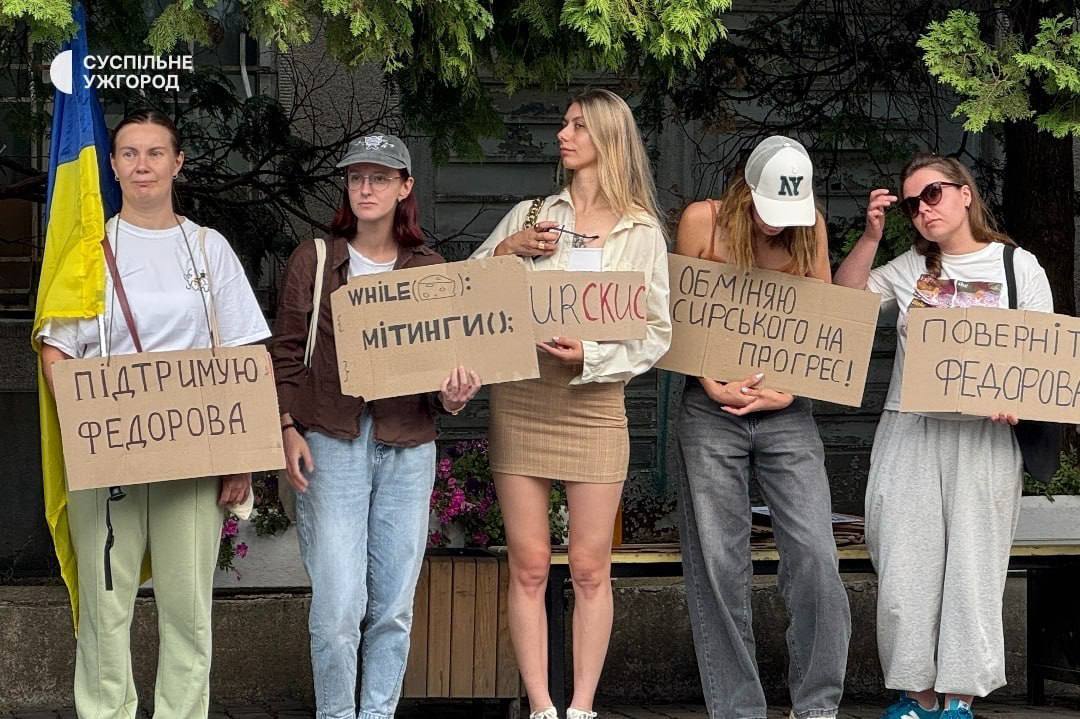 Photo: Protests against Fedorov’s dismissal (Suspilne)
But overall, sources within the Presidential team believe the protests will die down over time.
"They’ll need to adopt a systematic approach; they won’t be able to protest for long just on a whim. Besides, protests have power when they don’t turn into Hyde Park—when there’s one strong, clear demand, rather than everyone demanding something different, as was the case with Kim," says one of them.
Does Fedorov have political ambitions?
In any case, the turbulent events of the past few weeks have had an immediate electoral impact. According to a poll by the Rating group conducted on July 20–21, Fedorov has surged into the ranks of the frontrunners in the presidential race—13.4% of Ukrainians are ready to vote for him (whereas before the crisis, the agency’s sources estimated Fedorov’s actual electoral standing at 2–3%).
Fedorov has almost caught up with Valerii Zaluzhnyi (14.9%), but still trails Zelenskyy, who has a 22.3% approval rating. However, in terms of trust—at 65%—Fedorov has already surpassed the President, as 59% of voters trust him.
Meanwhile, the head of the Presidential Office, Kyrylo Budanov, has seen a noticeable drop in support, with 7.2% of Ukrainians ready to vote for him. All of RBC-Ukraine’s sources confirm that Fedorov’s support has grown primarily at the expense of the Presidential Office head’s supporters. In addition, Fedorov has chipped away at the electorate of both Zelenskyy and Zaluzhnyi, as well as the new military groups such as the Third Assault and Azov, and even Petro Poroshenko.
"We don’t even need to do anything—all those whom Mykhailo has bitten will now start attacking him on their own. Just as Poroshenko’s supporters once attacked Prytula when he had high ratings," asserts an RBC-Ukraine source in the President’s inner circle.
His words are partly confirmed—for example, some of Zaluzhnyi’s supporters have been lashing out quite harshly at Fedorov on social media in recent days.
At the same time, Zelenskyy’s team is confident that Fedorov’s rise in the polls is purely temporary.
"It all depends on what he does next. If he enters politics, he’ll have to compete with us somehow, but he’ll need to do so carefully, without crossing the line," muses one of RBC-Ukraine’s sources.
Fedorov’s camp also acknowledges that the current sharp surge in popularity is temporary. They insist that the former minister has no intention of entering politics. However, says a source close to him, everything will depend on how events unfold—regarding the protests, the situation at the front, and any potential pressure on Fedorov personally or his inner circle.
At the same time, alongside the official version—that Fedorov was fired due to a conflict with Syrskyi—as well as the version about a struggle for control of the state arms procurement market, a political version is circulating behind the scenes: namely, that the former defense minister had clear political ambitions and had his sights set on higher office.
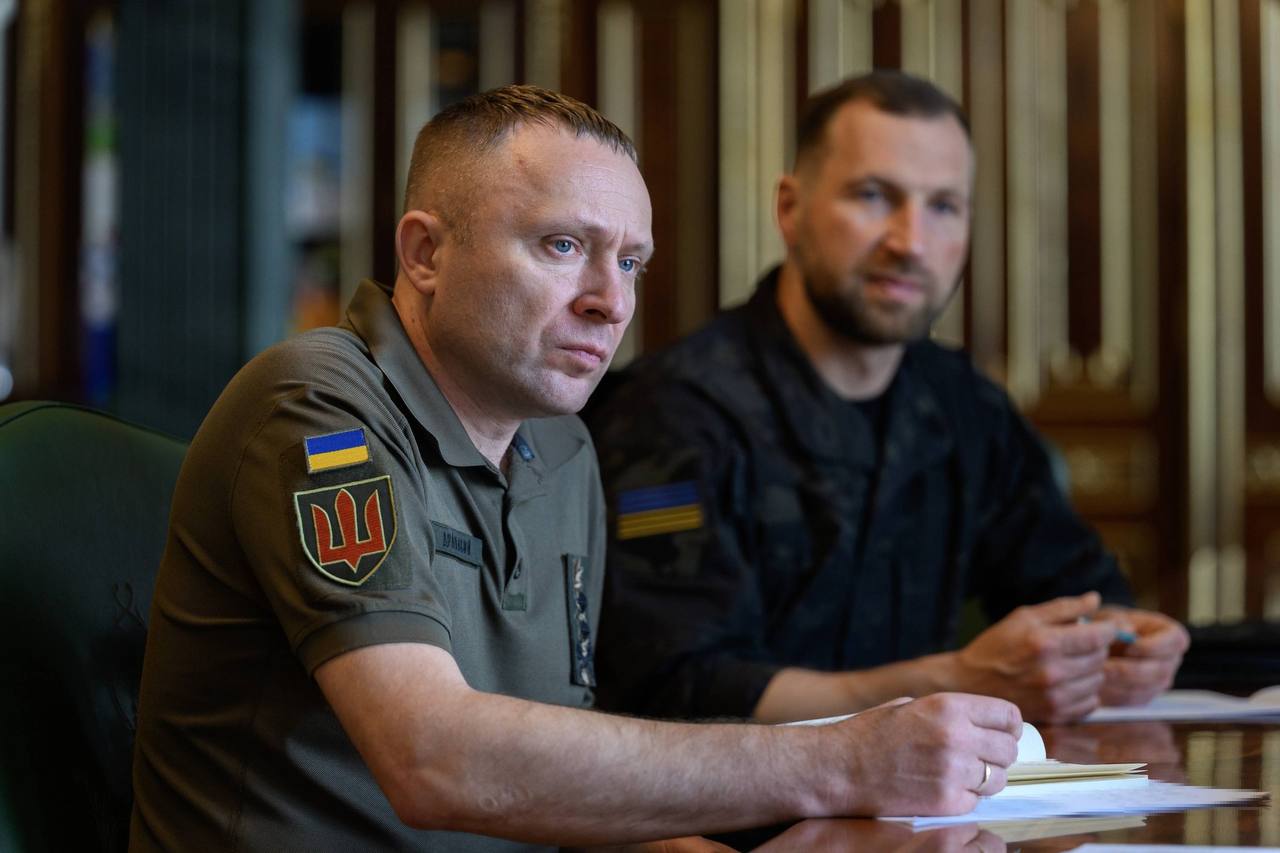 Photo: Mykhailo Drapatyi and Yevhenii Khmara (t.me/V_Zelenskiy_official)
Several sources within Servant of the People interviewed by the agency assert that Fedorov could potentially become the face of a new progressive, liberal, and anti-corruption project in the vein of Holos or Samopomich parties. They say that potential members of such a party have conducted social surveys, and the main thing they lacked was a charismatic leader—a role in which Fedorov would fit naturally. However, this is nothing more than speculation for now.
"Mykhailo has found a way to guarantee that he won’t go into politics on his own but will remain on the team; if not, he’ll go into business or work with think tanks in the defense sector or something similar. So these are all just excuses," says an RBC-Ukraine source close to Fedorov.
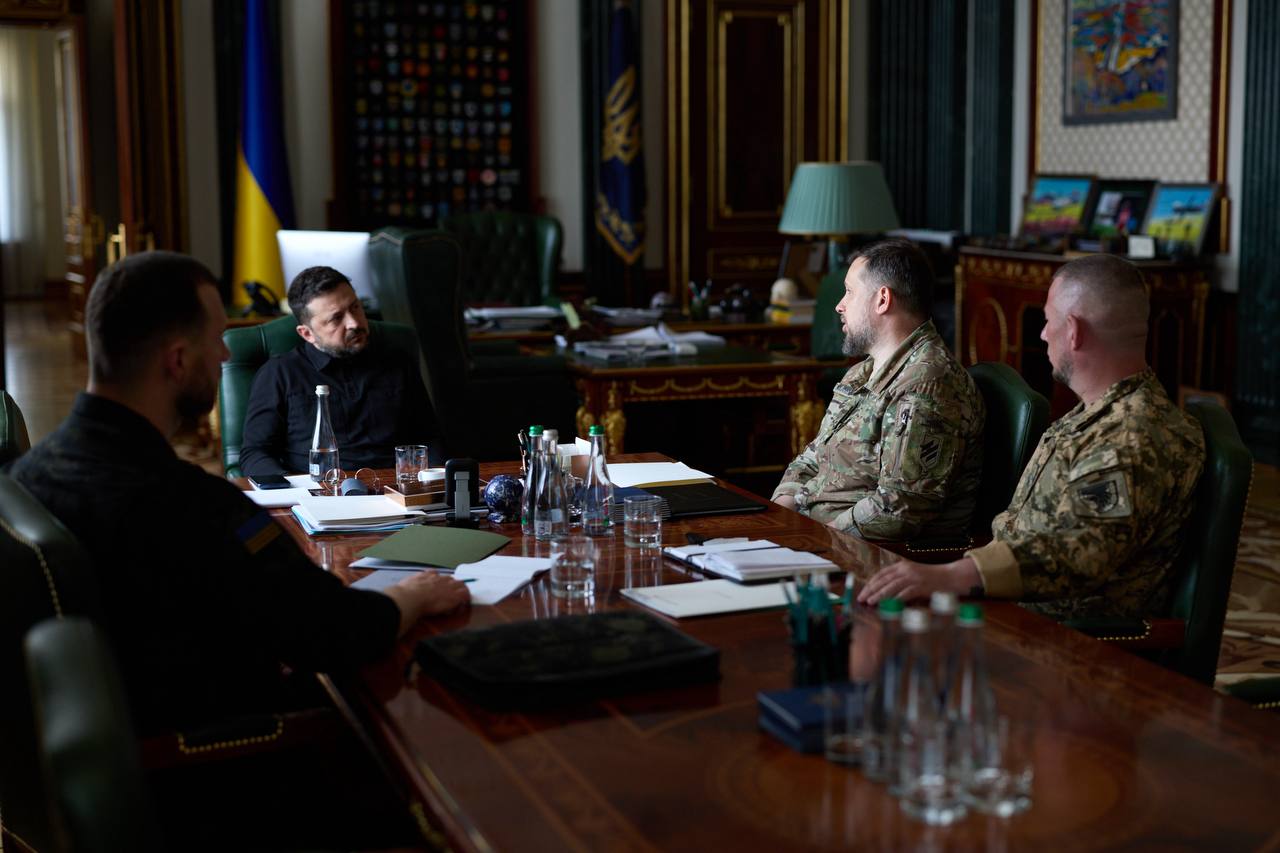 Photo: Volodymyr Zelenskyy at a meeting with Andrii Biletskyi (t.me/V_Zelenskiy_official)
"I’ve been trying for a long time to find a way to describe the crisis we’re facing now and what it was like a year ago. It seems to me the formula is the new versus the old. Last year it wasn’t so noticeable, but now it’s very clear: a new minister, new technologies, new drones… Why didn’t people feel this? Perhaps because we’ve been in power for so long. In any case, the bottom line of this whole story is that an active minority has formed in Ukraine. And it will continue to influence all processes," a source within Zelenskyy's party shared his thoughts with RBC-Ukraine.
Quick Q&A
– Why did President Zelenskyy decide to dismiss Syrskyi?
– This was the only major concession made to the protesters. At the same time, the Office of the President conducted a survey among brigade commanders: 95% of them stated that there was no adequate alternative to Syrskyi, but it was important for the Presidential Office to demonstrate a change in approach to the army.
– Why did Mykhailo Fedorov turn down the offered position of deputy prime minister?
– The former minister viewed the position of deputy prime minister for innovation as a mere fig leaf. Those close to him are convinced that without direct leadership of the ministry and the authority to sign documents, an official loses real influence.
– Who was considered the successor to the commander-in-chief, and why weren’t all candidates approved?
– Mykhailo Drapatyi became the leading second-choice candidate. General Apostol was also on the shortlist, but his candidacy was deliberately rejected due to his closeness to Syrskyi.
– What are the political consequences of this scandal for the former defense minister?
– Fedorov’s approval rating surged sharply to 13.4% and surpassed the President’s approval rating (65%). This electoral surge was driven by a shift in voters away from Kyrylo Budanov. But for now, Fedorov has no plans to enter politics.