Europe in flames: Why protests in France spreading and how they threaten Ukraine


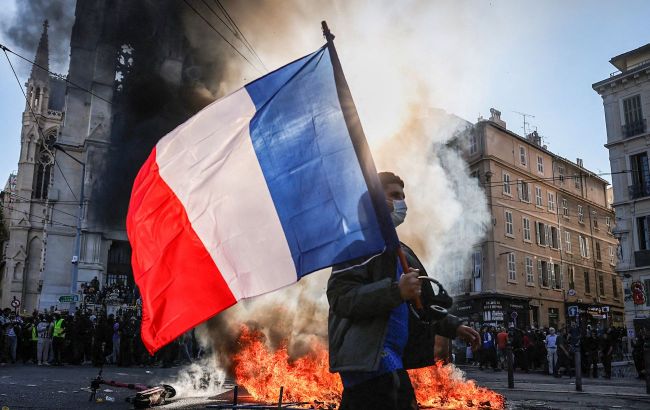 A protester in France (Getty Images)
Over the weekend, rioters in France set fire to the historic city hall in Limoges. Police arrested more than 1,800 people across the country. This marks the culmination of the unrest, but apparently not the end of the protests spreading across Europe.
RBC-Ukraine explains why the protests erupted, how they are evolving, and what consequences they could have for Ukraine.
Key points:
-
Cause of the unrest: Protests erupted over the chronic crisis in schools and government plans to cut social spending, but later took on a political dimension and descended into general chaos.
-
Spread across Europe: A wave of solidarity protests swept across neighboring countries amid shared socioeconomic problems facing young people.
-
Radicalization of the political landscape: Street confrontations benefit far-right political forces and threaten to destroy the moderate center.
-
Threat to Ukraine: Domestic turmoil shifts allies’ attention elsewhere and creates a risk that support for Kyiv could be reconsidered.
European protests began in France a month ago. The initial causes were related to long-standing problems in the education system. These included inadequate learning conditions, a shortage of teachers, excessive workloads, and poorly maintained school facilities.
The protests began with a local incident. On September 17, teachers at Lycée Saint-Exupéry in a suburb of Paris went on strike over staffing problems. According to them, the school had no teachers for mathematics, French, history, literature, and other subjects.
Just the day before, the government announced plans to impose strict limits on and cut funding for social sectors, including the education system, in its draft budget.
The following morning, high school students joined the teachers in their protest. Barricades began appearing around the school building. Soon, the protests gradually spread across France. They were supported by the High School Students’ Union and other school organizations, as well as student unions.
In late September, the demonstrations also received support from the leading public-sector trade union confederations: CGT, FO, and Solidaires.
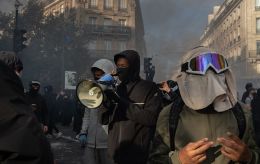
Although most demonstrations were peaceful, some protesters set fire to garbage bins, vandalized bus stops, or clashed with police. Officers responded with batons, tear gas, and rubber bullets to quell the unrest.
It should be noted that France has a deeply rooted culture of street protest. The French have traditionally viewed demonstrations as an effective tool for putting pressure on the authorities. This legacy stems from the numerous revolutions of the 18th and 19th centuries, the events of 1968, and the relatively recent Yellow Vest protests during Macron’s first term.
Overall, the protests have unfolded in waves, generally subsiding on weekdays before gaining renewed momentum over the weekends, as the French authorities’ response to the demonstrators’ concerns remains half-hearted.
On the one hand, the government announced the emergency deployment of several thousand substitute teachers to the most understaffed schools and promised to allocate additional budget funds for school repairs. On the other hand, the overall austerity measures in the state budget have not been revised, further reinforcing protesters’ sense that their concerns are being ignored. The harsh response by French security forces has also fueled the protests.
Moreover, the French protests have spread beyond the country’s borders and attracted attention across Europe. Solidarity rallies, school occupations, and student marches have spread to Belgium and Italy, as well as Spain and Austria.
In those countries, young people have taken to the streets with similar slogans, expressing support for French high school students and protesting cuts to education spending and social problems at home.
Political consequences
As time goes on, the protests are increasingly turning into demonstrations against the French government as a whole, in all its forms. Sometimes, entirely unrelated issues are added to the agenda.
For example, Palestinian flags have also appeared on the streets during the unrest. This is hardly surprising, as left-leaning young people in Europe have long held anti-Israeli sentiments, particularly among migrants from Arab and African countries.
In many places, the protests have effectively lost any political agenda, devolving into outright hooliganism and looting.
At the political level, the protests have received active support from Jean-Luc Mélenchon’s far-left party, La France Insoumise. The radical left has not only publicly urged young people to continue resisting but is also trying to take the lead in setting the agenda. Their apparent goal is to turn the revolt over education into a nationwide revolution against Emmanuel Macron’s budgetary policies.
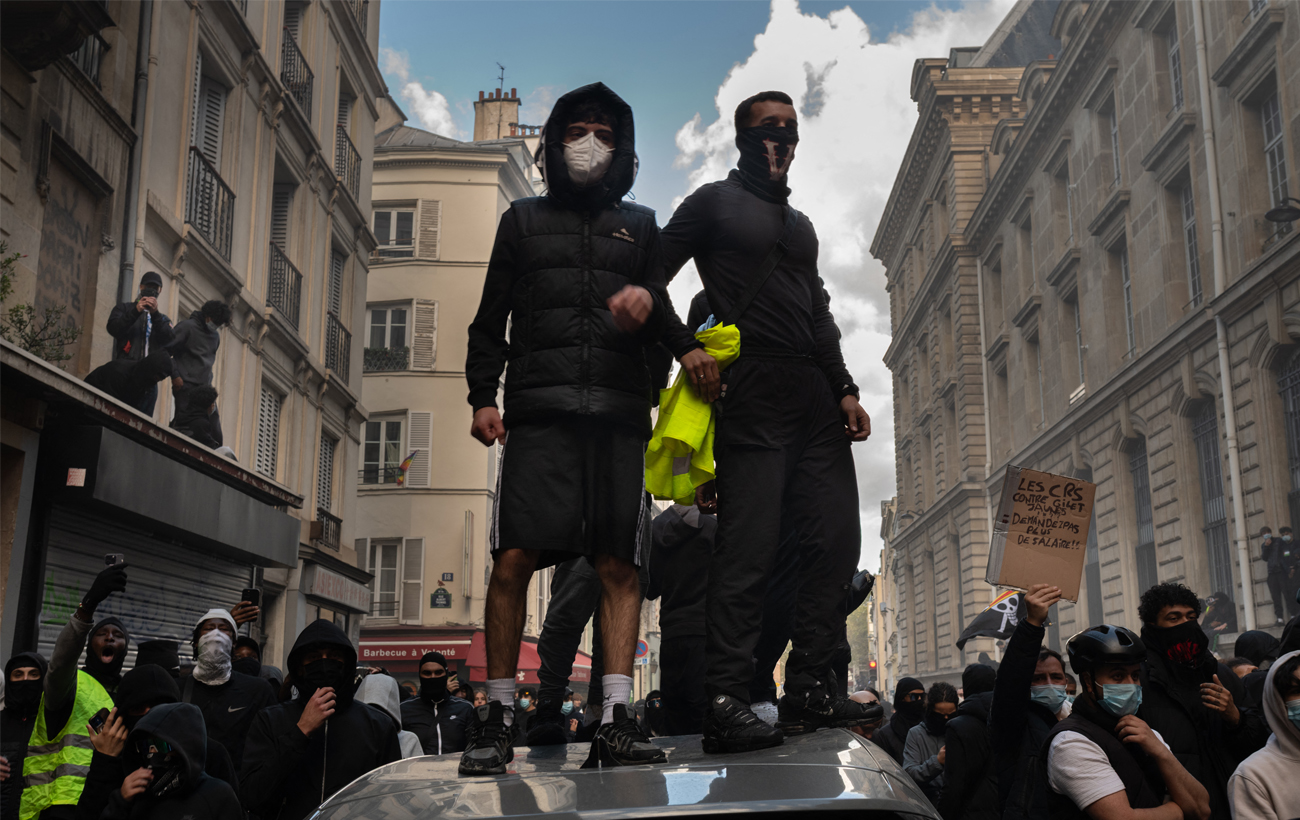
Protesters on the roof of a car in central Paris (photo: Getty Images)
The far right has backed the authorities in this situation, calling for "vandals" to be punished harshly. In the longer term, however, the protests play into the hands of Marine Le Pen and the National Rally, with their anti-immigration rhetoric.
"Clearly, among other things, this strengthens the position of the far right in France, as the authorities are currently unable to get a handle on what is happening. There is a strong emphasis on migrants being behind many of the protests, and this is very clearly reflected on social media," Oleksandr Leonov, executive director of the Penta Center for Applied Political Studies, told RBC-Ukraine.
According to him, the main danger is that the current crisis threatens to further marginalize moderate politicians in France ahead of next year’s presidential election.
If the "streets" continue to radicalize, there is a risk that only radical candidates—from the far left and the far right—will make it into the second round.
Consequences for Ukraine
The protests have been most visible in France. However, the fact that they have received support in other EU countries points to shared problems and the difficulties involved in resolving them.
Europe experienced a similar trend in May 1968. At the time, protests in Paris’s Latin Quarter also began with student demands to reform the outdated higher education system. But after violent clashes with police and the construction of barricades, trade unions and workers joined the students.
Ultimately, the unrest escalated into protests across Europe, triggered a political crisis in France, and eventually led to the resignation of President Charles de Gaulle.
Read also: Macron slams unrest in France, questions how protesters can do this to their country
For Ukraine, the current turmoil poses significant risks. Domestic social unrest in partner countries inevitably shifts the focus of European governments and societies away from foreign policy and resisting Russian aggression toward putting out their own internal "fires."
In addition, the radicalization of voter sentiment and the possible rise of extremist forces to power threaten to bring about a reassessment of support for Kyiv.
"The situation in France will primarily affect support for Ukraine and also the health of the European Union, since France is one of the EU’s key countries. If there are moves to halt funding for European programs or, for example, to start talking about making peace with Russia, this will lead to a deep crisis in European politics as a whole," Oleksandr Leonov told the publication.
Meanwhile, Kremlin propaganda is already trying to use footage of arson and clashes in France to fuel anti-immigrant fears and promote the narrative of a "divided and weak Europe."
In 1968, the protests were suppressed, but systemic reforms did eventually follow. Whether that will happen this time remains an open question. Unlike back then, Europe now faces far more challenges and threats.
Quick Q&A:
– Why did protests erupt in France?
– The protests were triggered by a teachers’ strike on September 17 over a shortage of teachers, poorly maintained school facilities, and excessive workloads. The anger of educators and teenagers intensified after the government announced plans for severe cuts to social spending in the new budget.
– Why did Palestinian flags appear at demonstrations in Europe?
– The appearance of Middle Eastern symbols is linked to the active participation of young people from migrant suburbs and the involvement of far-left organizations. In Europe’s contemporary protest movements, the Palestinian flag is seen as a universal symbol of resistance to the authorities and the fight against inequality.
– Which European countries have been swept up in the wave of education protests?
In addition to France, solidarity rallies, student marches, and school occupations have taken place in Belgium, Italy, Spain, and Austria. Young people in these countries have taken to the streets with similar slogans opposing cuts to public education spending.
– How could the protests in France affect support for Ukraine?
– Large-scale domestic unrest forces allied governments to shift their attention from foreign policy to internal problems. In addition, the growing popularity of radical forces creates a risk that the scale of financial and military assistance to Kyiv could be reconsidered.
– Who benefits from the political crisis in France?
– Prolonged turmoil and street unrest play into the hands of far-right forces, particularly Marine Le Pen. Growing chaos and the focus on migration strengthen anti-immigration rhetoric and threaten to undermine the moderate political center.