End of friendship? Inside Trump's new US playbook and Europe's growing fears


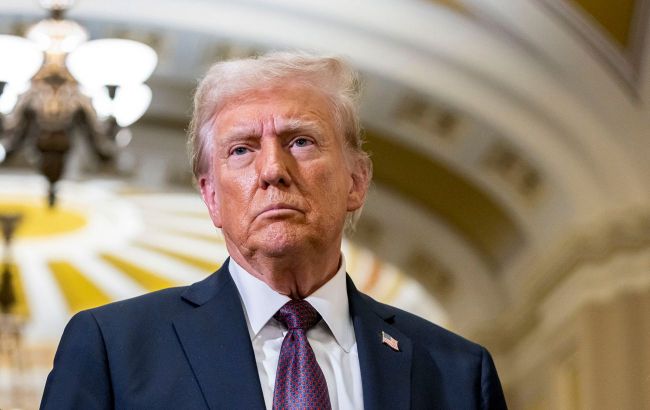 Donald Trump (photo: Getty Images)
US President Donald Trump has launched another wave of criticism against Europe, with Washington no longer considering Europeans to be unconditional official allies. RBC-Ukraine explores what this means and whether the US could close its security umbrella over the European continent.
Key questions:
- What was the essence of Trump's criticism of Europe during his first term?
- What marked Trump's second term and shocked Europeans?
- What is the new US national security strategy?
- Does the US really plan to end security cooperation with Europe?
- How does this relate to the negotiation process to end the Russia-Ukraine war?
- With the arrival of Donald Trump, the US administration's policy towards Europe has changed significantly. While the US was previously considered Europe's number one partner, in recent months, there have been fewer and fewer signs of this.
Trump has criticized Europe before. During his first term as president, the American leader said that European countries were freeloading on the US in the security sphere, called NATO weak, and expressed his dissatisfaction with the amount of money Europe spends on defense.
When Trump won the election for the second time, it became clear that his attitude toward Europe had not changed. He continued to criticize Europeans for their carefree approach to the defense industry, emphasizing that they have to pay for security, and the North Atlantic Alliance remained weak in his eyes.
However, the situation in the world changed dramatically during Trump's two terms in office. At a time of full-scale Russian invasion of Ukraine and Russian provocations against the European Union, the US President's statements are no longer perceived as abstract geopolitics, but as a direct threat to European security.
Formidable Trump
The United States has always been considered Europe's main strategic partner. They declared common values, the key ones being democracy and a rules-based world order.
Everything changed when Donald Trump became the master of the White House, especially the second time around. His approach to doing business was strikingly different from the European one. Trump, who was used to speaking the language of business and deals, openly sought only to benefit from the partnership with the Europeans. And since he believed that friendship with America was more beneficial to the EU than to the Americans themselves, the dialogue did not get off to a good start.
Trump's general line of criticism of Europe was defense spending. During his first term, the American President repeatedly stated that European countries were neglecting this issue while the US was ensuring their security.
So even before Trump's victory, European leaders' expectations were quite pessimistic. Based on previous experience, they understood that criticism from the new US President would once again rain down on them. And it did not take long to materialize.
After arriving at the White House, Trump immediately questioned the prospects for European independence, complained about migration policy, and so on. Of course, he did not forget to mention that the United States continues to invest unilaterally in European security.
Then members of his team joined in. First, US Secretary of War Pete Hegseth addressed the European public in Brussels. He stated outright that the United States would no longer be the guarantor of European security. Vice President JD Vance's speech at the Munich Security Conference came as a real shock. The main thesis was that US values now differ from those in Europe.
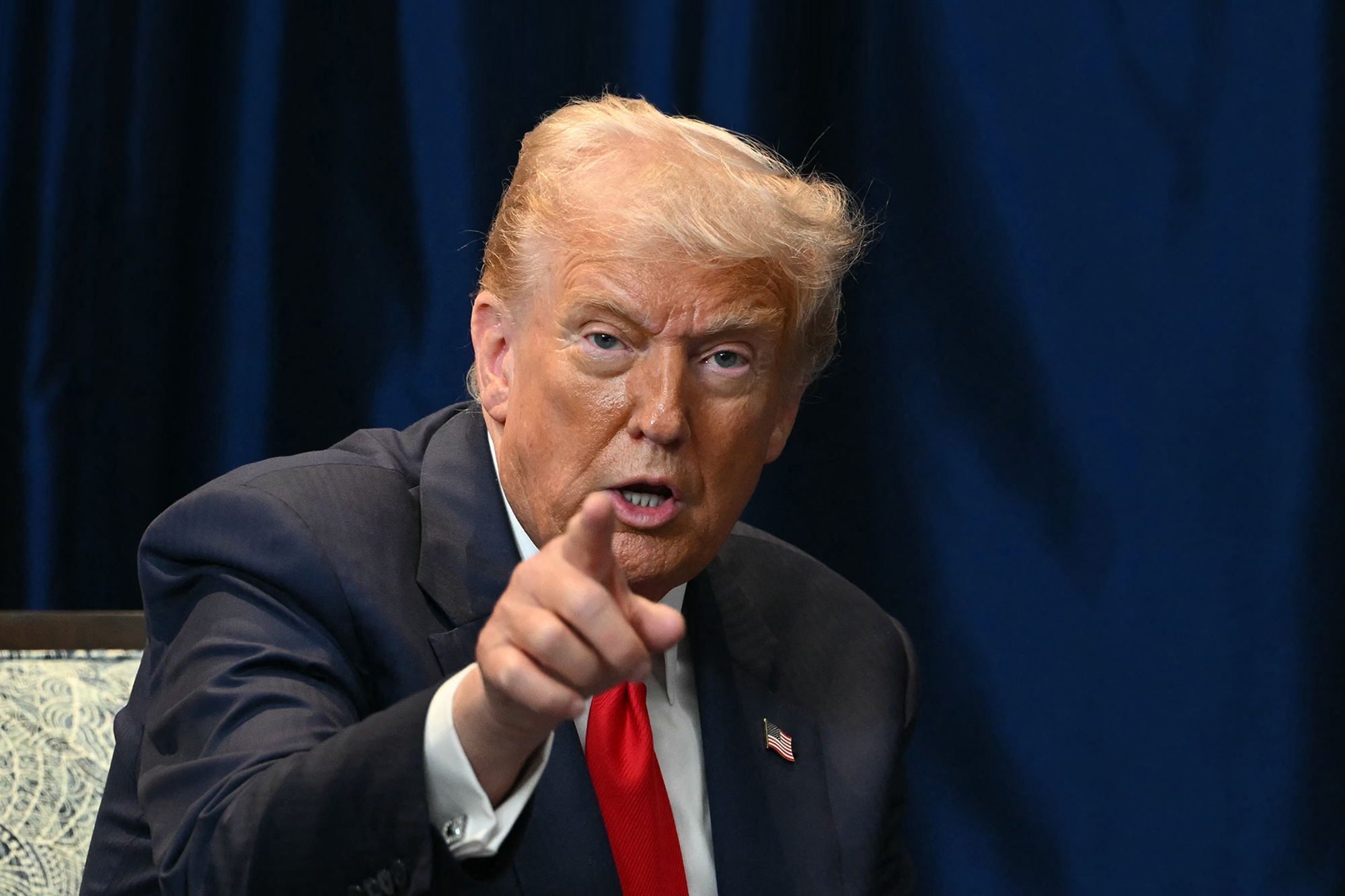 Donald Trump (photo: Getty Images)
JD Vance stated that Europe's policy of combating propaganda and disinformation restricts freedom of speech, indicating that there is currently no basis for discussing a shared vision of democracy on both sides of the Atlantic.
The US Vice President's speech then became the main topic of conversation in the corridors of the Munich Conference. The European audience took a long time to recover from the shock and was at a loss for words.
"It’s Sunday morning, but I feel like we’re at a psychiatrist’s panel. We are trying to calm down, manage our emotions, trying to say that we are not so bad and are doing everything we can. Unfortunately, this is a problem, and maybe it’s part of European culture – we are always reflecting," said Latvian President Edgars Rinkēvičs at one of the panel discussions.
After Vance's devastating speech, Europeans made several desperate attempts to establish relations with the new US administration. British Prime Minister Keir Starmer and French President Emmanuel Macron built bridges with the United States—they talked to Trump, invited him to visit, traveled to the US, and actively used a charm offensive strategy in an attempt to win over the American leader.
However, Finnish President Alexander Stubb unexpectedly achieved particular success in this area. He once spent about five hours with Trump in Mar-a-Lago (Florida - ed.) playing golf and engaging in political discussions. In this way, Stubb even secured a seat at the table where the US president discussed a peace settlement of the Russia-Ukraine war alongside the leaders of the largest European countries.
 Trump and Keir Starmer (photo: Getty Images)
At one point, Europe managed to tone down Washington's criticism, but Trump's main line remained unchanged. He continued to push the issue of security, the US umbrella, and increased European defense spending.
As a result, he managed to get Europe to promise to spend 5% of its GDP on security and defense. In addition, the US reduced the number of its troops in Romania and on NATO's eastern flank. This decision by the US only confirmed Europe's fears that it would now have to think about its own defense.
New wave of discontent
At the end of the year, Ukraine and Russia, under pressure from the US, entered into another round of negotiations. Contrary to Trump's desire to quickly resolve this issue and earn himself another medal for ending the war, the process was delayed again. The Kremlin once again put forward territorial demands, and Ukraine, as expected, did not agree to them.
In addition, in his latest interview with Politico, Trump was even more critical of Europe than before.
Trump criticized the European approach to migration policy, mentioned that NATO calls him daddy, and lamented that Paris and London have changed beyond recognition. He concluded by saying that some countries in Europe will soon become unviable and that many European leaders are stupid.
A few days earlier, the US had unveiled its updated National Security Strategy. It is based on Washington's intention to distance itself from external global conflicts and focus on its own country. This is broadly in line with Trump's main election slogan, Make America Great Again. But in the strategy itself, the US is effectively abandoning its traditional foreign policy format, and this applies primarily to Europe.
 Trump with European leaders (photo: Getty Images)
"After the end of the Cold War, American foreign policy elites convinced themselves that permanent American domination of the entire world was in the best interests of our country. Yet the affairs of other countries are our concern only if their activities directly threaten our interests," the introduction says.
The strategy also states that Europe faces the prospect of the destruction of civilization and that some European countries will be unrecognizable in 20 years or less.
"What Trump is proposing is essentially an authoritarian, anti-democratic model. At the same time, he criticizes Europe for allegedly deviating from democratic standards. Yet within the US, he himself violates these standards," political scientist Volodymyr Fesenko says in a comment to RBC-Ukraine.
In addition, part of the strategy is devoted to Russia's war with Ukraine. Washington wants to restore stability in Europe, and to do so, it is necessary to resolve the conflict as quickly as possible and end the hostilities. Given the US's attempts to push through territorial concessions, one can guess how quickly the US wants to end the war.
Against this backdrop, the information that Trump allegedly wants to create an alternative to the G7 together with Russia and China no longer seems completely unrealistic.
The new US strategy has been another revelation for Europe. German Chancellor Friedrich Merz says that the document contains parts that are unacceptable from a European point of view. He also notes that Europe must become more independent.
In response to the Strategy, the European Commission stated that decisions concerning the European Union are made by the European Union for the European Union, including issues of its regulatory autonomy, protection of freedom of speech, and a rules-based international order. In other words, they tactfully pointed out to Trump that they themselves would decide whether democracy in Europe was right.
The wave of criticism from Trump and the new approaches of the US in the field of foreign policy have once again raised the question in Europe of whether the US could close this security umbrella over the continent. This question is particularly relevant in view of Russia's actions in the war with Ukraine, periodic threats from Moscow, and Trump's rather loyal attitude towards Putin.
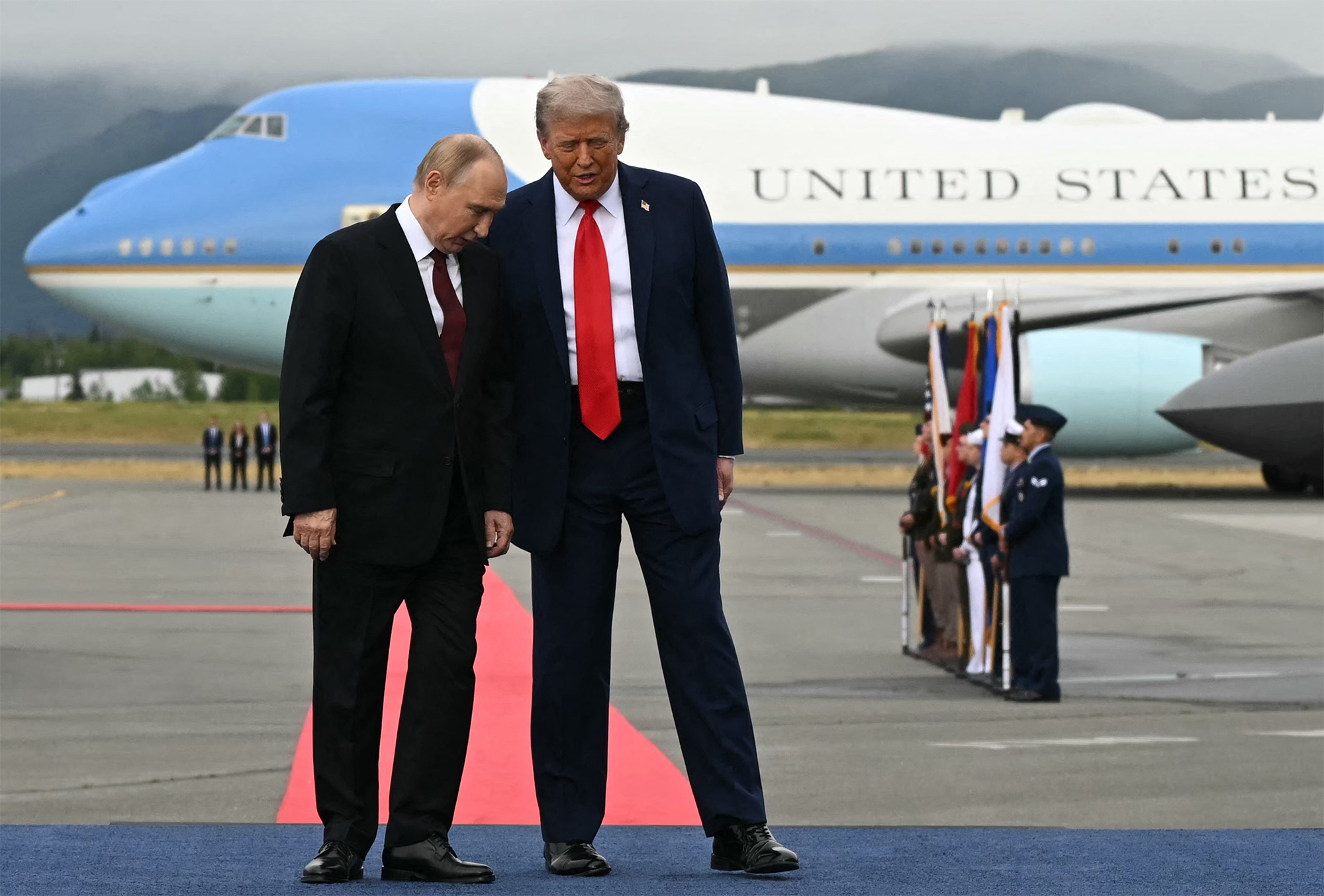 Trump and Vladimir Putin (photo: Getty Images)
Experts note that it is too early to talk about a complete cessation of US cooperation with Europe. The same applies to Washington's withdrawal from NATO. But there is still some common sense in Trump's words — for a long time, Europe has indeed neglected security issues.
"This is obvious. And not only in terms of nuclear weapons and missiles. Even conventional weapons and regular armed forces were based in the United States. Europeans have reduced their defense spending. In this sense, Trump's criticism may even have positive consequences. Europeans have begun to understand that they themselves must be responsible for their own defense and their own state," Fesenko notes.
But the change in priorities of America, which has always acted as a global arbiter, may have consequences. And, it must be said, it already has. Trump continues to be loyal to the Kremlin's demands and seems more willing to put pressure on Ukraine than on Russia. This approach could undermine NATO's authority, which has already been weakened recently by its sluggish response to Russian provocations.
"Not only is the global policeman taking off his sheriff's badge, but he is also starting to negotiate with gangsters. This is where the danger for NATO lies. It was an instrument of US influence in global politics. And Trump now has the power to destroy this instrument himself," Fesenko notes.
Such sentiments within the US administration cannot have a beneficial effect on its relations with Europe. What's more, Trump is clearly angry that European leaders are more supportive of Ukraine's approach to ending the war and are not prepared to put pressure on Zelenskyy alongside him. According to the Wall Street Journal, the US President has already expressed his indignation to Europe on this issue.
But so far, it seems that both Trump's verbal aggression and the US administration's national security strategy are being used more as a tool to put pressure on Europe. Despite public statements that matters in America are more important to Trump than those outside its borders, he likes the role of the “big daddy.” He wants to be listened to, asked for advice, and obeyed. In addition, Europe irritates Trump because it does not have a single leader.
"I got the impression when Zelenskyy and European leaders were visiting Trump that he was not very comfortable with so many people around. He feels comfortable when there is one leader. And he is responsible for everything. Like Putin, for example," Vladyslav Faraponov, head of the Institute of American Studies, tells RBC-Ukraine.
The expert also notes that he sees no signs that the US actually intends to end cooperation with Europe in any area. But through their actions, they are emphasizing what they want from Europe, reminding it of what they have said repeatedly: if you need our services, pay for them.
***
Many have already dubbed the current deterioration in relations between the US and Europe a European existential crisis. In reality, Europeans now have a chance to demonstrate their independence and finally build a military-industrial complex that is not dependent on the changing policies of the United States.
The paradox of the US's current claims against Europe is that it accuses it of neglecting democracy and expects it to make independent decisions, but does not want to see it as a separate player in the negotiation process. Trump makes it clear: either you agree with my position, or don't get in the way.
Europe has two options: to remain on Ukraine's side but worsen relations with the US, or to help the US put pressure on Kyiv and undermine the authority of the very institutions it has been building for decades. In any case, it would be wiser for Europeans to prepare for the possibility that, for the first time in 80 years, they will be left without their American big brother.
Sources: political scientist Volodymyr Fesenko, head of the Institute of American Studies, Vladyslav Faraponov, US National Security Strategy, and information from open sources.