Dust on children's dresses and fake cobwebs: A look inside towns near Pokrovsk


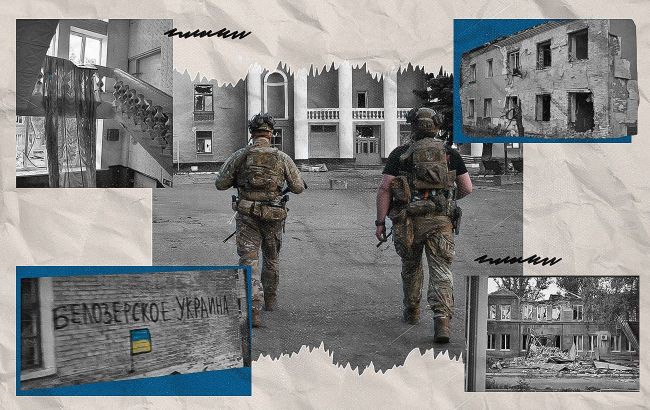 Photo: Life in the towns near Pokrovsk (collage by RBC-Ukraine)
Pokrovsk sector has become the stage for total aerial terror, where Russian drones hunt supply routes around Bilozerske and Dobropillia.
RBC-Ukraine correspondent Anastasiia Rokytna visited Bilozerske and the area near Dobropillia together with Ukrainian troops to see how towns close to the front line are living.
Key points:
- A new tactic of aerial terror. Russian forces are shifting strikes deeper into Pokrovsk district, increasingly targeting civilian and logistics infrastructure far from the line of contact.
- The war for logistics. Russians are conducting an "aerial hunt" for transport, trying to block ammunition deliveries, UAV shipments, and the evacuation of wounded soldiers.
- A "web" across the fields. The symbol of this stage of the war is kilometers of thin fiber-optic cable from ambush drones, literally entangling fields, roads, and tree lines across Pokrovsk district.
- The trap of the new normal. Front-line communities still have civilians with children who have adapted to deadly risks and refuse evacuation.
While Russian forces continue trying to advance in the Pokrovsk sector, their strikes are increasingly reaching far beyond the battlefield. Not only Ukrainian positions but also towns, roads, and logistics routes that support the defense effort are coming under attack.
Today, the war in the Donetsk region has taken on a new form. It is no longer just artillery or guided aerial bombs. It is dozens of FPV drones waiting along roads, fiber-optic UAVs, and anti-drone nets under which vehicle movement resembles a military operation of its own.
***
June, Donetsk region. Wind passes through the shattered windows of Bilozerske's House of Culture as freely as audiences once entered before children's concerts. It brushes the sleeves of Ukrainian folk costumes hanging in long rows on racks, as if turning the pages of someone else's memories.
Not long ago, children stepped onto the stage in these dresses to the applause of their parents. Now they hang silently in the half-darkness. Some garments are carefully wrapped in transparent plastic — an attempt to preserve what had been collected over the years for celebrations, performances, and festivals.
But the dust of war finds its way even through polyethylene. A gray layer settles on the embroidery after every blast wave. Russian strikes roll through the town again and again, passing through walls and leaving behind more than shattered windows and broken glass. They settle on objects that were part of peaceful life only recently.
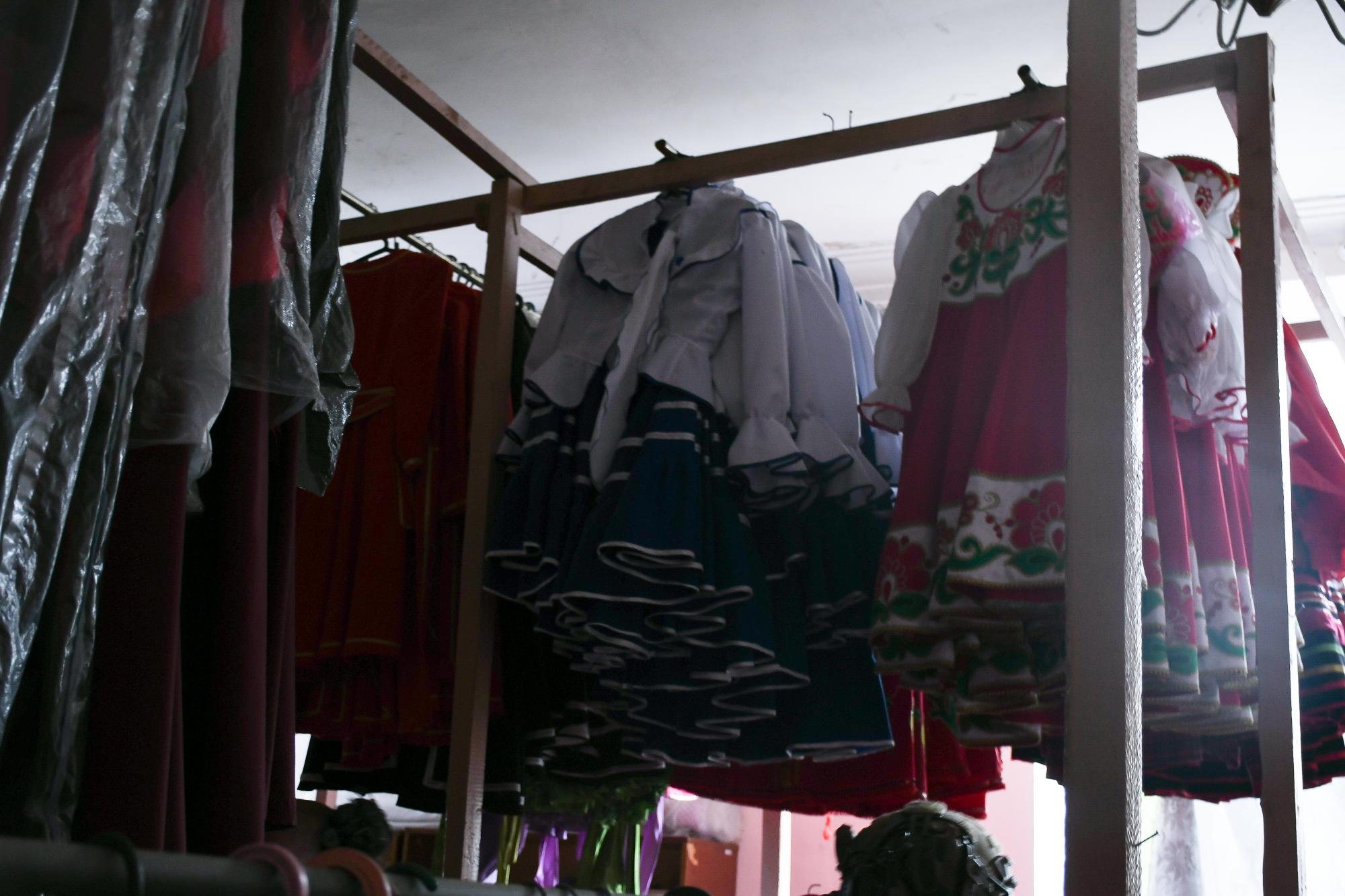 Photo: Folk dresses covered in dust (Anastasiia Rokytna, RBC-Ukraine)
This is where we head at an "anti-drone" pace together with soldiers to see firsthand the latest consequences of Russian strikes on the Pokrovsk district — a district where almost no civilians remain.
Bilozerske, the administrative center of the local community, now lies just 15 kilometers from the kill zone — an area easily reached by Russian drones and guided aerial bombs. Days without an air threat are rare here. The damage is visible everywhere: on central streets, shattered facades, damaged shops, and abandoned homes.
Before the full-scale invasion, Bilozerske lived the ordinary life of a mining town with about 14,000 residents. Although most people have already left, evacuations are still ongoing.
For the Russians, the town is not an end in itself. Its value lies in geography, because Ukrainian troops use it as a route to reach the Pokrovsk sector. That is why Russian drones are increasingly hunting not individual positions but the routes.
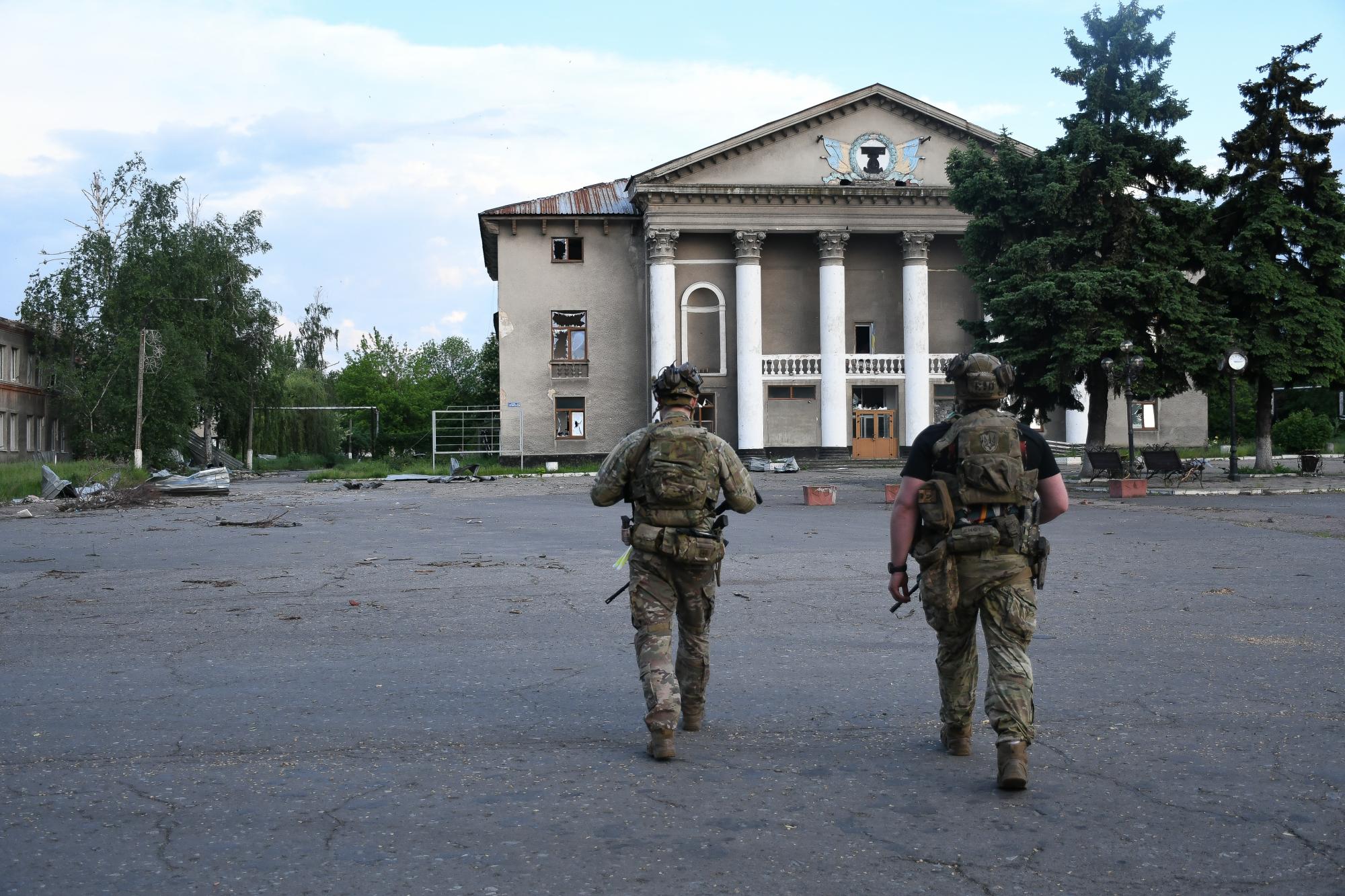 Photo: House of Culture (Anastasiia Rokytna, RBC-Ukraine)
We travel into the town along roads covered by anti-drone nets. They stretch above highways like long dark tunnels meant to conceal movement from enemy eyes. Yet even under this protection, everyone drives fast.
Traffic rules have been left somewhere far beyond the Donetsk region. Different rules apply here — the rules of survival. The main road sign on these routes is Chuika, a drone detector that continuously scans the sky. As soon as we stepped out of the vehicle, we heard the system activate.
"Okay, let's get under a tree and wait," says a soldier with the callsign "Yenot" calmly.
We move closer to the trees. Seconds later, a familiar buzzing appears overhead. It sounds neither like an airplane nor a helicopter. It resembles an annoying fly you cannot see, but one on which your life depends.
"They often fly through in transit. If you don't appear in the camera, it may just keep going," he explains.
The sound gradually fades away. The threat passes by, and we return to our route.
According to Yenot, controlling roads is sometimes no less important today than controlling tree lines or individual positions.
"If logistics stop even for a few hours, it means delays in ammunition deliveries, evacuation of the wounded, personnel rotations, and drone supplies. That's why the Russians are investing more and more resources into aerial hunting of transport even in Bilozerske, which is still quite far from the line of combat," he explains.
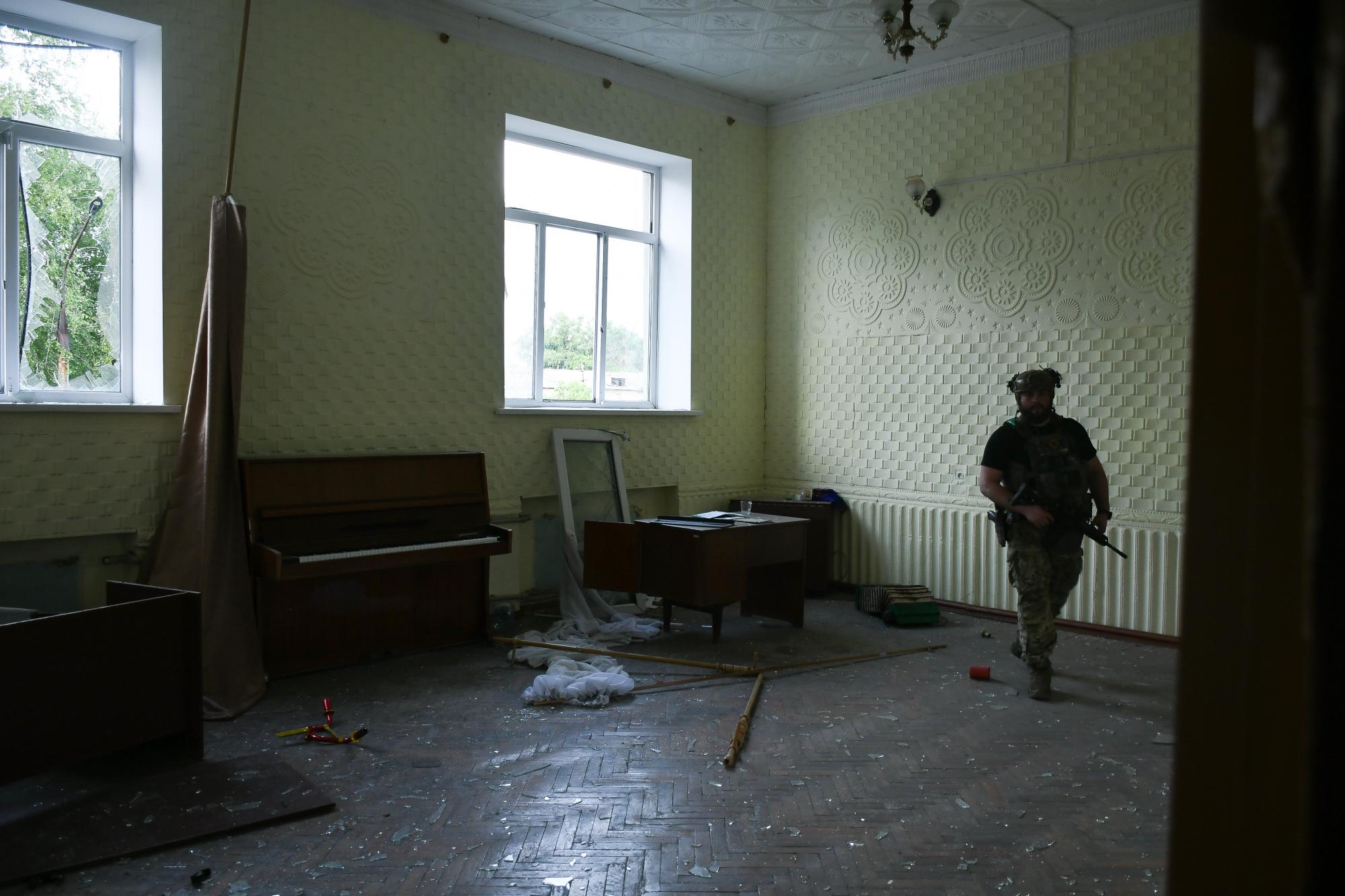 Photo: A soldier inside an administrative building (Anastasiia Rokytna, RBC-Ukraine)
Outside the windows, we see a town without life. Destroyed administrative buildings where people once came to arrange pensions, social benefits, or complain about a neighbor moving a fence a few centimeters. Shops where residents once knew the bread delivery schedule better than the bus timetable. Empty apartment blocks with black voids where windows used to be.
We spot a woman calmly walking home. Very few civilians remain in this settlement, and those who do have no plans to leave. They avoid conversations with journalists and try to stay away from cameras. This woman is no exception.
Bilozerske, like all settlements in the Donetsk region within Russian reach, reminded me of Prypiat. Although even there, the buildings seem more intact.
"This is already a familiar Russian tactic: destroying settlements, logistics, and complicating any movement toward the front," says Yenot, commander of a sapper platoon in the Rubizh Brigade. "Nearby is Dobropillia. Until May, it was relatively calm. Then came mass bombings, drone-dropped munitions, and constant attacks. There are no Russians there. But they want nobody left there."
In this sector, the enemy has long relied on a combination of small assault groups and total aerial terror. Russian UAV units known as Rubicon and Judgment Day operate here. Their work leaves more and more burned-out vehicles along the roads.
After spending several hours in Bilozerske, we transferred into a Novator armored vehicle. Ahead lies the route toward Dobropillia. Every trip there today feels like a separate operation.
At the wheel is "Uber," a minibus driver before the war. Beside him sits "Ratatui," a former security guard. They have their own movement system: one drives while the other continuously watches the sky.
"A Molniya drone is heading toward Dobropillia from the west... Bilozerske is clear..." Ratatui comments on the situation.
The day before, they had already experienced a fiber-optic ambush drone, which soldiers simply call a "waiter."
"It was standing right by the road. Waiting for someone to pass," the soldiers recall.
That time, they were lucky. The vehicle stayed out of the drone's sight, and it was neutralized.
In war, the phrase "we got lucky" is heard far more often than anyone would like. Even professional training cannot eliminate the role of chance.
Meanwhile, we continue moving. The driver's task is to deliver a UAV crew to its positions. Armored vehicles are among the main targets for Russian drone operators.
Ratatui orders everyone to keep watching the sky through the windows and monitors. Uber focuses on the road, where mines may be hidden among dust and debris.
Everything happens quickly and without unnecessary words. When we reach the destination, all start to move before the vehicle fully stops. People, antennas, drones, backpacks, and equipment instantly disappear behind a tree line. Chuika remains silent, but only temporarily, while we are at the yellow level.
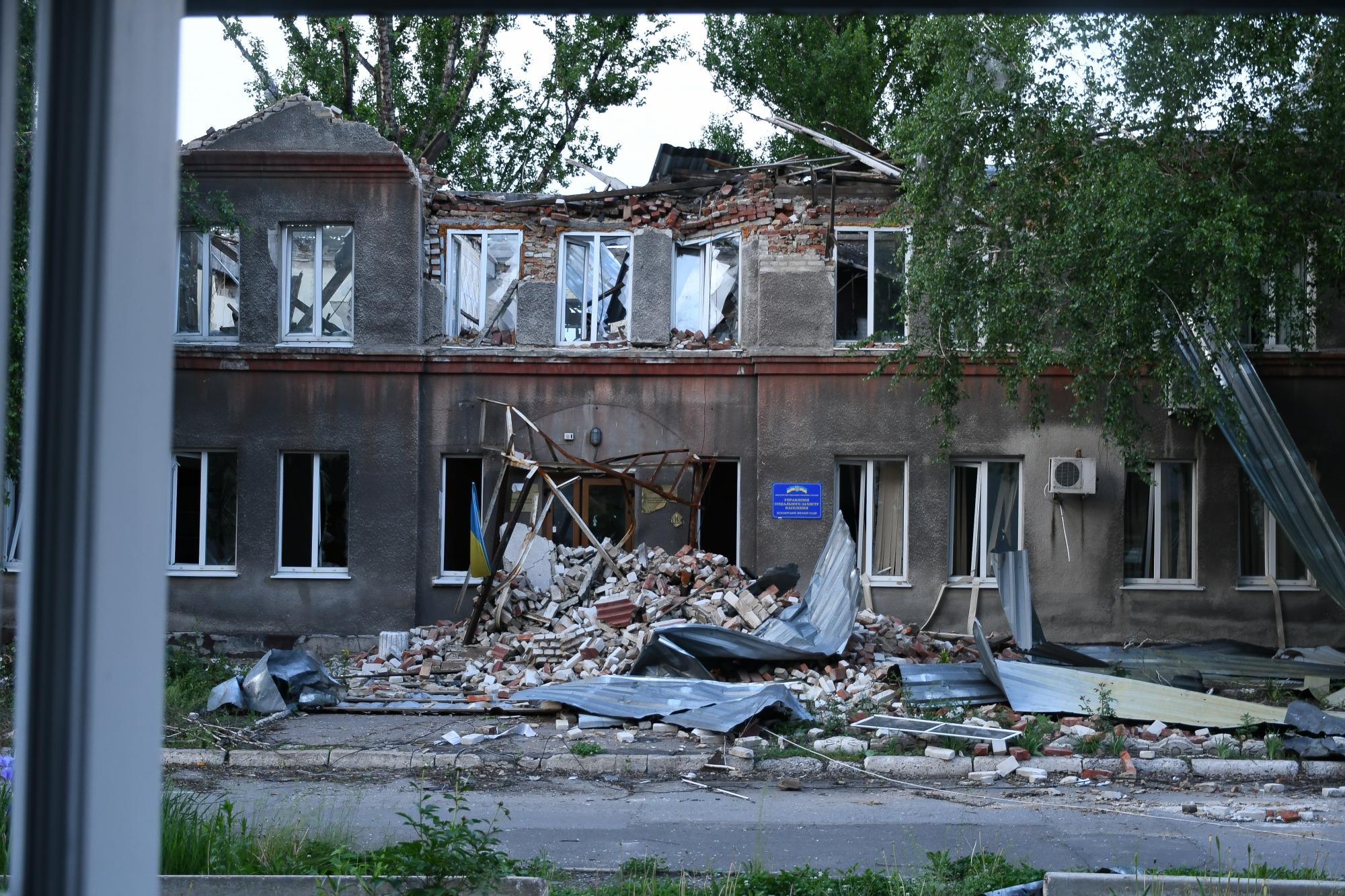 Photo: A destroyed building (Anastasiia Rokytna, RBC-Ukraine)
As soon as the last soldier leaves the armored vehicle, Uber hits the gas. We turn around and leave the area, leaving only a cloud of dust behind.
Looking out the window, I see how war changes the landscape. Fields were once littered with missile fragments, mortar tails, and unexploded ordnance — imagery that already carried symbolic meaning. But now a new symbol of this war has appeared.
Fiber-optic cable. Countless kilometers of thin line lie across fields, tangle in trees, wrap around roads, and shelterbelts. Entire stretches of land are covered with this artificial web that glitters in the sunlight. Every thread leads to a drone designed to find and kill its target.
After leaving the town, we reach what appears to be a safer area — Novodonetske. It is more intact, but still within range of massive Russian strikes. Here I see many teenagers and their parents. They have no plans to leave.
"We're used to it, and nowhere is really safe anymore. If things get worse, we'll leave, but right now we don't even know where to go. The children are fine, we're fine," one Novodonetske resident replies reluctantly, sounding as if she has answered the same question many times before.
Three guided aerial bombs hit that same "fine" place just a few days later.
Sometimes it feels as though, over the years of war, it has seeped into Ukrainians' DNA. What once seemed like an unacceptable risk has become routine. People have learned to distinguish the sounds of drones, estimate the distance to explosions, and keep moving after an air-raid alert. As if the internal speedometer of fear has been recalibrated for a new reality.
With those thoughts, we return to base. I feel exhausted and need time to process what I have seen and felt. Meanwhile, the soldiers prepare for their next missions — as if fatigue does not exist for them at all.