Domino effect: How attacks on Wildberries are hitting Russia's economy


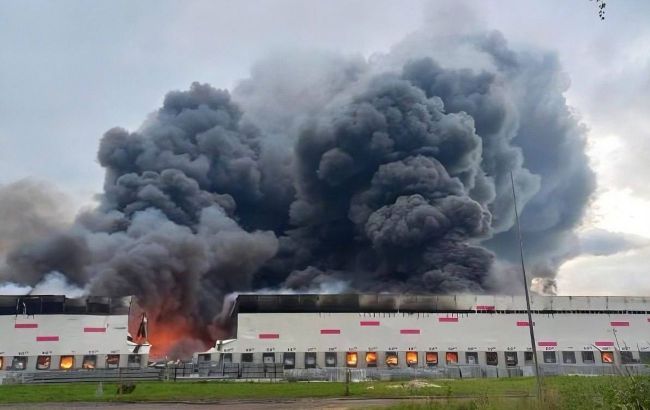 Fire after drone strikes on Wildberries warehouse in Ryazan (photo: Getty Images)
A series of strikes on Wildberries logistics hubs has already led to a 10.6% weekly drop in marketplace turnover and threatens to disrupt domestic distribution across Russia.
Read more about experts’ assessment of the economic consequences of the growing burden of the war on Russia’s small and medium-sized businesses, as well as financial and inflation risks, in the RBC-Ukraine report.
Key points:
- Marketplace turnover (including Wildberries and Ozon) fell by 10.6% due to attacks on warehouses.
- Twelve logistics hubs in the European part of Russia were hit, including Elektrostal, Ryazan, Simferopol, and others.
- Up to 9% of Wildberries’ warehouse infrastructure has been disabled.
- The channels of "parallel imports" from Türkiye, the UAE, and Kazakhstan are also under threat. These routes allowed Russia to bring in up to 40% of consumer goods.
Strike on hyper-centralized logistics
Drone attacks on Wildberries and Ozon mega-warehouses have disabled up to 9% of Russia’s warehouse capacity. More than 60% of Russian warehouses are concentrated around Moscow and St. Petersburg. These hubs were crucial for Wildberries, which controls 47% of the e-commerce market with a turnover of $78 billion.
The destruction of central terminals created a "bottleneck": goods flows became stuck at regional hubs (Kazan, Rostov, Yekaterinburg), which were not designed for such a workload, forcing other e-commerce retailers to urgently decentralize their operations.
"This makes the system less efficient, but more resilient to the loss of individual hubs," Oleksandr Bondarenko, CEO of the Investment Programs Bureau and founder of GreenInvest, told RBC-Ukraine.
Domino effect and inflation risks
The suspension of shipments has frozen the capital of hundreds of thousands of small sellers. The median revenue of a Wildberries seller is around $7,500, and they have no financial buffer, meaning a one- to two-week disruption could push small businesses toward a negative scenario.
However, experts believe that a wave of small and medium-sized business bankruptcies is still far away. Nevertheless, attacks on Wildberries are making their operations more difficult.
"Especially amid accelerating inflation, currency depreciation, falling incomes of individuals and companies, and reduced access to working capital. The share of troubled loans will undoubtedly increase, and the risk of freezing individual deposits is becoming quite real," Borys Kushniruk, head of the expert and analytical council of the Ukrainian Analytical Center, told RBC-Ukraine.
Russia’s Central Bank is trapped: attempts to cut the key interest rate (to 14%) to support an economy growing at just 0–1% conflict with accelerating inflation, which has reached 5.9% (with a forecast of 6–7%). Combined with fuel shortages caused by strikes on oil refineries, this is increasing inflation risks for the Russian economy.