Zelenskyy demonstrates in UK Parliament how he monitors Russian strikes in real time

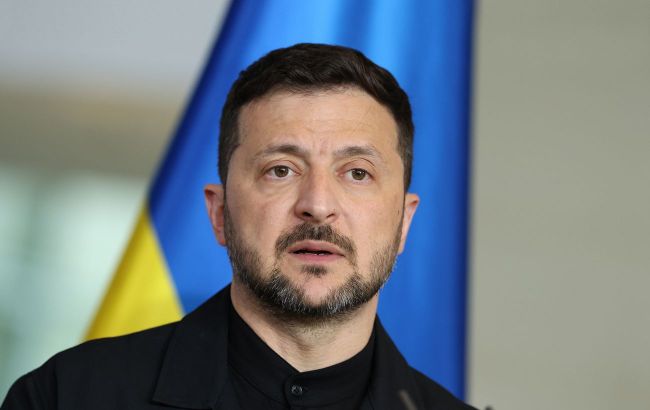 Photo: Volodymyr Zelenskyy, President of Ukraine (Getty Images)
Ukraine’s leadership has access to a system that allows them to track Russian attacks and the situation on the front line in real time, said Ukrainian President Volodymyr Zelenskyy during his address to the UK Parliament.
"I have proof that the evolution of security can be fast and cheaper than old defense systems. This is an iPad with software that lets us control our security in real time," Zelenskyy said.
He noted that such devices are also used by the Prime Minister, the Defense Minister, and the military command.
The President explained that the system makes it possible to see Russian strikes, the trajectories of missiles and drones, and to assess the performance of Ukraine’s air defense.
"We see every large-scale Russian attack on our cities in detail, launch points, flight path, likely targets. The system lets us analyze each attack and how our air defense responds as a whole, in real time," Zelenskyy stated.
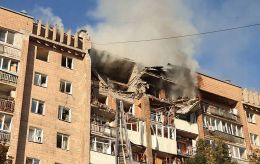
The President cited as an example a massive attack on the night of March 14, when Russia used nearly 500 aerial attack assets.
"In total, there were nearly 500 air attack weapons, 430 drones, and 68 missiles of different types. And we shot down most of them, and in real time on this iPad in our system, we could see how our aircraft were working, where electronic warfare was used, and how interceptors were deployed," Zelenskyy explained.
Zelenskyy also said that he had given one of these devices to King Charles III of the United Kingdom. The President said that His Majesty had asked whether he had another iPad, to which he replied that he only had his own left and could not give it away, and that His Majesty said he would share it with the Prime Minister.
On the night of March 14, Russia attacked Ukraine with dozens of missiles of various types and 430 strike drones.
Air defense forces shot down most of the targets, but hits by six missiles and 28 drones were recorded at 11 locations, along with debris falling at seven sites.