Zelenskyy outlines Russia's plan to stop European aid to Ukraine

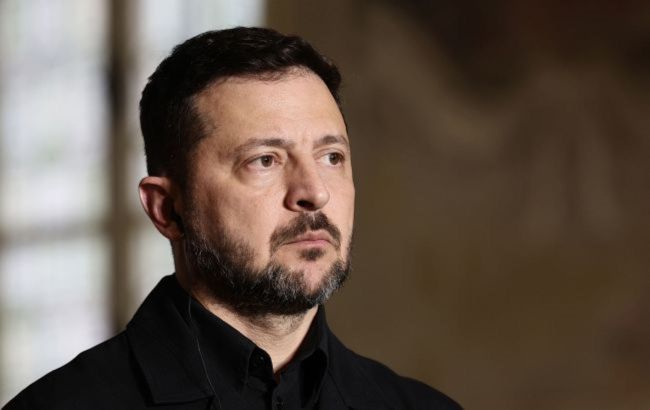 Ukrainian President Volodymyr Zelenskyy (photo: Getty Images)
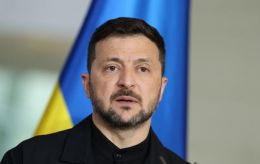
Russia is waging hybrid warfare against European countries, seeking to increase pressure on their societies and governments to make them stop helping Ukraine, President Volodymyr Zelenskyy said during an online address to the Hudson Institute in Washington.
Drone attacks as a means of pressure
The president said that Russia's hybrid attacks are not directed against Ukraine alone.
Moscow is also pressuring former Soviet republics that have become independent states, as well as other European countries.
"Russia began hybrid attacks not only against Ukraine. It's all about post-Soviet republics that are today independent countries. And it's also not only about these countries. Drone attacks have already affected Romania, Germany, Poland, Moldova, and Bulgaria. And just today, they attacked Romania in the Black Sea. They absolutely destroyed a vessel with the products," Zelenskyy said.
He noted that Russia would continue to use drones as a tool for hybrid attacks and to put pressure on Europe. In addition, Moscow would seek to blockade the Black Sea and target vessels carrying agricultural products and energy resources.
Zelenskyy explained that the Kremlin aims to change Europeans' attitudes toward helping Ukraine, forcing them to focus more on their own security.
"I think that the idea of Russians is to put pressure on Europe as much as possible. They hope that it will have influence on European societies and that it will push Europeans to think how to less support Ukraine and how to defend themselves," the president said.
According to him, Moscow is also trying to divide the European Union and weaken support for Kyiv by threatening European countries with cyberattacks, hybrid operations, and drone strikes.
Russia's mobilization plans
Zelenskyy also said that Russia plans to mobilize an additional 300,000 troops.
Ukraine will prepare for possible challenges, although it is not yet known what proportion of these forces Moscow intends to use against Ukraine.
The president noted that some European countries still do not fully recognize the threat Russia poses. They believe the war could threaten Ukraine and Europe's eastern flank, but not necessarily their own countries directly.
"It's difficult to believe that war will come to your house, to your family, until it comes. It's really difficult to believe that war can come to your country, your city, your home," Zelenskyy said.
He noted that some European countries continue to support Ukraine while also prioritizing strengthening their own defenses. In particular, they are seeking more capabilities to intercept missiles and drones.
However, the president said it would be extremely difficult for European countries to defend themselves against Russia on their own if Ukraine failed to hold its ground.
"If they will break our defending lines, and our people, nobody can defend by themselves. It's very difficult to defend against the country, which is ready for anything, the country, which is ready to kill ordinary people, civilians, using missiles, drones, everything," Zelenskyy stressed.
Ukraine is vital to Europe's security
The president emphasized that Ukraine must become an important part of NATO's and Europe's security systems. In his view, European countries' ability to counter Russian aggression directly depends on whether Ukraine can continue to hold back the Russian army.
Zelenskyy also warned against attempts to reach agreements with Moscow through diplomacy alone, without adequately strengthening defenses.
He warned that Russia may continue its attacks if it senses weakness among its opponents and sees an opportunity to secure sanctions relief, recover funds, or have its frozen assets unfrozen.
"To be strong, when Ukraine has its own part and a very important part in such a security infrastructure, it's more, more important," the president stressed.
Russia's hybrid attacks on Europe
As previously reported, a merchant vessel sank in the Black Sea off the coast of Romania on October 23 after being struck by a Russian drone. Ukrainians and Azerbaijanis were on board.
Russia is also known to carry out provocations on European territory using its drones from time to time. The Baltic states are often affected by such incidents, and they are among those preparing most intensively for a possible Russian invasion.
For example, Latvia and Lithuania recently issued air raid alerts over an unidentified object, and allied military aircraft were deployed.