Zelenskyy outlines alternative plans for Ukraine reparations loan

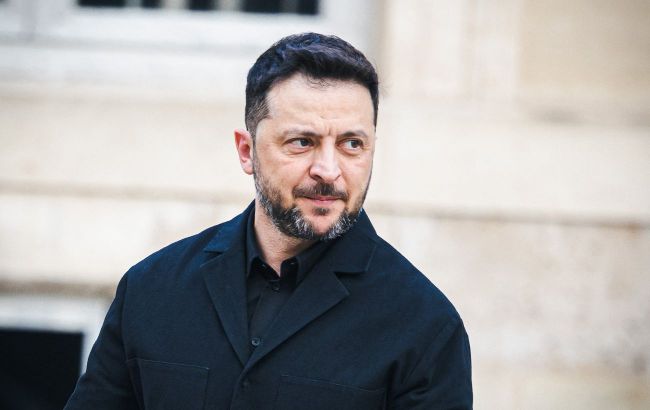 Volodymyr Zelenskyy, President of Ukraine (photo: Getty Images)
Ukrainian President Volodymyr Zelenskyy spoke about plans A and B regarding a reparations loan to Ukraine, which would be based on frozen Russian assets. However, a scenario in which the loan is not received is also being considered, Zelenskyy states in response to media questions.
“At present, a reparations loan or any format calculated based on the amount of Russia’s frozen assets - from $150 to $200 billion, in total $210 billion - is a game-changer. This is a security guarantee for Ukraine, a financial security guarantee,” the president said.
However, according to him, Kyiv must consider various options: if the war ends, continues, or if Ukraine is ultimately not granted the reparations loan.
“Unfortunately, we must also consider plan B. Plan A is the end of the war; plan B is the continuation of Russian aggression. If plan B and Russian aggression continue, Ukraine is counting not only on bilateral aid packages from countries, but on at least €40–45 billion per year in financial assistance,” Zelenskyy said.
In the case of plan B and the continuation of the war, Ukraine would be able to use the reparations loan to support the army and the defense sector, according to the head of state. This includes funding for weapons, air defense, and so on.
However, if the war ends, the funds from the reparations loan will be directed toward the reconstruction of Ukraine, the president said.
There is also a third scenario - if there are problems in receiving the reparations loan. In that case, Ukraine is counting on alternative financing options at the same scale as the aforementioned tranche, and negotiations with the leadership of the European Union are already underway on this matter.
Reparations loan to Ukraine
There is a delay in the EU regarding the provision of the so-called reparations loan to Ukraine (€140 billion), which would be based on frozen Russian assets. This loan is being blocked by Belgium, where the largest portion of the aggressor’s assets is held in the Euroclear depository.
Brussels claims it is concerned about potential liability to Moscow if the loan is granted to Ukraine. However, the media have also cited more practical reasons for Belgium’s blocking of the reparations loan: the country could earn income from transactions involving Russia’s frozen assets.
Recently, media reports indicated that Belgium is demanding autonomous guarantees from the European Union in exchange for supporting the provision of the reparations credit to Ukraine using Russia’s frozen assets. Until such guarantees are provided, Belgium will continue to block the decision.
However, the EU has a contingency plan if an agreement on the reparations credit for Ukraine cannot be reached. The European Union is considering a transitional loan funded by EU borrowing to support Ukraine at the beginning of 2026.