Zelenskyy delivers signals to Putin through leaders of Finland and Norway


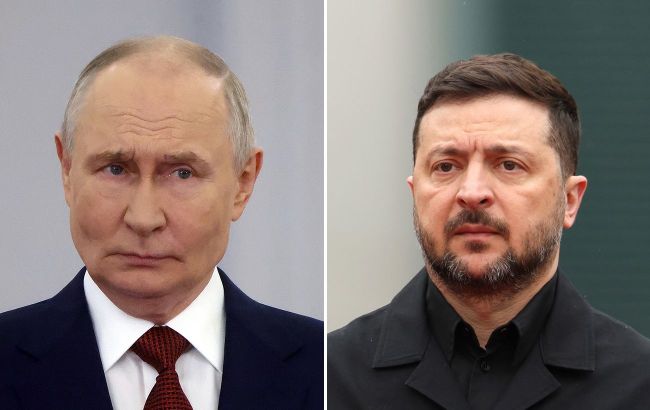 Illustrative photo: Volodymyr Zelenskyy and Vladimir Putin (RBC-Ukraine collage)
Ukrainian President Volodymyr Zelenskyy has sent clear signals to Russian leader Vladimir Putin. Kyiv stresses that negotiations with the Kremlin must be coordinated, Ukrainian Foreign Ministry spokesperson Heorhii Tykhyi said during a briefing with journalists.
According to Tykhyi, recent calls to Russia by Finnish President Alexander Stubb and Norwegian Prime Minister Jonas Gahr Støre had been coordinated in advance with the Ukrainian side during a meeting in Oslo.
"The President of Ukraine asked his Finnish and Norwegian counterparts to voice certain signals to Putin. They voiced these signals and positions, and conveyed the things the President asked them to convey. That is why the call was coordinated," the spokesperson said.
He added that these countries share a border with Russia and are directly concerned about security, making them partners in peace efforts.
The Ukrainian Foreign Ministry warned other European leaders against attempting to hold independent negotiations with Moscow without coordinating with Ukraine.
"However, we are against any uncoordinated, unilateral calls made for unclear reasons. If you want to help diplomatic efforts and contribute to the peace process, please consult with Ukraine, coordinate, and discuss it. We will find a way to involve you," Heorhii Tykhyi stressed.
The ministry spokesperson added that talks with the Russian leadership are not beneficial in themselves unless they are part of a single, coordinated strategy.
On October 27, Finnish President Alexander Stubb and Norwegian Prime Minister Jonas Gahr Støre held a phone call with Vladimir Putin ahead of planned diplomatic meetings in Abu Dhabi.
The main topics of the talks were diplomatic efforts to end the war and address security issues in Europe. The leaders of the two countries, which share a border with Russia, stressed the need for de-escalation and direct negotiations.
Meanwhile, analysts at the Institute for the Study of War (ISW) noted that the Kremlin had no plans to change its position and was rejecting proposals for a full or partial ceasefire, despite Ukraine's willingness to discuss possible diplomatic steps.