'Would harm US economy': Iran's rivals urge Donald Trump not to attack Tehran

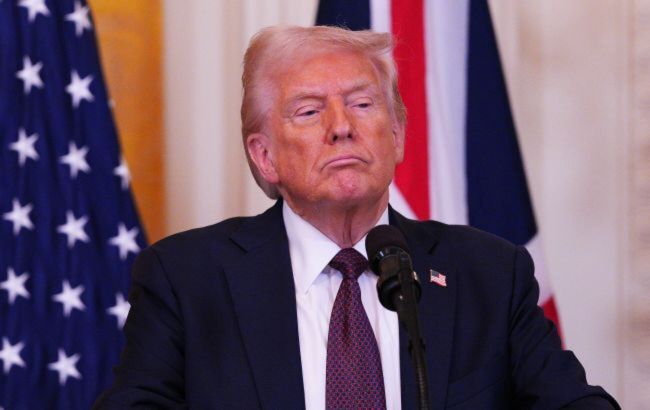 Photo: Donald Trump, President of the United States (Getty Images)
Arab rivals of Iran in the Persian Gulf, led by Saudi Arabia, are urging the United States not to carry out strikes on Tehran after Washington warned them to be prepared for such an attack, according to The Wall Street Journal.
In public statements, Arab states of the Persian Gulf largely refrained from commenting as protests spread across Iran and human rights organizations reported thousands of deaths as a result of the regime’s crackdown.
However, officials from Gulf countries, including Saudi Arabia, Oman, and Qatar, have privately warned that attempts to overthrow the Iranian regime could destabilize global oil markets and ultimately harm the United States economy, according to The Wall Street Journal. At the same time, they are said to be primarily concerned about the consequences for their own countries.
In particular, Gulf states fear that strikes on Iran could disrupt tanker traffic through the Strait of Hormuz, a narrow waterway at the mouth of the Persian Gulf separating Iran from its Arab neighbors, through which roughly one-fifth of global oil supplies transit.
Trump administration's approach to Iran
According to officials, the administration of US President Donald Trump has not specified what military actions it may take against Iran but has indicated that an attack is considered more likely than not. A White House official said Trump has all options available in addressing the situation in Iran and is weighing a wide range of views before making a decision.
The newspaper notes that earlier this week Trump directly addressed Iranian protesters, encouraging them to resist efforts by the authorities to suppress demonstrations and seize control of state institutions. US officials say the president has not yet made a final decision and continues consultations with advisers. Possible options reportedly include authorizing military strikes on regime targets, conducting cyberattacks, approving new sanctions, or supporting anti-government activity online.
Position of Gulf states
Saudi officials have said they assured Tehran that their country would not take part in a potential conflict and would not allow the United States to use Saudi airspace for strikes, seeking to distance themselves from Washington’s actions and prevent escalation.
Representatives of the Saudi embassy in the US and Saudi Arabia’s international media center in Riyadh declined to comment. Qatar and Oman also did not respond to requests for comment.
Background
The protests in Iran, which began in Tehran in late December amid a deepening economic crisis and spread nationwide this month, are described as one of the most serious challenges to the regime since the 1979 Islamic Revolution.
An Iranian human rights group reported this week that the death toll has exceeded 2,000 as authorities intensify efforts to suppress the demonstrations. Iranian state television has also aired footage showing dozens of bodies wrapped in shrouds inside and outside a morgue in Tehran.
Overall, the death toll from the large-scale anti-government protests, now ongoing for more than two weeks, is estimated by some sources to have reached as many as 12,000.