Why Russia using fewer drones now: Air Force explains catch

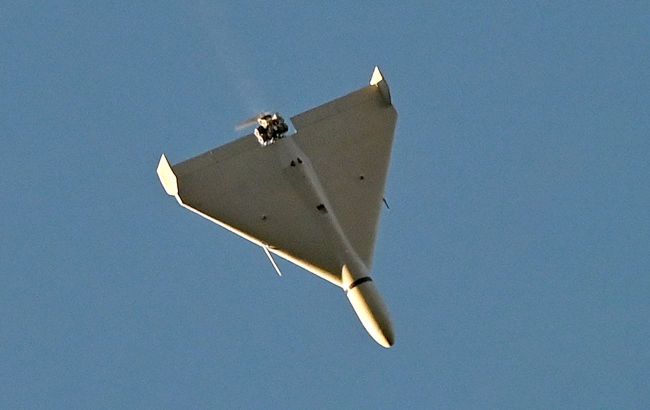 Illustrative photo: Russia has not reduced its drone strikes but has merely changed tactics (Getty Images)
Russian forces have not reduced their drone attacks but are instead redistributing strikes between drones and missiles, continuing to target Ukraine almost around the clock, according to Air Force spokesperson Yurii Ihnat during a national telethon broadcast.
Russia betting on ballistic missiles, not reducing drone attacks
The spokesperson commented on an assessment by the Institute for the Study of War (ISW) suggesting that Russia has begun using drones less frequently. According to him, the reality is that Moscow is increasingly relying on ballistic missiles, taking advantage of Ukraine's ongoing shortages of air defense missiles.
However, drone attacks have not decreased. They continue every night and often during the daytime as well.
"I would not say there are fewer attacks. What they are really doing now is placing greater emphasis on ballistic missiles, understanding the challenges we face with missile supplies for Ukraine. But they attack every night and now during the day as well. When the enemy sets such a goal, drones can attack around the clock," Air Force spokesperson Yurii Ihnat said.
Air defense remains under constant pressure
According to Ihnat, the situation remains difficult for Ukraine's Defense Forces. After a nighttime attack involving around 150 drones, Russia can launch more than 100 additional drones during the day.
The continuous battle for control of the skies is exhausting both personnel and equipment. Therefore, he stressed, there is no room for complacency.
"The enemy may shift the focus of its strikes, whether toward drones or missiles. And do not forget about tactical-level drones, such as Lancets and Molniyas. They are not even included in the statistics we publish," Ihnat said.
He added that operational-tactical and tactical drones are reported separately by Ukraine's General Staff in its daily morning updates.
Meanwhile, Russian forces today carried out their first-ever guided aerial bomb strike on Pavlohrad in the Dnipropetrovsk region. The attack killed two people and injured at least 13 civilians, including a one-year-old child.
As previously reported, Russia is increasingly using jet-powered drones and hybrid Banderol munitions. The weapon combines characteristics of a drone and a missile and can reach speeds of up to 600 kilometers (373 miles) per hour.