WHO wants to treat climate crisis as deadly threat on par with COVID

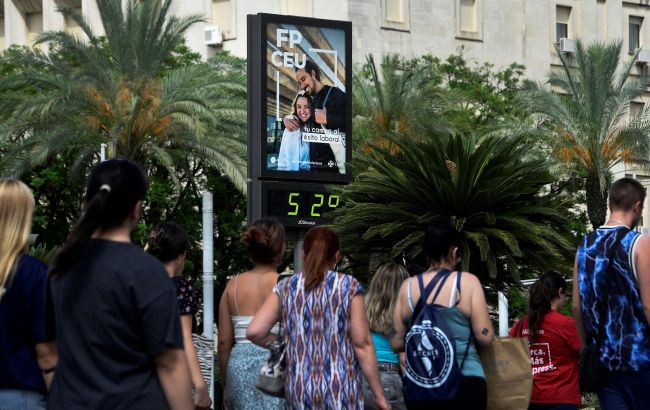 Photo: heatwave in Europe (Getty Images)
Leading international experts have called on the World Health Organization to declare the climate crisis a global public health emergency, according to The Guardian.
The call came from an independent pan-European commission on climate and health convened by the World Health Organization. In its report, experts concluded that the scale of the threat now meets the criteria for a "public health emergency of international concern" (PHEIC). COVID-19 and Mpox previously received the same designation.
The report stresses that the climate crisis is directly affecting human health through heat waves, floods, wildfires, air pollution, food insecurity, and the spread of dangerous infectious diseases, including Dengue fever and Chikungunya.
Former Icelandic Prime Minister Katrín Jakobsdóttir, who chaired the commission, said climate change has already become a threat to humanity’s survival.
"The climate crisis may not be a pandemic, but it’s still a public health emergency that threatens humanity’s very health and survival. And if we don’t act more quickly and comprehensively, many millions more people could die or face life-changing illness," she said.
Professor Andrew Haines of the London School of Hygiene & Tropical Medicine, the commission’s chief scientific adviser, said the World Health Organization has already recognized climate change as a serious threat to humanity, but now it is time for more decisive action.
"If we carry on emitting at current rates, that will accelerate the risks to health for both current and future generations," he added.
The report also calls on governments to stop subsidizing fossil fuels. According to the commission, this policy is directly linked to about 600,000 premature deaths each year in Europe alone.
According to the report, European countries spend around €444 billion annually supporting the oil and gas industries. In 12 countries, these costs have already exceeded 10% of total national healthcare spending, and in four countries they have surpassed entire healthcare budgets.
"This is not a sustainable energy policy. It's really more of a public health failure," Jakobsdóttir said.
She also warned that new fossil fuel subsidies and plans by some countries to expand oil and gas production due to the crisis surrounding Iran could have "catastrophic consequences" for public health.
What WHO said
Hans Kluge, the WHO regional director for Europe, backed the commission’s recommendations and said the climate crisis has long stopped being only an environmental issue.
According to him, the war in Ukraine and conflicts in the Middle East have shown how dependence on fossil fuels affects healthcare systems, food supplies, and social stability.
"The case for acting on climate now is not just environmental. It is a security argument, a health argument and an economic argument, all at once. And it is a moral imperative," Kluge said.
Earlier, climate experts warned that 2026 could rank among the hottest years ever recorded. The first months of the year have already been among the hottest despite the impact of La Niña, which typically slows temperature growth.
According to analysts at Carbon Brief, 2026 is almost certain to rank among the four hottest years on record, while 2027 could set an all-time temperature record.