Who really controls drones best? US Marines make surprising discovery

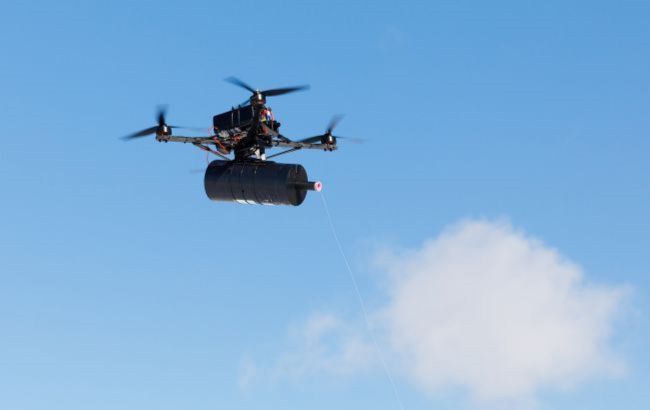 Pilots must manage drones carrying payloads (illustrative photo: Getty Images)
Despite the widespread belief that the best drone pilots are former gamers, the US Marine Corps has reached an unexpected conclusion. In reality, the best drone pilots are former bikers, according to Business Insider.
It turned out that skills from operating motorcycles, jet skis, or boats provide a much stronger foundation for piloting attack drones than video games, explains coordinator Major Mike Olivarez, who oversees the 1st Marine Division drone pilot course.
He says that a person with experience in technical work in an outdoor environment has a much higher chance of success than someone who has only played video games.
According to Olivarez, the key factor is a soft touch and the ability to feel equipment in a real-world environment. Operating a drone requires precise control of small switches and fine adjustments.
Extreme precision is needed to simultaneously control speed, altitude, and direction. Gamers perform well in zero-weight simulations. However, when a drone is fitted with explosives or other payload, its flight dynamics change.
Motorcyclists and boat operators, who are accustomed to physical inertia and environmental resistance in outdoor conditions, adapt to these changes much faster. Gamers, by contrast, are not used to such factors. About 20% of students drop out due to an inability to master controller sensitivity.
Earlier, the media reported that a Ukrainian pilot made history by shooting down two Iranian Shahed kamikaze drones at a distance of 500 kilometers from their launch point using the STING interceptor, setting a new world record.
Also, Ukraine's Ministry of Defense has recently approved the use of the Shvidun drone, one of the most effective Shahed interceptors, thanks to its ability to stay airborne for more than two hours.
In addition, developers are working on "smart swarm" technology, where a single operator will be able to control a group of interceptor drones both up close and remotely.