What if aliens contact Earth? Humanity still has no plan

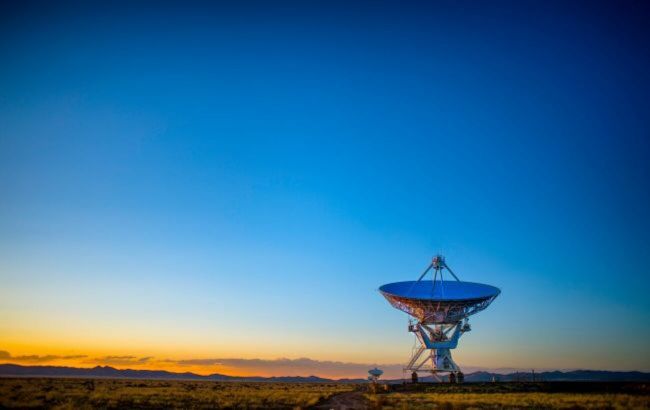 Researchers are divided into two camps over the search for extraterrestrial life (photo: Unsplash)
Humanity still has no plan for what to do if contact with extraterrestrials is ever made. As a result, scientists remain divided over whether humanity should send signals into space at all. Futura explores some of the best-known scientific theories about potential contact with extraterrestrial civilizations.
Search for alien signals, Rio scale
Since 1959, scientists have been listening for artificial signals in space, while the Drake equation has been used to estimate the possible number of intelligent civilizations in the universe.
More recently, researchers have been studying mysterious fast radio bursts, while NASA has reported detecting molecules on one of Saturn's moons that could point to the presence of life.
Although there is still no definitive proof that extraterrestrials exist, researchers with the SETI Institute have developed a special assessment tool known as the Rio scale. It evaluates the significance of a potential discovery using four criteria, assigning a score from 0 to 10:
- 0: an observational error or false interpretation
- 5: a moderately confirmed signal
- 10: undeniable direct contact or detection of an extraterrestrial object.
Sending messages into space: Scientific initiative or existential risk?
Although there is still no universal protocol for first contact, various groups of enthusiasts and scientists have already sent several messages into deep space.
NASA placed a map of Earth aboard the Pioneer spacecraft, the Arecibo observatory in Puerto Rico transmitted a famous radio message, and mathematical concepts have repeatedly been sent toward potentially habitable star systems.
The late physicist Stephen Hawking warned against such efforts. He argued that alien civilizations could be vastly more advanced than humanity and might view us the way humans view bacteria. He often cited the fate of Native Americans after the arrival of Europeans as an example of how contact between unequal civilizations can unfold.
On the other hand, American astrobiologist Douglas Vakoch believes that any advanced civilization would likely have already detected the radio emissions Earth has unintentionally been broadcasting into space for decades.
How contact with alien life could change humanity
Regardless of how it happens, the first confirmed evidence of extraterrestrial life would permanently transform human civilization. Astrophysicist Carl Sagan believed such a discovery could give "a chance for a more humble and united humanity."
Meanwhile, conspiracy theories surrounding the US military's Area 51 base in Nevada remain widespread, despite the US government officially acknowledging the site existence only in 2013.
Even so, the scientific community stresses that any response to a potential extraterrestrial signal should be based on verified evidence and international consensus rather than speculation.