'We choose fair trade over tariffs': EU signs historic trade agreement

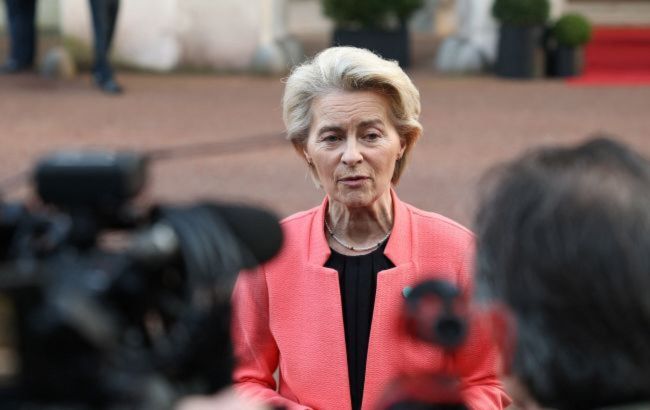 Photo: President of the European Commission Ursula von der Leyen (Getty Images)
The European Union has concluded a historic free trade agreement with the South American bloc MERCOSUR (Mercado Común del Sur, or Southern Common Market). The document was signed in Paraguay’s capital, Asunción, according to Euractiv.
The agreement was signed at Paraguay’s Central Bank, the same venue where the Treaty of Asunción was signed in 1991, establishing the MERCOSUR bloc between Argentina, Brazil, Paraguay, and Uruguay.
On behalf of MERCOSUR, the signing ceremony was attended by Paraguayan President Santiago Peña, Bolivian President Rodrigo Paz, Argentine President Javier Milei, and Uruguayan President Yamandú Orsi. Panama’s President José Raúl Mulino, whose country is an associate member of MERCOSUR, also took part.
At the ceremony, European Commission President Ursula von der Leyen said the EU was choosing "fair trade over tariffs." She stated that the bloc preferred a productive, long-term partnership over isolation and aimed above all to deliver real and tangible benefits for citizens and businesses on both sides.
Von der Leyen also underscored the agreement’s geopolitical significance, noting that when two regions like the EU and MERCOSUR speak with one voice on global issues, the world listens.
On January 9, von der Leyen received political approval to sign the agreement, negotiations on which had lasted more than 25 years. Most EU member states backed the deal despite objections from France and Poland.
Protests against MERCOSUR agreement
In recent weeks, farmers across Europe have staged protests against the agreement, with further demonstrations expected next Tuesday in Strasbourg. Around 5,000 farmers and 1,000 tractors are set to gather near the European Parliament building. Protesters argue that the free trade deal with South American countries would flood the EU market with cheaper agricultural products.
A key vote in the European Parliament is scheduled for Wednesday and could put the agreement at risk by referring it to the Court of Justice of the EU.
Meanwhile, US President Donald Trump has threatened EU countries with tariffs in an effort to pressure the bloc over Greenland. The measures are set to take effect on February 1, with the Trump administration warning that tariffs could be raised to 25% if the EU does not change its stance on a potential US purchase of Greenland. EU officials have already responded to the threats, vowing to deliver a reply, with French President Emmanuel Macron among the most outspoken critics.