Valentine: Saint, martyr, or marketing myth?

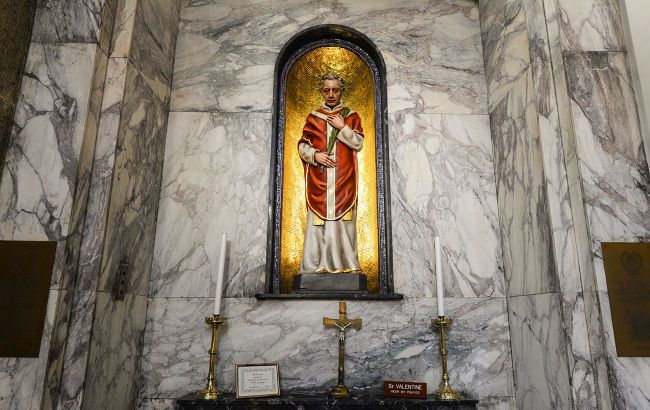 Who was Saint Valentine really and why is he not recognized by the church (photo: Getty Images)
Today we celebrate Valentine's Day, but few people know who he really was. The church has practically forgotten his story, while marketers turned the martyr into a symbol of romance and gifts.
Who Saint Valentine was and why he is considered the patron of lovers, and also why the church does not mention him — even though the celebration of lovers exists worldwide.
Who Valentine really was
Saint Valentine lived in the 3rd century in Rome. Historians say he fought for the right of young couples to marry despite Emperor Claudius II's ban. His name is associated with martyrdom and secret weddings, not hearts and valentines.
In fact, little is known about Saint Valentine's life — he was a Christian priest who helped lovers.
Emperor Claudius believed that unmarried men were better soldiers than those with wives and children. He issued a law forbidding young men to marry.
Valentine secretly married couples and gave them his blessing. When the emperor learned of this, he ordered Valentine’s arrest and execution, which occurred on February 14, 270.
According to another legend, Valentine was a bishop during the reign of Claudius II and had the ability to perform miracles. Once he healed a boy who could neither walk nor speak — he prayed all night for the child and restored his health.
Thanks to this gift, he was able to convert many Romans to Christianity, which angered the emperor, who did not recognize Christianity, and he was punished and executed.
During Christian persecutions, Valentine was imprisoned, where he developed tender feelings for the jailer’s daughter. The girl had been blind from birth but was very beautiful. He prayed for her, and she regained her sight.
Before his execution, Valentine wrote her a letter confessing his feelings and signed it: “Your Valentine.”
Some also mention the pagan festival of Lupercalia (in honor of the god Faun), which later influenced Valentine’s Day.
Historians still debate whether this was the same Valentine, whether he was really a saint, and whether he gave the world the legend that became the basis for Valentine's Day.
But since then, February 14 has become a holiday for all who have passionate feelings. The day is mentioned repeatedly even in Shakespeare’s works, confirming the holiday’s popularity at the time.
Why the church forgot Valentine
The holiday became widely popular in Western Europe after the 15th century. The first valentine is attributed to Charles, Duke of Orleans, who in 1415 sent a poetic message to his wife from an English prison.
Over the centuries, few documents about Valentine survived, and the church celebrated other saints in February. In 1969, Pope Paul VI officially removed mention of Saint Valentine from church calendars due to doubtful origin, as his history could not be verified.
The holiday’s symbolism turned into a commercial tool, and the real historical figure receded into the background.
Interestingly, in the Roman Catholic Church and the Catholic Church, Saint Valentine is mentioned during liturgy, but he is considered the patron of people suffering from nervous disorders, not lovers.
The Orthodox Church, meanwhile, calls the story of the priest secretly marrying lovers a beautiful legend.
Instead of honoring the saint — pure marketing
In the modern world, Valentine’s Day is an important holiday connected less to the legend and more to commerce. Entire industries rely on gifts for this day.
Each year brings new promotions and countless heart-shaped products—all to popularize the holiday and profit from it.
Every country has developed its own traditions. For example, in France, jewelry is traditionally given on Valentine’s Day; in Japan, sweets from popular brands; in Denmark, dried flowers.
Interesting facts about Valentine's Day
-
Saint Valentine's relics are kept in the Church of the Nativity of the Blessed Virgin in Sambir, Lviv region. Their authenticity is confirmed by a 1759 document from the Pope.
-
In 1537, Valentine’s Day became an official holiday in England.
-
In 1850, the U.S. began mass-producing valentines, pioneered by artist Esther Howland.
-
In 1861, the famous chocolate company Cadbury released its first heart-shaped box of chocolates, still given on Valentine’s Day today.
-
Relics of Saint Valentine are also in Poznań, Poland, where many believers come on Valentine’s Day hoping the relics and miraculous icon above the altar will help in matters of love.'
-
In Saudi Arabia and Iran, Valentine’s Day is banned.