US to push for global shift away from China's minerals reliance

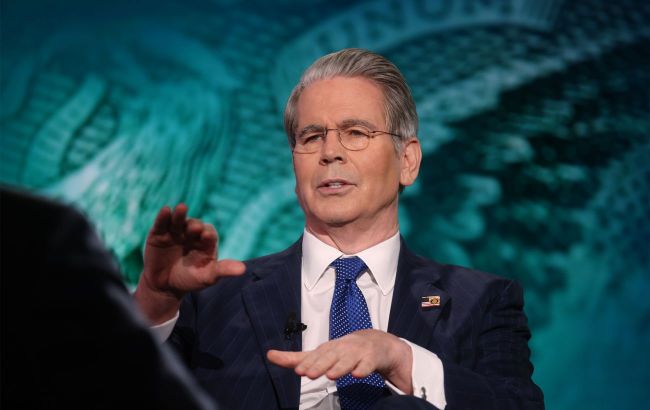 Photo: US Treasury Secretary Scott Bessent (Getty Images)
The US plans to call on the G7 countries and other states to intensify efforts to reduce dependence on China in the field of critical minerals. The idea will be promoted by US Treasury Secretary Scott Bessent, Reuters reports.
On January 12, Bessent will meet with twelve senior officials from other countries, one of the agency's sources says. Bessent's guests will include Finance Ministers and senior officials from the developed economies of the G7, the European Union, Australia, India, South Korea, and Mexico.
Together, these countries and blocs account for 60% of global demand for critical minerals. Bessent will discuss reducing dependence on China with their representatives.
"It's a very big undertaking. There's a lot of different angles, a lot of different countries involved and we really just need to move faster," the source says.
Bessent himself tells the agency that he was pushing for such a meeting since June, when the G7 leaders' summit was held in Canada. At that time, the Minister gave a presentation on rare earth minerals to the leaders of the US, the UK, Japan, Canada, Germany, France, Italy, and the European Union.
However, Japan was the only country that actually took steps to secure supply chains and reduce dependence on Beijing. Other countries did not demonstrate the urgency that the Minister had hoped for.
China's dominance
China currently dominates the supply of critical minerals. China controls between 47% and 87% of the supply of copper, lithium, cobalt, graphite, and rare earth elements. These minerals are an important component used in defense technologies, semiconductors, renewable energy components, batteries, and recycling processes.
Due to China's constant threats to impose strict export controls on the supply of critical materials, civilized countries are under constant threat of production disruption. However, even in such conditions, the source noted, we can expect a statement at most, but no concrete joint action.
"The United States is in the posture of calling everyone together, showing leadership, sharing what we have in mind going forward. We're ready to move with those who feel a similar level of urgency ... and others can join as they come to the realization of how serious this is," the official adds.
The administration of US President Donald Trump is forming a new coalition aimed at reducing China's influence on the rare earth elements market and limiting its advantages in artificial intelligence and other technologies.
Beijing is developing a mechanism for exporting rare earth metals to the US, which it hopes will prevent raw materials from falling into the hands of American defense companies.