US State Secretary explains Trump's delay on Russia sanctions, citing need for 60 days

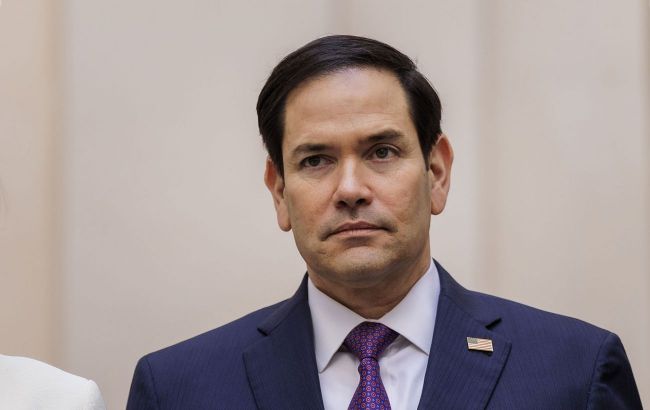 Photo: US Secretary of State Marco Rubio (Getty Images)
US President Donald Trump signs an executive order waiving sanctions against Russia under the Graham Act to analyze their potential impact on the US and global economies over the next 60 days, according to US Secretary of State Marco Rubio.
Rubio notes that the law on sanctions against Russia and Iran included sanctions not only against Russia. Therefore, the administration needs more time to make a decision on its implementation.
"The problem is these sanctions were not just sanctions on Russia. They include tariffs on a number of countries, India, uh, for example, and others. And so, I think the president wants to take the 60-day period of time to sort of analyze what imposing both sanctions and tariffs will mean to the global economy and even to the US economy," he says.
According to the US Secretary of State, when the bill was passed, one of the reasons for including exemptions was the understanding that it would take some time to study this issue.
Rubio notes that the Trump administration needs 60 days to take all of this into account and weigh all the pros and cons.
As an example, he cites India, which has voluntarily diversified its energy supplies but still receives a significant portion of its energy from Russia.
When asked by a reporter whether this decision was a gift to Vladimir Putin, the Secretary of State stated that Russian diesel fuel would have been sold one way or another.
"The only difference is how much of it the United States was going to get. So, but this is not unprecedented. If you recall a few months ago, we also did a 60-day waiver on Russian oil when Hormuz was being challenged," he adds.
Rubio notes that conflicts around the world are currently interconnected and can therefore create uncertainty in the global energy market.
"So all these things have to be managed delicately and work because they're all, you know, they're all coming together now. It's not just the Strait of Hormuz anymore. It's what's happening with Saudi Arabia and the uncertainty that that's creating. It's also what's happening between Russia and Ukraine and the constraints that's putting on global energy supplies," says the US Secretary of State.
Trump suspends sanctions against Russia
US President Donald Trump signed an executive order suspending the tough sanctions against Russia—the sweeping tariffs, restrictions, and sanctions promoted by the late Senator Lindsey Graham for the purchase of Russian energy resources.
Trump invoked a provision to waive the sanctions under the law that Lindsey Graham had championed as a way to punish Russia for the war in Ukraine.
The executive order formally imposes the tariffs but suspends their enforcement. This means that Trump can impose them at a later time if he chooses.