US starts talking it may lack forces to defend Israel against Iran

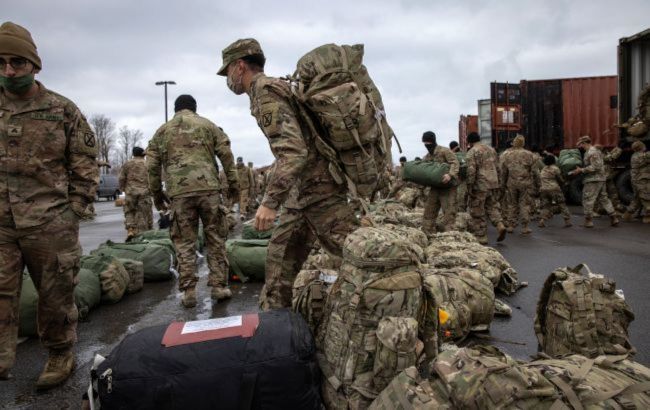 The United States reassesses its defense priorities amid the draining war with Iran (photo: Getty Images)
The top US general in Europe has privately warned the Pentagon that he does not have enough naval forces to continue defending Israel against ballistic missile attacks, according to The Washington Post.
What General's warning says
General Alexus Grynkewich, head of US European Command, sent a written message to senior Pentagon officials, warning that without an additional destroyer, he would have to prioritize defending the US homeland over protecting Israel.
The information was provided by officials who spoke on condition of anonymity.
A US Defense Department official said Grynkewich's request is consistent with previous appeals made to the Pentagon by other senior military commanders. Such requests are common when commanders compete for limited military resources and weapons.
Why Navy is exhausted
The warning comes at a volatile stage of the five-month conflict. After peace talks between Washington and Tehran collapsed, near-daily attacks resumed.
The US Navy has been particularly strained. The Trump administration ordered a blockade of Iranian ports in response to Tehran's closure of the Strait of Hormuz. The move disrupted the flow of Middle Eastern oil and other goods, affecting the global economy.
US destroyers stationed in the eastern Mediterranean have helped defend Israel for years. Equipped with powerful radar systems, the ships have intercepted missiles launched at Israel by Iran and the Iran-backed Houthi movement in Yemen.
US European Command must also keep forces ready to respond to any potential Russian attack on NATO territory. Russia possesses missiles capable of reaching the continental United States.
How many ships are currently deployed
The US Navy has five destroyers assigned to port Rota in Spain. A sixth is expected to arrive later this year.
The pace of the war has created a backlog in maintenance, further complicating General Grynkewich's situation.
As of Friday, July 31, two destroyers—USS Paul Ignatius and USS Roosevelt—were operating in the Mediterranean Sea. Three others—USS Arleigh Burke, USS Bulkeley, and USS Oscar Austin—were in Rota.
Two additional US warships were deployed in the Arabian Sea closer to Iran. Another destroyer, USS Gonzalez, was operating in the Red Sea, where Houthi forces continue to target commercial shipping.
Earlier, US embassies across the Middle East urged American citizens to consider the security risks in the region.
Diplomatic missions warned of the possibility of further escalation.
It was also previously reported that the United States and Israel are considering large-scale strikes against targets inside Iran.
The plans have been discussed amid failed efforts to reach a ceasefire agreement.