US plans massive $20 billion Tomahawk missile investment

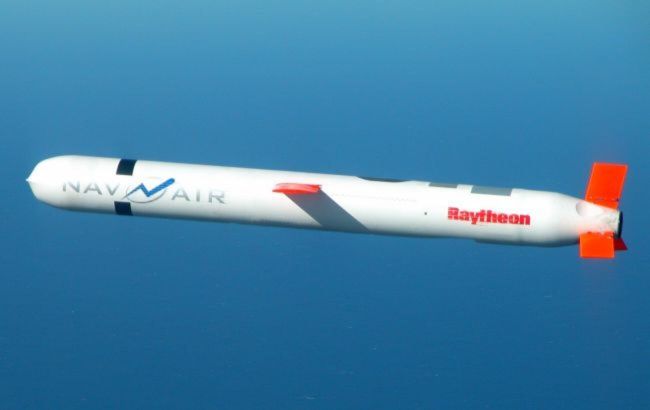 Photo: Tomahawk missile (US Navy)
The US has decided to significantly ramp up production of long-range Tomahawk cruise missiles, with the Pentagon set to spend more than $20 billion under a contract with Raytheon, according to Reuters.
The US Navy has signed a seven-year, $22.9 billion contract with Raytheon. Under the contract, production of Tomahawk cruise missiles is set to increase from the current 60 to over 1,000 units per year—a roughly 17-fold increase.
Acting US Navy Secretary Hung Cao states that US authorities have called on the defense industry to rapidly ramp up ammunition production.
According to him, the Tomahawk deal is intended to provide the US military with the necessary firepower.
Raytheon President Phil Jasper announces that the company is investing in personnel, technology, supply chains, and manufacturing capacity to significantly increase missile production.
The contract builds on a framework agreement between Raytheon and the US Department of Defense, signed in February 2026 as part of the Arsenal of Freedom initiative. Its goal is to shift the US defense industry from peacetime production rates to a level closer to wartime levels.
Reason for sharp jump in production
The main reason for the increase in long-range missile production was the depletion of high-precision weapon stocks during the war in Iran.
According to the agency, the US Navy expended about 400 Tomahawks during 71 hours of combat operations and over 850 during the first month of the campaign.
By the time of the April ceasefire, the US military had fired a total of more than 1,000 such missiles. After hostilities resumed in July, their use continued.
It is estimated that at the start of hostilities, the US had approximately 3,100 Tomahawk missiles. Thus, operations against Iran could have reduced the US stockpile by about one-third.
In the first half of 2026, Raytheon delivered three times as many Tomahawks as it did during the same period last year. The contract covers Block V missiles designed to strike land and sea targets.
The US Navy and Raytheon have not disclosed the exact number of missiles in the order or the delivery schedule.
During five months of war with Iran, the US military has used up nearly its entire stockpile of high-precision long-range ATACMS and PrSM missiles. There is also a shortage of Tomahawk missiles.
The US still lags significantly behind Ukraine in the production of combat drones and is only in the early stages of developing its own drone industry.