US operation expands beyond Middle East — The Washington Post

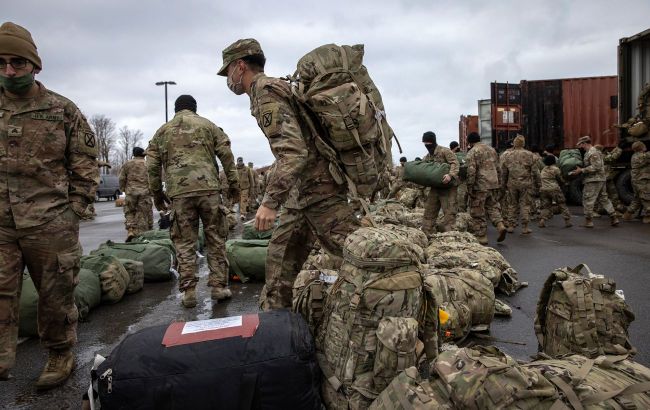 Photo: US operations against Iran have expanded beyond the Middle East (Getty Images)
The US has seized an Iranian tanker in the Indian Ocean, and operations against Tehran have expanded beyond the Middle East, according to The Washington Post.
On Tuesday, April 21, the US military seized the tanker Tifani in the open waters of the Indian Ocean. The vessel is suspected of smuggling Iranian oil.
A video released by the Pentagon shows US troops rappelling from helicopters onto the tanker. The operation went off without incident.
The US imposed sanctions on Tifani last summer. Officials claim that the vessel was engaged in ship-to-ship transfers of Iranian oil, a so-called shadow fleet scheme designed to circumvent sanctions.
Thus, as The Washington Post reports, the US operation against Iran has extended beyond the Middle East.
According to satellite imagery, the tanker was loaded in March on Kharg Island, Iran’s main oil terminal in the Persian Gulf. It may be carrying up to 2 million barrels of oil.
A US official stated that a decision regarding the future of Tifani and its crew will be made within a few days.
Chairman of the Joint Chiefs of Staff General Dan Caine warned last week that US forces would pursue any vessel flying the Iranian flag or any vessel attempting to provide material support to Iran, including in the Indo-Pacific region.
Meanwhile, US destroyers are escorting at least two Iranian tankers, Dorena and Sevin, off the west coast of India.
As of Tuesday, the naval blockade of Iranian ports, which has been in effect since April 13, has forced at least 28 vessels to turn back.
According to three US officials, a third US aircraft carrier, the USS George H.W. Bush, will arrive in the Middle East in the coming days. It is currently transiting through East Africa.
Upon its arrival, the US will have a greater concentration of naval power in the region than at any time since the start of the conflict with Iran. The aircraft carriers USS Gerald R. Ford and USS Abraham Lincoln are already in the Red Sea and the Arabian Sea, respectively, each with dozens of fighter jets on board.
The US was expecting a response from Iran’s Supreme Leader, Mojtaba Khamenei, regarding the terms of a settlement, specifically on Wednesday, April 22.
One of the reasons Trump extended the ceasefire was to wait for this response and receive clear directives for negotiators from the Iranian side.
Iran did not recognize the extension of the ceasefire announced by Washington, as the US continues to block the Strait of Hormuz.