US has no plans for new Iran strikes, State Secretary tells allies

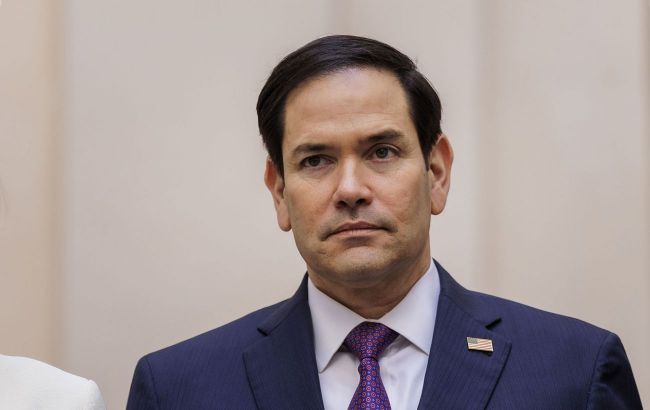 Photo: Marco Rubio (Getty Images)
US Secretary of State Marco Rubio has told Washington's allies in recent days that the US had no plans to launch new strikes against Iran. Instead, other pressure measures will be used, including the sanctions initiative announced this week, according to Axios.
The agency reports that Rubio's message to the foreign ministers of allied countries came at a time when the US believes it is strangling Iran with a naval blockade, while simultaneously diverting ever-increasing volumes of oil away from the Strait of Hormuz.
Furthermore, this approach is a sign that US President Donald Trump is frustrated with the war and wants it to end—at least for now.
What new approach entails
According to a US official, Rubio makes it clear in phone calls with his counterparts that the US does not plan to resume large-scale combat operations. At the same time, he does not rule out strikes if Iran strikes first.
Another US official says that the US Navy's clearing of mines in the Strait of Hormuz marks a turning point in the war, as it has largely neutralized one of Iran's main sources of influence.
Moreover, in recent weeks, more tankers have been passing through the strait's southern lane, which significantly reduces Iran's influence on global energy markets.
Thus, the Trump administration's policy currently follows this logic:
- To avoid military action against Iran
- To intensify economic pressure on Iran through a US naval blockade and new sanctions from the US Treasury Department
- To transport as much oil as possible through the strait to global energy markets.
At the same time, a US official says that this policy is expected to remain in place at least until the midterm elections, after which the possibility of a new military campaign may be reconsidered.
Axios explains that the US naval blockade is depriving Iran of vital revenue. US officials say that over the past two weeks, almost no tankers have been spotted near Kharg Island, the main hub for Iranian oil exports.
"The Iranians have lost control over the strait. Now the US controls it," says one of the officials.
For his part, US State Department spokesperson Tommy Pigott notes the following:
"The Iranian economy is in free fall and the regime's military has been decimated and we are cutting off every financial lifeline the regime has remaining. The President has been clear that Iran cannot have a nuclear weapon, and that he will use the tools necessary to ensure that objective is accomplished," he says.
One source also reports that the US is not currently negotiating with Iran but is instead putting pressure on Tehran. Washington believes this pressure may force the Iranians to return to the negotiating table.
On Wednesday, Trump's envoys Steve Witkoff and Jared Kushner, who are leading the negotiations with Iran, are expected to visit US Central Command for briefings on the situation on the ground.
What else important to know
On August 25, US President Donald Trump stated that the US Navy had completely neutralized and detonated all mines in the international waters of the Strait of Hormuz. He also threatened Iran with the destruction of any ship or boat if there were an attempt to lay new mines in the strait.
At the same time, media reports indicated that Iran and Oman were negotiating the establishment of a temporary route through the strait and were also considering a mission to clear it of mines. This information came to light after Trump's statement that the strait had allegedly been cleared of mines.