US and Iran exchange strikes for second straight night

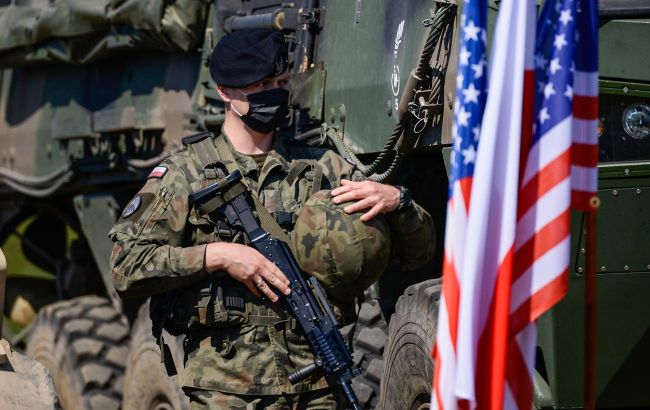 Photo: US military officials have identified the targets that were in their sights (Getty Images)
On the night of June 11, the US and Iran exchanged strikes for the second night in a row. This time, the likely cause was the delay in reaching an agreement, according to US Central Command, Fox News, and other media outlets.
Background
Earlier this week, US President Donald Trump stated that on Monday, the Iranians shot down an American AH-64 Apache helicopter in the Strait of Hormuz. In response to the incident, Trump vowed to retaliate, and on the night of June 10, the two sides exchanged strikes.
Already on Wednesday of the same day, the 10th, the US President stated that Iran had dragged its feet on negotiations, so Tehran would pay for it. Shortly thereafter, he spoke to the press and announced that there would be another strike on that day.
By evening, Axios revealed an article stating that Trump had held a meeting at the White House Situation Room. He discussed the possibility of resuming attacks on Iran. One scenario involved a large-scale but short-term operation to change Tehran’s position in the negotiations.
Almost immediately after this report, Pentagon chief Pete Hegseth made public statements. He announced that the US would carry out another round of attacks on Iran that night or the next one.
When attack began, and what happened as events unfolded
An hour after Hegseth’s announcement, US Central Command officially stated that American forces had launched another attack on Iran. Media outlets reported explosions in several areas, including near the Strait of Hormuz and not far from Tehran. The US carried out at least two waves of attacks.
Shortly thereafter, the Iranian Armed Forces announced that the Strait of Hormuz was once again closed to all vessels and that any attempts to pass through would be met with fire. At the same time, CENTCOM claimed that Iran was lying and that commercial vessels were continuing to travel in both directions.
A few hours after the attacks, Fox News reporter Trey Yingst reported that he had spoken by phone with President Donald Trump. This occurred while Trump was directing US strikes against Iran from the Situation Room.
Trump said he had been in direct dialogue with Iranian officials who had asked him to stop the bombing. Against this backdrop, he said the attacks would end soon, but if Tehran still refused to sign the agreement, the US would bomb Iran.
He also stated that this was the most frequently violated ceasefire in world history. At the time of the conversation, Trump said that the US had fired 49 Tomahawk missiles at Iran and bombed the country from fighter jets.
What parties reported
At 4 a.m., CENTCOM announced that the US had completed a series of strikes on Iran. The targets of the US forces were Iranian military surveillance assets, communications systems, and air defense facilities.
"The strikes are in response to Iran's unwarranted and continued aggression. U.S. forces remain vigilant, lethal, and ready," the statement says.
According to the IRGC, the US attacks targeted the corps’ infrastructure, coastal posts, and the area around Bandar Abbas Airport near the strait.
Regarding the Iranian attacks, the IRGC claims to have struck 18 significant targets, including an airbase in Bahrain and two in Kuwait. However, CNN notes that there have been no air raid sirens in Kuwait in recent hours.
What else is important to know
Recently, US Vice President JD Vance stated that Washington was in a position that allowed it to agree to terms that are beneficial to the US both economically and in the long term.
According to the official, the document could be signed either as early as next week or in a few months. But he emphasized that it must definitely happen before the midterm elections in the US.