Ukraine updates weapons needs as new Russian threats emerge, NATO envoy says


 Photo: Alyona Getmanchuk, Ukraine's ambassador to NATO (facebook.com/alyona.getmanchuk8)
Ukraine is adjusting its requests to partners based on the nature of the war, but the main areas of military support remain unchanged, says Alyona Getmanchuk, head of Ukraine’s Mission to NATO, in an interview with RBC-Ukraine.
Specific requests within the key defense areas have to be regularly revised because of changes in the nature of Russian attacks.
Air defense remains one of the main priorities. A constant need for Ukraine is means of countering ballistic missiles, but the emergence of new threats requires adjustments to the requests.
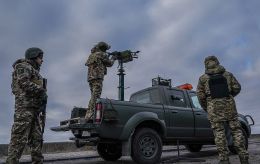
The Ukrainian side now also needs means of combating jet-powered drones.
The changes have also affected artillery ammunition. Ukraine has moved from using only standard 155-mm shells to longer-range Extended Range Ammunition.
As Getmanchuk noted, these are already different needs and, accordingly, different volumes of funding.
The overall architecture of Ukraine's defense priorities is not changing. Maintaining it despite changes in defense ministers is a positive signal for NATO, according to the diplomat.
Ukraine is increasing production
Getmanchuk named investments in the production of Ukrainian drones and missiles as the third priority. Kyiv expects the maximum possible share of funding provided by partners to be directed specifically toward this area.
Production is also adapting to new challenges. Initially, Ukraine scaled up the production of interceptor drones and achieved a shoot-down rate of more than 90%. It then formulated a request for medium-range strike drones and achieved the corresponding result.
"Here, we are also responding flexibly to threats: first, we scaled up the production of interceptor drones and reached a shoot-down rate of more than 90%, then we formulated a request for drones for medium-range strikes (middle strikes) and saw the result. A separate component is an effective means for long-range strikes (deep strikes)," Getmanchuk noted.
Earlier, Getmanchuk noted that Ukrainian experience and defense capabilities developed during the war could be important not only for the country's own defense. In the future, Ukraine could become an additional source of military capabilities for the alliance and partially compensate for certain capabilities that are currently provided by the United States.