Ukraine's Patriot missile shortage could last another year — Bloomberg

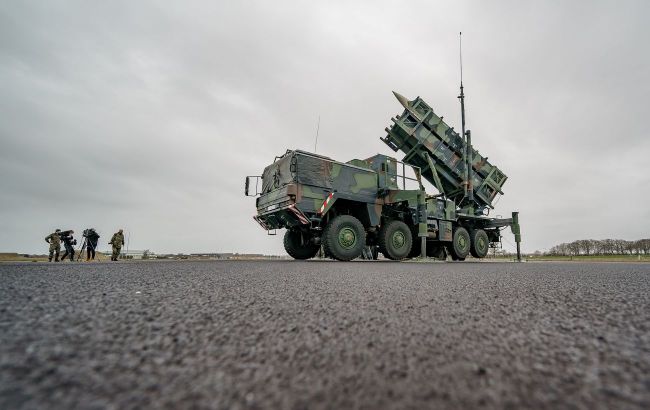 Photo: Ukraine needs Patriot (Getty Images)
European stockpiles of missiles for Patriot systems have fallen to a minimum, and countries are reluctant to supply them to Ukraine. A noticeable improvement is not expected for at least another year, according to Bloomberg.
According to the agency, a reduction or sudden cessation of US support would not lead to Ukraine's immediate collapse. But the country would find itself in an extremely vulnerable position. Europe is still a long way from being able to replace America's capabilities in three areas: air defense, satellite communications, and intelligence.
"If the US stopped all aid my sense is that Ukraine could adjust. But the political and strategic signal would be very harmful — and encouraging to Moscow," says Ian Lesser, an expert at the Brussels office of the German Marshall Fund.
Patriot missiles shortage
Patriot systems provide the best defense against ballistic missiles. There has been a severe shortage of them ever since US President Donald Trump launched a war against Iran.
The Trump administration recently approved a deal to sell $2.1 billion worth of missiles to Ukraine. According to Bloomberg, this will not solve the problem quickly.
"European stocks of PAC-2 and PAC-3 interceptors for Patriot systems, produced by US firms Raytheon Co. and Lockheed Martin Corp., are at a minimum with national militaries often resistant to hand them over to Ukraine without firm US commitments for fresh supplies, according to people familiar with the matter," the agency writes.
The situation will begin to improve in about a year, when Ukraine receives the missiles ordered for production in Europe. In 2027–2028, Kyiv is set to receive 600 PAC-2 missiles manufactured in Germany.
At the end of last month, a new agreement was also announced regarding the production of PAC-3 missiles in Poland.
Trump's promise to allow the production of interceptor missiles in Ukraine has not yet been fulfilled.
Nor has the program to develop low-cost air defense systems made any progress. Five European countries with the largest defense budgets announced the launch of this program in February.
Intelligence and satellite communications
Europe also struggles to match the US in intelligence. This refers to data for tracking the movements of Russian troops and identifying targets.
This is particularly true for real-time warnings about impending airstrikes.
SpaceX's Starlink systems remain the backbone for battlefield logistics and for guiding Ukrainian drones during medium-range strikes.
The European counterpart to Starlink, the Bromo project, has not yet received approval from antitrust authorities. The project has faced opposition from labor unions and suppliers.
In addition, US military satellites provide Ukraine with warnings about Russian missile strikes and data for target designation.
Europe has its own space assets, but their number and capabilities are insufficient to meet Kyiv's needs to the same extent.
Ukrainian President Volodymyr Zelenskyy stated that Ukraine needed Taurus missiles to destroy Russian launchers.
According to him, since the US was unable to supply anti-ballistic missiles for air defense, there is no other option, and this does not concern civilian facilities or the energy sector.
Ukraine has tested systems for intercepting ballistic missiles in near-Earth space.
According to The Guardian, there have been at least three such tests, and Fedir Venislavskyi, chairman of the Subcommittee on National Security, Defense, and Defense Innovation, acknowledged that funding would be a significant challenge.