Ukraine's Ombudsman clarifies why Oleshky residents evacuated via Crimea, Russia, and Belarus

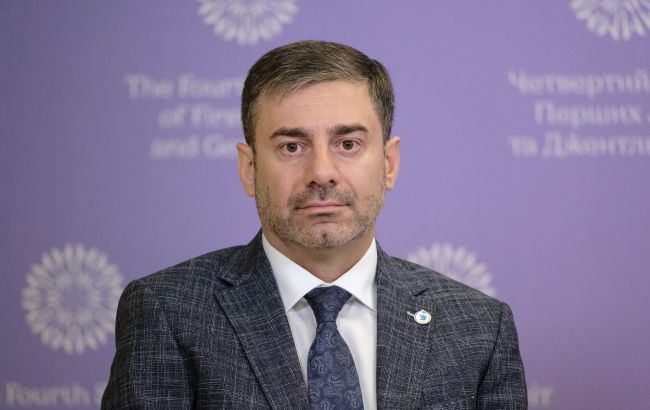 Photo: Ukrainian Ombudsman Dmytro Lubinets (Vitaliy Nosach, RBC-Ukraine)
A direct evacuation from Oleshky to Kherson via waterway was impossible. This conclusion was reached by the Defense Forces of Ukraine following an assessment, states Ombudsman Dmytro Lubinets during a press conference.
Logistical route of the evacuation
Lubinets revealed details of the logistical route for the evacuation from Oleshky.
"I left Kyiv on October 29 together with the Ukrainian delegation and two American journalists who had arrived in advance. We agreed to return in the same composition."
The route passed through Gomel, Anapa, temporarily occupied Crimea, and the Kherson region.
"On the evening of October 29, a technical meeting took place in Simferopol. We discussed the formation of the convoy and other details. At 3:00 AM, we already headed to Oleshky to form the evacuation convoy. We remained there until 2:00 PM on October 31 and then departed in the opposite direction, taking everyone who wished to leave," said Lubinets.
Assessment by the Defense Forces of Ukraine
Lubinets answered the question of why such a long route was chosen instead of crossing the Dnipro River to Kherson.
"Initially, I gathered information from the Armed Forces of Ukraine; here, I would like to separately thank Commander-in-Chief Mykhailo Drapatyi and the Defense Forces for providing their assessments," clarified the ombudsman.
According to Lubinets, no one ever proposed supporting an idea regarding demining and evacuation from Oleshky to Kherson because it is a front line.
"The military definitely would not have agreed to this, as they would not do anything that could weaken Ukraine's defense. Therefore, this route was never considered," he said.
Separate route assessments were conducted by the Main Intelligence Directorate and the Security Service of Ukraine, noted Lubinets. Data from individuals who had independently evacuated from Oleshky and could provide information on the best routes and what to pay attention to was also taken into account.
No filtration occurred
Lubinets assured that there was no filtration of evacuees from Oleshky by Russians.
"I emphasize this separately. We had cases where our citizens did not have any documents. Currently, all documents are being issued, there is full support, and everything will be done," said the ombudsman.
Russian equipment marked with red crosses was used for demining operations in Oleshky during the temporary ceasefire, as stated by Lubinets.
Furthermore, according to the ombudsman, the bodies of deceased military personnel and civilians were removed from the city morgue during the ceasefire in Oleshky.