Ukraine's FM fires back at Orbán over comments on Russian aggression

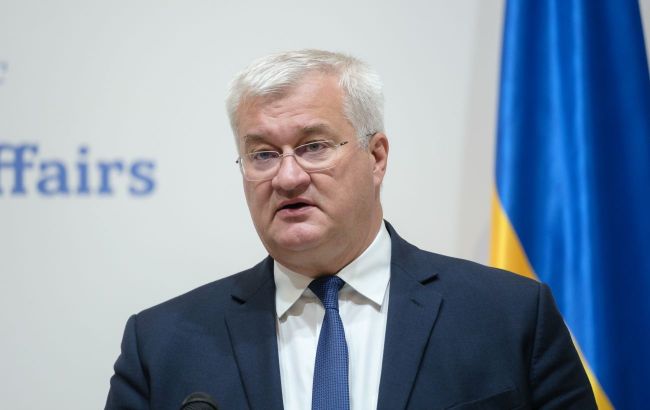 Photo: Andriy Sybiga (Vitalii Nosach, RBC-Ukraine)
Ukrainian Foreign Minister Andriy Sybiha responded on Twitter to Hungarian Prime Minister Viktor Orbán, who expressed doubt that Russia was responsible for the full-scale invasion of Ukraine.
Background
The day before, Orbán stated that "it is unclear who attacked whom" in the war between Ukraine and Russia. The cynical remark came amid the EU’s decision on further financial support for Kyiv.
"They sit calmly at home, drinking coffee, thinking it is morally right to help a small country that has been attacked — well, not so small — and it is not entirely clear who attacked whom, but in any case, we are now helping a country that has suffered violence, and it costs us nothing. But in the end, they will pay," Orbán said.
Foreign Ministry reaction
"Just as 'not clear' as it was for Hungary's leadership in 1939," Sybiha wrote, drawing a historical parallel with the period of World War II, when Hungary was an ally of Nazi Germany. In 1940, the country joined the Axis powers, participated in the invasion of Yugoslavia, and fought against the USSR on the Eastern Front, suffering significant losses.
After the defeat at Stalingrad, Hungary’s situation deteriorated sharply: in 1944, German forces occupied the country, and hostilities on its territory continued until 1945.
It is worth noting that at the end of the war, Hungary’s regent Miklós Horthy attempted to withdraw the country from the Nazi alliance, but these efforts failed due to the German occupation.
Reparations credit for Ukraine
Earlier, the European Commission proposed providing Ukraine with a reparations credit of €140 billion using frozen Russian assets. However, Belgium is blocking this proposal, as the largest portion of these assets is located on its territory.
If no compromise is reached, the EU is considering an alternative option — a so-called "Plan B." This would involve a transitional credit to support Ukraine at the start of 2026, funded through EU borrowing.
It is worth noting that on Thursday, December 18, Hungarian Prime Minister Viktor Orbán stated that he considers the issue of using frozen Russian assets "effectively closed." According to him, a blocking minority of countries within the EU may form to oppose providing a reparations credit to Ukraine.