Ukraine's EW prepares for Russian missiles and jet-powered drones amid cold season


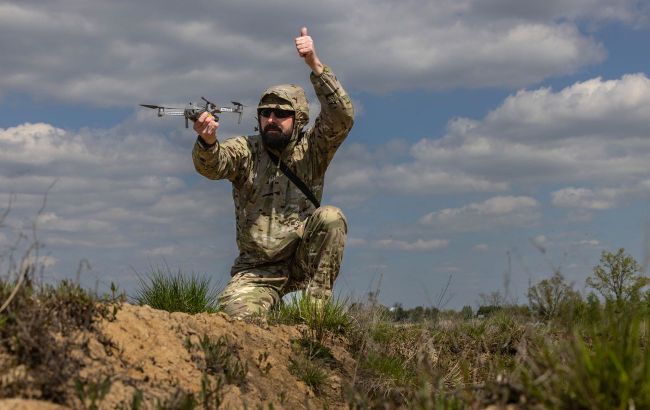 Photo: Electronic Warfare operations (Getty Images)
Ahead of the fall and winter season, Russia is switching en masse to jet-powered variants of the Shahed, Banderol, and other low-cost alternatives to cruise missiles, which significantly complicates their interception, according to an RBC-Ukraine article Ballistic missiles, jet-powered Shaheds, energy strikes: What to expect from Russia this fall and winter and comments from Contra-Drone co-founder Tymofii Yurkov.
Main threat
According to Yurkov, the key change in Russia's tactics ahead of the fall-winter period is a massive shift to jet propulsion. This refers to jet-powered variants of the Shahed, Banderol-type systems, and other low-cost Russian analogues of cruise missiles, which significantly increase the tempo of air attacks.
The main problem with such targets is precisely their speed. It critically reduces the reaction time of interceptor forces and shortens the window during which a missile or drone remains within the range of electronic warfare stations.
During the brief moment when a high-speed target flies past a jamming station, its onboard navigation system simply does not have enough time to accumulate sufficient error to significantly deviate from its course or disrupt the mission.
The situation is further complicated by the fact that Russia is beginning to actively deploy 16-channel jam-resistant CRPA antennas and use mesh networking for communication between weapons systems.
The only effective response from electronic warfare, Yurkov emphasizes, is a large-scale increase in the number and density of such systems along the approach routes.
Only by forming a continuous, echeloned jamming field along the entire flight path can sufficient exposure be created to guarantee the suppression of jam-resistant navigation, the disruption of mesh networks, and the disruption of precision guidance toward infrastructure targets.
Why bad weather doesn't hinder electronic warfare
Yurkov notes that a sky saturated with missile targets renders classic mobile fire teams equipped with small arms and searchlights practically useless—the burden of interception falls on air defense systems, MANPADS crews, and electronic warfare assets.
Autumn and winter weather conditions primarily affect optical systems: low cloud cover at 100–150 meters and dense fog leave MANPADS operators with only a few seconds to visually lock onto a missile with a thermal seeker before it disappears back into the clouds.
For electronic warfare systems, however, frost and inclement weather are not a critical obstacle—radio waves penetrate clouds and fog of any density, so in blind weather, the importance of electronic protection only increases.
Winter challenges for electronic warfare systems
Despite this, winter also adds purely operational challenges, notes the co-founder of Contra-Drone. The load on power supply systems and generators increases; the rotating mechanisms of antenna systems require constant maintenance to prevent icing; and very dense, wet snow causes additional attenuation of high-frequency signals.
However, Yurkov concludes that, overall, electronic warfare remains the most reliable all-weather defense layer, operating independently of line-of-sight conditions.
RBC-Ukraine has previously reported on the additional strain on Ukraine's air defense: according to the agency's sources, Moscow plans to ramp up production of the Dan-T missile to 14,000 units as early as 2027. Russia expects to produce up to 2,000 of these missiles by the end of this year.
Sources interviewed by RBC-Ukraine consider the weapon's mass deployment to be the main risk: its high speed and long range, combined with thousands of units, could place an additional burden on the defense system on top of Shaheds, cruise missiles, and ballistic missiles.