Ukraine reveals real capabilities of Russia's Zircon missile

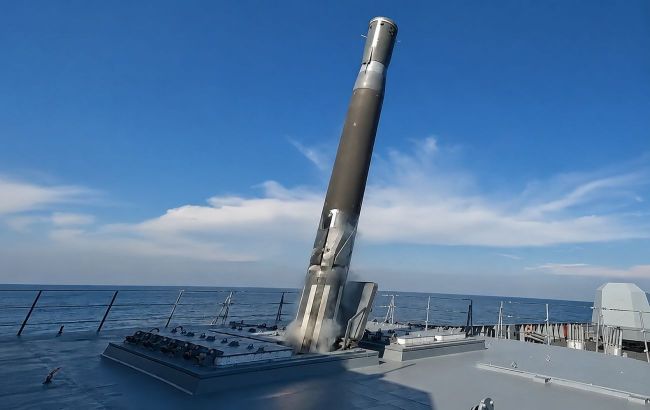 Ukrainian intelligence revealed the characteristics of the Zircon missile (photo: wikipedia.org)
Ukrainian intelligence has revealed the characteristics of the 3M22 Zircon missile, as well as the facilities involved in its production and the foreign equipment they use, according to the Defense Intelligence of Ukraine.
It is noted that the Zircon was developed as an anti-ship weapon (the letter M in the product index) for Russian nuclear-powered submarines and Project 22350 frigates equipped with the 3S14 universal shipborne firing system.
During the Russia-Ukraine war, facing significant problems with the use of its fleet in the Black Sea, Russia had to adapt the 3M22 missiles for launch from Bastion-M coastal missile systems.
The 3M22 warhead weighs around 120 kg, which is an extremely low figure for the most expensive missile among all of Russia's strike weapons. For comparison, even the small-class Banderol cruise missile has a 150-kg warhead.
How the missile works
After the missile leaves the container on a ship or coastal missile system, the booster engine is activated, allowing the missile to gain the altitude and speed required to start the sustainer engine. After the booster engine separates, the main sustainer engine is activated. Both engines use solid fuel.
The engines of the orientation and stabilization system, located on a protective fairing that later separates from the missile, are responsible for initially setting the missile on course toward the aiming point.
It is claimed that the missile can reach a speed of Mach 9 during certain stages of flight. However, the maximum recorded speed of the 3M22 missile currently does not exceed Mach 6.8 and is not maintained throughout the entire flight.
Design features
The 3M22 missile has a combined guidance system — inertial guidance during the cruise phase of flight and an active radar homing head during the final phase.
The missile has the Baget-83 onboard digital computing system typical of all Russian ballistic missiles.
The missile's tail section contains electrohydraulic steering actuators and aerodynamic control surfaces, which are the missile's primary control surfaces. During transportation, the control surfaces remain folded and deploy after the missile leaves the container. The entire tail section of the missile is made of titanium.
Russian forces have recently begun striking Kyiv with an upgraded ballistic missile provisionally known as the Iskander-1000. Due to its larger engine and larger launcher, the missile is capable of striking targets at greater distances.
Ukrainian Air Force spokesperson Yurii Ihnat has also said that there is a shortage of air defense missiles not only for Patriot systems but also for ground-based and airborne platforms.
According to him, strengthening the protection of Ukrainian airspace during the autumn-winter period was discussed in every conversation Zelenskyy had with European leaders.