Ukraine continues legal withdrawal from CIS - Presidential decree

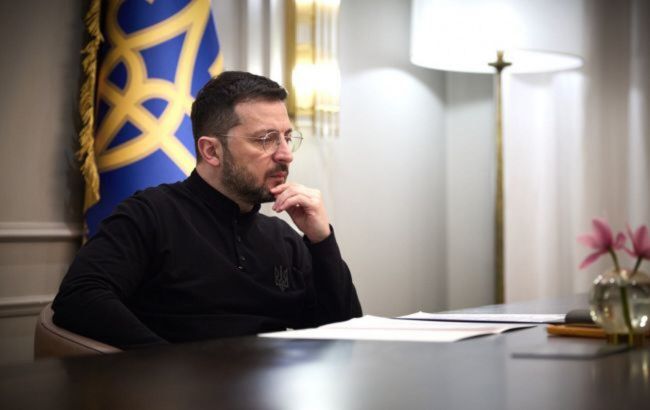 Photo: Volodymyr Zelenskyy (Getty Images)
Ukraine has officially terminated its participation in one of the core agreements signed within the Commonwealth of Independent States concerning the protection of state borders and maritime economic zones, according to Presidential Decree No. 82/2026 dated January 26, 2026.
President Volodymyr Zelenskyy signed a decree withdrawing Ukraine from the CIS Agreement on the Protection of State Borders and Maritime Economic Zones of the member states, an accord signed in Kyiv on March 20, 1992, which regulated cooperation in border and maritime security.
The decision was formalized in Presidential Decree No. 82/2026 dated Jan. 26, 2026, which set out the legal basis for Ukraine’s withdrawal from the international agreement.
The decree states that the decision was taken in accordance with Article 106 of the Constitution of Ukraine, the Law “On International Treaties of Ukraine,” and Article 56 of the Vienna Convention on the Law of Treaties, and orders Ukraine to withdraw from the CIS agreement.
Under the document, the Foreign Ministry was instructed to officially notify the depository of the agreement and complete all required international procedures.
Context
The move was described as part of Ukraine’s consistent policy of terminating participation in CIS arrangements. It recalled that in June 2022, parliament approved a number of government bills to withdraw Ukraine from CIS agreements and that in June 2024, the Cabinet of Ministers backed a draft law to withdraw from an agreement with Russia on the protection of victims of armed conflicts following Russia’s violations of international humanitarian law.
The report also noted that Zelenskyy had said more than 80% of Russian targets at the front are now being destroyed by drones, most of them produced in Ukraine, while artillery still plays an important role, but the nature of warfare is changing, with technology and speed becoming decisive.
It added that Zelenskyy had said continuous efforts are under way to restore energy infrastructure damaged by Russian strikes, with the most difficult situation in Kyiv, as well as in Kharkiv and the regions of Zaporizhzhia, Dnipropetrovsk, Chernihiv, and Sumy, where many buildings in the capital remain without heating for a long time.