UK to supply Ukraine with budget drones amid cost concerns

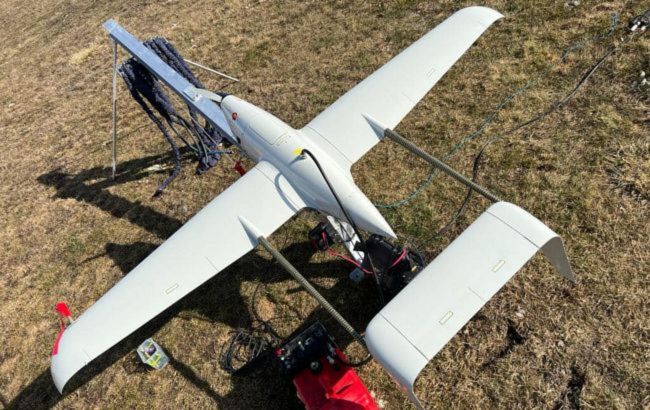 Photo: Drone (facebook.com/backandalive)
The United Kingdom is reviewing its approach to using reconnaissance drones and has announced plans to focus on more modern and cost-effective systems, according to the UK Defence Journal.
Read also: Why Ukrainian drones can brave freezing temperatures — And how military keeps them running
Watchkeeper deemed problematic project
For years, Watchkeeper reconnaissance drones have remained one of the most controversial programs of the British Armed Forces.
According to the source, the country is set to receive a new advanced system as early as November this year, which will replace these UAVs.
This means the replacement will arrive significantly earlier than the previously planned retirement date for Watchkeeper, which was scheduled for March 2027. It is noted that the new platform will take into account current combat experience and modern technological solutions.
Reasons for abandoning Watchkeeper
As early as 2023, the UK began to question the feasibility of continuing to operate these drones.
A total of 54 units were purchased, but the program proved to be significantly more expensive than originally planned: £1.35 billion instead of £800 million.
In addition, since 2014, Watchkeeper drones have been regularly involved in accidents, and their functionality was limited exclusively to reconnaissance, making it possible to replace the system with more compact and cheaper alternatives.
Search for alternatives and Ukrainian experience
Last year, London launched a program to find a replacement for the problematic UAVs. Among the potential candidates was the Ukrainian solution Raybird (ACS-3) developed by Skyeton, a member of NAUDI.
Its advantages include the ability to remain airborne for more than a day and proven operational experience in conditions of intense combat.
Why drones to not be transferred to Ukraine
At the same time, it is emphasized that the decommissioned Watchkeeper drones will not be transferred to Ukraine. Instead, the United Kingdom intends to invest in new, more resilient and cost-effective unmanned systems.
The reasons for this decision are linked to Watchkeeper’s vulnerability to Russian air defense systems, high maintenance costs, the need for additional infrastructure and personnel training, as well as a significant number of accidents.
Operator training has also previously been a separate issue, complicated by weather conditions and limited flight hours.
Amid the growing threat posed by mass-produced and low-cost drones, Europe’s defense industry is accelerating the shift from experimental development to serial production of counter-drone systems. In this context, German startup TYTAN Technologies has announced the opening of a new manufacturing facility in Bavaria, as well as the signing of a memorandum of understanding with leading radar systems developer HENSOLDT.
The Polish Air Force continues to explore options to enhance its aviation combat capabilities and has shown interest in light attack aircraft that could be used to counter drones.