Trump sidesteps whether Iran ceasefire is over

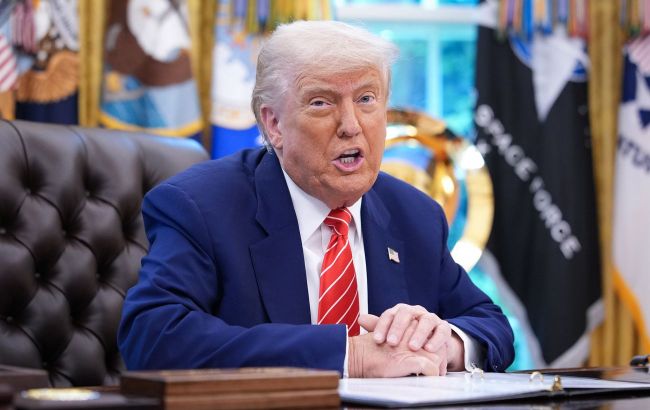 Donald Trump (photo: Getty Images)
US President Donald Trump has refused to say whether the ceasefire between the US and Iran is still holding after both sides exchanged fire in the Strait of Hormuz on Monday, according to CNN and Reuters.
Read also: US Intelligence Community says strikes failed to slow Iran nuclear program — Reuters
When radio host Hugh Hewitt asked whether the ceasefire with Iran was over and whether strikes could resume on Monday evening (it is still May 4 in the US), Trump replied:
"You wouldn’t — if I answered that question, you’d say this man is not smart enough to be president," the US leader said.
Earlier that same day, in an interview with Fox News, Trump warned Iranian forces that they would be wiped off the face of the earth if they tried to attack American ships in the Strait of Hormuz or the Persian Gulf.
Later in the interview, he insisted that the war with Iran was militarily... essentially over.
What led up to this
Reuters published a report detailing the events that occurred on Monday.
Specifically, on that day, the US and Iran launched new attacks in the Persian Gulf, fighting for control over the Strait of Hormuz through opposing naval blockades — undermining the fragile ceasefire.
The new volleys of missiles and drones came after Trump announced and soon launched Operation Project Freedom to ensure the passage through the Strait of the stranded tankers and other vessels that had nothing to do with the Middle East conflict.
Even before Monday was over, several commercial vessels in the Persian Gulf reported explosions or fires.
The US, for its part, claimed to have destroyed six small Iranian military boats, while in the UAE, an oil port hosting a major American base was on fire due to an Israeli attack.
This was the first apparent use of military force since the ceasefire regime was announced in April to open the Strait of Hormuz. But as the IRGC puts it, opening is only possible with their permission.
After all these events, Iranian Foreign Minister Abbas Araghchi said that Monday's events demonstrated there is no military solution to the crisis. He added that peace talks mediated by Pakistan are ongoing, and he warned the US and UAE against being drawn into the swamp of ill-wishers.
"Project Freedom is Project Deadlock," he wrote on social media.
Negotiations to end the war
Despite the announced ceasefire, the parties have not yet agreed on a final deal to end the war.
Just at the end of April, the US received a proposal from Iran that included opening the Strait of Hormuz and halting hostilities, but postponed talks on the country's nuclear program for a later time.
Already on Sunday, May 3, Trump said he had reviewed Tehran's proposal but called it unacceptable. According to him, he is not satisfied with the current version, though he did not specify exactly what.
Immediately after these statements, the media reported that Iran had allegedly agreed to bring the nuclear issue to the negotiating table. Whether this information has been received by the US remains unclear for now.