Trump hints at possible US operation in Colombia

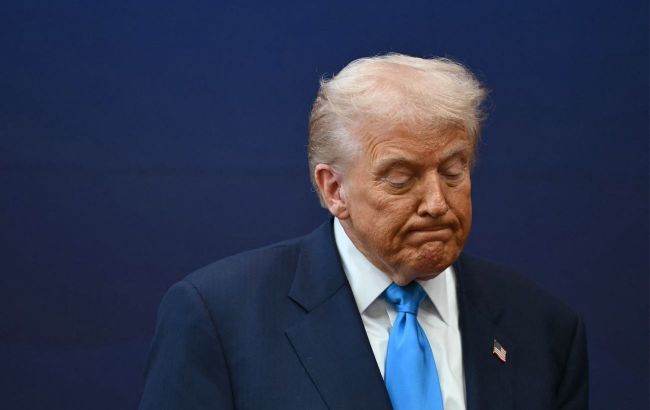 Photo: US President Donald Trump (GettyImages)
US President Donald Trump has made a series of harsh statements about Latin American countries, including Colombia, Mexico, and Cuba. He hinted at possible tough action by Washington in the fight against drug trafficking and regional instability, CNN reports.
Speaking to reporters aboard Air Force One, Trump says Colombia is run by a "sick man" who, according to him, is involved in the production and supply of cocaine to the US. He adds that this situation "he’s not going to be doing it very long."
The current President of Colombia is Gustavo Petro, who announced the deployment of troops along the border with Venezuela the day before. This happened after the United States carried out an operation to capture Venezuelan President Nicolás Maduro.
At the same time, when asked about a possible US operation in Colombia, Trump replied, "sounds good to me" effectively not ruling out the use of force.
The US President also stresses that Washington is interested in stable and economically successful states where oil can be freely extracted, because, according to him, this contributes to lower world prices and is beneficial for the American economy.
US and Mexico
Separately, Trump criticizes Mexico, saying that the country must "get their act together" because of drug trafficking that enters the US through its territory. He noted that he had repeatedly offered to involve the US military with Mexican President Claudia Sheinbaum, but, according to him, "she’s a little afraid" of such a step.
In addition, Trump reiterates his previous statement on Cuba, expressing his belief that the regime in that country is "going to fall" without the need for US intervention.
Relations between US and Colombia
Relations between the US and Colombia are strategic in nature and have been shaped by issues of security, the fight against drug trafficking, and regional stability. The US is Colombia's main partner in military and financial aid, supporting the government in its fight against drug cartels and armed groups.
At the same time, these relations have been accompanied by tensions on numerous occasions. Colombia criticises Washington's excessive influence on the country's domestic policy and its harsh anti-drug methods. For its part, the US expresses concern about the pace of reforms, the level of security, and the political steps taken by certain Colombian governments.
In recent years, relations between the two countries have been undergoing a period of rethinking. Bogota is trying to pursue a more independent foreign policy, focusing on social reforms and peace initiatives, while Washington seeks to maintain its influence in the region and continue cooperation on security and economic issues.
Sanctions against President of Colombia
Gustavo Petro's name recently appeared on the so-called OFAC list, a list of individuals whom the United States associates with drug trafficking. The US Treasury Department holds him responsible for the increase in cocaine production in Colombia, but Petro himself categorically denies these accusations.
Along with the President, his wife Verónica Alcocer, his eldest son Nicolás Petro Burgos, and Interior Minister Armando Benedetti are also added to the sanctions list.
The Colombian government criticizes Washington's decision, calling it an offensive move that, in their words, infringes on the honor and dignity of the president and his family.
Petro's statements against Trump
At the end of September, the United States revoked the Colombian President's visa after he participated in protests in New York. During the protests, he called on American soldiers not to obey Donald Trump's orders.
Before that, speaking at the UN General Assembly, Gustavo Petro sharply criticized Washington's policies. He declared the global war on drugs a failure, called for an investigation into Trump's actions in the Caribbean, and condemned US support for Israel's offensive in Palestine.