Trump challenges Putin - NYT

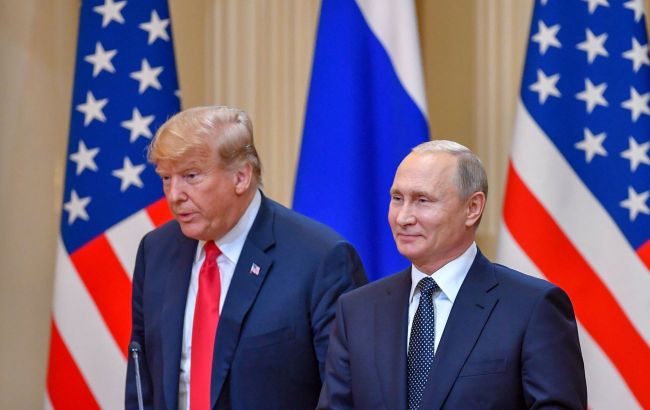 Donald Trump and leader Vladimir Putin (Photo: Getty Images)
The shift in Washington’s foreign policy simultaneously creates new opportunities and additional risks for the Kremlin, changing the balance of power in geopolitics and forcing Moscow to adapt to a harsher and more unpredictable game, according to a publication by The New York Times.
For many years, Russia has been expanding its influence, using military, intelligence, and diplomatic power to gain geopolitical advantages.
However, Donald Trump’s return to an active role in international politics is altering the Kremlin’s usual strategy.
New factor in the global game
In recent days, Moscow has been watching with interest the actions of US President Donald Trump, who has threatened NATO’s unity with high-profile statements, including regarding Greenland.
The publication notes that this US course appears beneficial to Russia only as long as the interests of the parties coincide.
Opportunities and threats for the Kremlin
Analysts believe that the US’s transactional approach, backed by virtually unlimited military and economic resources, creates a complex situation for leader Vladimir Putin.
“This moment is filled with all kinds of promise and peril for Putin. For him, it’s going to be complicated, just like for everyone else,” said Fiona Hill, who previously oversaw Russian affairs on the National Security Council at the White House.
She noted that for almost two decades, the Russian leader has sought to weaken the unipolar world order, but in a global competition without rules, the US objectively surpasses Russia in the scale of its influence.
“The United States is basically saying, ‘We’re with you and we’re going to do the same things you’re doing,.’ The problem for him might well be that Trump may try to out-Putin him,” Hill added.
“This is kind of, ‘Be careful what you wish for.’”
Ukraine and the Rift with Europe
Analysts believe that Moscow hopes to benefit from a possible thaw in relations with the US without giving up its demands regarding Ukraine.
At the same time, tensions between Washington and Europe are seen in the Kremlin as a strategic advantage, although concerns remain about how the US will use its power in regions of interest to Russia.
US President Donald Trump responded to Moscow’s proposal to use frozen assets to pay the contribution for participation in the Peace Board, suggesting that such an option could have a positive outcome.
According to the Ukrainian side, US President Donald Trump has the potential to influence the end of the war in Ukraine, as he engages in dialogue with leader Vladimir Putin from a position of equality, while the capabilities of the US significantly exceed those of Russia.