Travel chaos at EU airports as new border system rolls out — media

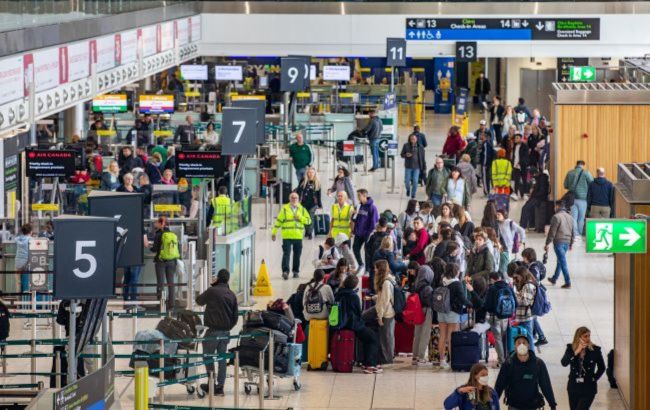 The European Commission explores options to reduce delays at airports (photo: Getty Images)
The European Commission will begin new talks with EU member states to reduce multi-hour delays at airports caused by the rollout of the new biometric Entry/Exit System (EES), according to Politico.
Key decision in Brussels
EU Commissioner for Migration Magnus Brunner sent a letter to airport and airline executives, stressing that the EES is designed to "keep citizens safe, without undue discomfort for visitors from outside the Schengen area."
He says, in most EU countries and airports, the system "works well."
At the same time, the commissioner acknowledged that passengers are facing longer waiting times at some entry points. He attributed the delays to insufficient staffing and inadequate infrastructure.
"The Commission will now make additional efforts to help those Member States that still encounter issues," Brunner said.
Now, member states may temporarily suspend the requirement to collect biometric data to speed up processing.
Airline industry pressure, recognition of problems
Brussels' response was prompted by letters from the International Air Transport Association and the Airlines for Europe group. The industry voiced serious concerns over long border queues and travel delays.
Previously, Brussels had denied widespread shortcomings in the system.
However, European Commission President Ursula von der Leyen has for the first time acknowledged that significant work will be needed to address "technical problems."
How many people have been affected?
The EES rules were developed over eight years before taking effect. Instead of traditional passport stamps, non-EU travelers now have fingerprints taken and are photographed.
According to Politico, since October 2025, the EES has recorded 43,728 cases of denied entry to the EU for rule violations. Of these:
- 16,383 people were traveling without sufficient grounds
- 8,739 overstayed their permitted duration
- More than 400 attempted to cross the border using forged documents.
Following a gradual rollout, from April 10, 2026, the EES became mandatory for all travelers from non-EU countries entering the Schengen area for short stays.
Notable that the official launch of the EES began on October 12, 2025, and full-scale operation at the borders of 29 European countries started on April 10, 2026.
The system replaces manual passport stamping with digital registration and applies to citizens of third countries.