Three European countries prepare their own format for Ukraine peace talks

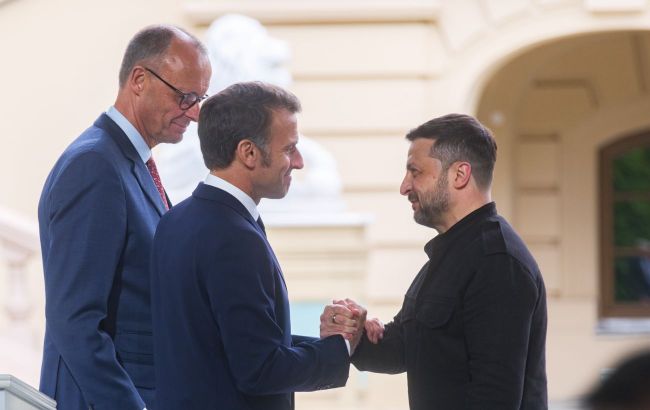 Photo: Ukrainian President Volodymyr Zelenskyy, French President Emmanuel Macron and German Chancellor Friedrich Merz (Vitalii Nosach, RBC-Ukraine)
France, Germany and the United Kingdom are working on their own format for negotiations on Ukraine, fearing that the US could leave Europe out of key agreements, according to The New York Times.
According to five European officials, the three countries have joined forces to ensure Europe has a seat at the negotiating table.
Two senior European diplomats and one senior European official said France and Germany are playing a leading role in shaping a common European position.
The United Kingdom is acting more cautiously, in part because of concerns about damaging relations with US President Donald Trump.
At the same time, European diplomats emphasize that relations with Russia and resolving the war in Ukraine have a direct impact on Europe's security. Therefore, they want to ensure that Washington and Moscow do not reach any agreement without European allies being informed.
There are currently few signs that Russian President Vladimir Putin is ready for serious negotiations. European officials expect that if a diplomatic process begins, the US will play the leading role in negotiations with Moscow.
Who else could join
France, Germany and the United Kingdom, known as the "E3" format, form the core of the Coalition of the Willing supporting Ukraine. They have also been developing options for military and security guarantees for Ukraine after a possible peace agreement is reached.
At the same time, European officials say Poland, Italy and the Nordic countries should be involved in the consultations. The European Union should also be informed and eventually brought into the process.
However, some countries, including the Baltic states and Hungary, do not fully trust France and Germany to represent their interests.
The UK's Foreign Office said the current discussion remains speculative. An EU representative stressed that the various diplomatic efforts are complementary rather than competing.
Meanwhile, ahead of elections to the State Duma, Russia is stepping up its pro-war rhetoric and saying it is ready to end the war only on the Kremlin's terms. The Institute for the Study of War (ISW) believes that the Russian authorities are seeking to rally society around the war and justify their refusal to negotiate.