Survey shows falling support for Putin and growing skepticism toward Kremlin policy

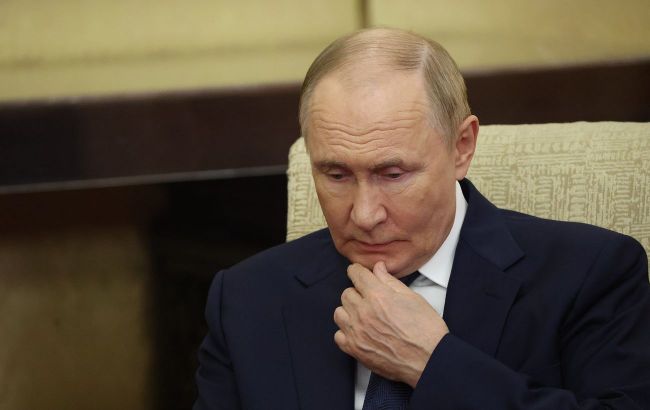 Photo: Russian President Vladimir Putin (Getty Images)
Russians’ trust in the authorities and key state institutions is steadily declining. An increasing number of Russian citizens are negatively assessing the situation in the country, while the share of those who support the Kremlin’s course has decreased, according to a post by the Foreign Intelligence Service.
At the same time, fewer people believe that the aggressor country is moving in the right direction — currently 61%, down by 13 percentage points year-on-year.
Trust in Putin is declining
The approval rating of Russian President Vladimir Putin fell to 80%, down 7 percentage points since November last year. Meanwhile, the level of disapproval rose to 15%.
A similar trend is observed regarding the country’s government: approval dropped to 66% — down 12 percentage points since May 2025, while disapproval increased to 29%.
The approval rating of the State Duma of the Russian Federation declined to 53% (minus 13 percentage points), and support for regional governors fell to 66% (minus 9 percentage points year-on-year).
A clear gap is observed between age groups: older Russians show higher levels of loyalty, while younger people are significantly more likely to take a critical stance.
Main factors behind dissatisfaction
Among the key factors of dissatisfaction are:
- The growing financial burden due to tax policy;
- Tightening restrictions on internet access;
- Accumulated fatigue from the full-scale war.
As a result, a growing sense of social injustice is emerging among Russians, which undermines trust in government decisions even when they are intended to stabilize the situation.
Sociologists note the formation of an "inertial loyalty" model in the aggressor country: approval ratings remain formally high, but their social base is narrowing.
"This increases the vulnerability of the Kremlin system to specific crisis situations, primarily economic ones. In parallel, the effectiveness of information control is declining: even with a high level of declared support, the proportion of those who do not accept official narratives is growing," the Foreign Intelligence Service noted.
Earlier this year, intelligence published a new interception indicating a critical state of regional budgets in Russia.
In addition, it recently became known that trust in Vladimir Putin among Russians has fallen to its lowest level since the start of the full-scale invasion of Ukraine.